If you notice tiny specks, webbing, or discolored spots on your spruce or arborvitae, spider mites might be the culprit. They pierce plant cells and suck sap, weakening your trees over time. To control them, encourage beneficial insects, wash off webs, and maintain healthy foliage. For quick relief, use specific miticides carefully. To keep these pests at bay and protect your evergreens, there’s more to discover that can help you manage the problem effectively.
Key Takeaways
- Look for tiny speckled spots, webbing, and discolored foliage on spruce and arborvitae as signs of spider mite infestation.
- Promote natural predators like lady beetles and predatory mites to control spider mite populations naturally.
- Apply targeted miticides carefully, following label instructions for quick relief during early infestation stages.
- Maintain tree health with proper watering, fertilization, and good airflow to prevent mite outbreaks.
- Regularly inspect and wash foliage to dislodge mites and webbing, reducing infestation severity.
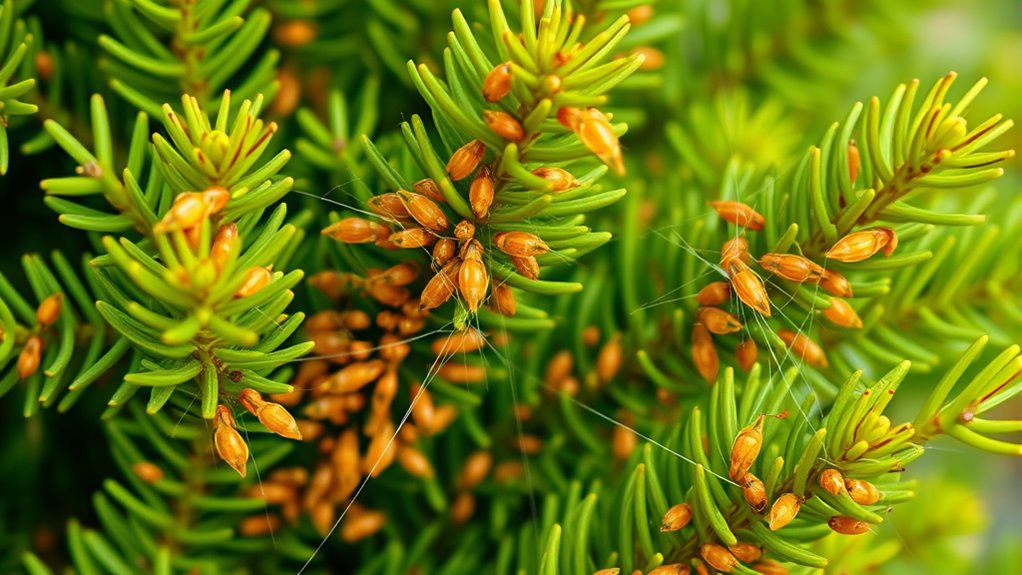
Have you noticed tiny, speckled spots or webbing on your spruce or arborvitae? If so, you’re likely dealing with a spider mite infestation. These minuscule pests are incredibly common on evergreens and can cause considerable damage if left unchecked. Spider mites are so small that they often go unnoticed until the symptoms become pronounced. The speckled appearance on your foliage results from their feeding, as they pierce plant cells and suck out the sap. Webbing may appear as fine silk threads draping across the branches, making the infestation even more apparent. Regular monitoring and early detection are key to effective management.
Tiny speckled spots and webbing signal a spider mite infestation on your evergreens.
The good news is that managing spider mites isn’t solely about applying chemicals; you can also encourage natural predators to help control the population. Predatory insects like lady beetles, lacewing larvae, and predatory mites are natural enemies of spider mites. Introducing or conserving these beneficial insects can be an effective, eco-friendly way to reduce the infestation without resorting to harsh chemicals. You can attract natural predators by planting diverse, pesticide-free gardens around your trees and avoiding broad-spectrum insecticides that kill beneficial insects along with pests. Regularly inspecting your evergreens and supporting healthy, balanced ecosystems will help keep spider mite populations in check naturally.
However, if the infestation becomes severe, chemical treatments might be necessary. When using pesticides, opt for miticides specifically formulated for spider mites, and follow label instructions carefully. Chemical treatments can provide quick relief but should be used judiciously to prevent harming beneficial insects and the broader environment. It’s best to target early signs of infestation with these treatments to prevent it from spreading further. Remember, chemical treatments aren’t a cure-all; they work best when integrated with other management strategies, such as improving plant vigor through proper watering and fertilization, which makes your trees less susceptible to pest damage. Maintaining plant health can reduce pest susceptibility and improve overall resilience.
Prevention plays a critical role in managing spider mites on spruce and arborvitae. Keep your trees healthy, avoid excessive fertilization, and ensure good airflow around the branches. Regularly wash off the foliage with a strong jet of water to dislodge mites and webbing. This simple step can considerably reduce their numbers and buy you time before more aggressive measures are needed. By combining natural predator support, vigilant monitoring, and targeted chemical treatments when necessary, you can protect your evergreens from the damage caused by spider mites and keep them thriving for years to come.
Frequently Asked Questions
Can Spider Mites Infest Indoor Spruce and Arborvitae Plants?
Yes, spider mites can infest indoor spruce and arborvitae plants. If you notice tiny webs or speckled leaves, an indoor infestation might be present, which can quickly harm your plant’s health. You should act promptly by isolating the affected plant, increasing humidity, and using insecticidal soap or neem oil. Regularly inspecting your plants helps prevent severe damage and keeps them healthy indoors.
Are There Natural Predators That Control Spider Mite Populations?
A bird in the hand is worth two in the bush, and the same applies to natural predators controlling spider mites. You can encourage biological control by welcoming natural predators like ladybugs, predatory mites, and lacewing larvae into your garden. These beneficial insects help keep spider mite populations in check without chemicals. Using natural predators is an effective, eco-friendly way to manage pests and maintain healthy plants.
How Long Do Spider Mites Typically Live on Spruce and Arborvitae?
Spider mites usually live for about two to four weeks on spruce and arborvitae, depending on environmental factors. Warmer temperatures and dry conditions tend to shorten their lifecycle, while cooler, more humid environments can extend it. During this time, they reproduce rapidly, so controlling your plants closely is crucial. By understanding this lifecycle duration, you can better time your treatments and manage infestations effectively.
Do Weather Conditions Affect Spider Mite Outbreaks?
Yes, weather conditions considerably influence spider mite outbreaks. High humidity tends to suppress their populations, while dry, hot conditions promote rapid reproduction. Wind can help spread mites to new plants, increasing infestations. You should monitor moisture levels and protect your plants during dry spells, as these conditions create an ideal environment for spider mites to thrive and multiply quickly. Proper environmental management can help prevent severe infestations.
Are Chemical Treatments Safe for Surrounding Plants and Pets?
Chemical treatments can be safe for surrounding plants and pets if you choose products labeled as pet-safe and follow the instructions carefully. Always read the chemical safety labels before application, and avoid spraying when pets are nearby or during windy conditions. You can protect your pets by keeping them indoors during treatment and ensuring the chemicals dry completely. This way, you minimize risks and safeguard both your plants and furry friends effectively.
Conclusion
To protect your spruce and arborvitae, stay vigilant, stay proactive, and stay informed. Regularly inspect your plants for signs of mites, act quickly at the first sign of trouble, and apply effective treatments when needed. By monitoring your trees, preventing infestations, and responding promptly, you can keep your landscape healthy and vibrant. Remember, prevention is your best defense—stay attentive, stay prepared, and enjoy lush, thriving trees all season long.