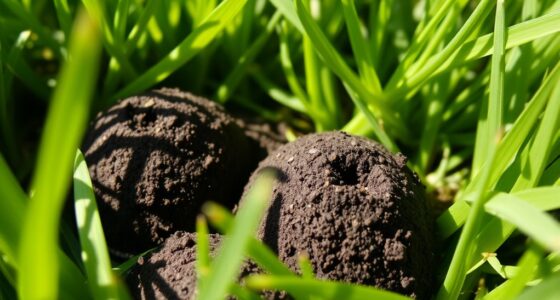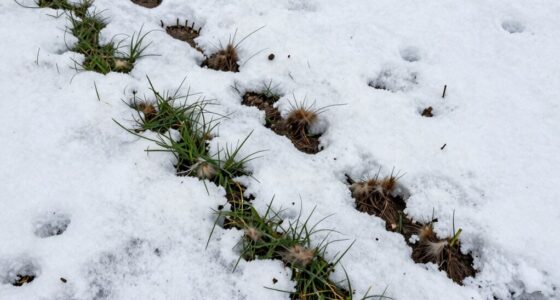
In warm-season turf, mole crickets become most active during late spring and summer when soil temperatures hit 80-95°F. During this time, they tunnel, feed, and lay eggs, causing damage to your lawn. Their activity peaks as they emerge from burrows, making early intervention essential. If you want to learn how to better manage their activity and protect your turf during these months, keep exploring for effective strategies.

Get garden gear delivered free with Prime
- Fast, free delivery on millions of items
- Prime Video, Amazon Music and more included
- Member-only deals all year
Key Takeaways
- Mole crickets are most active during late spring and summer when soil temperatures reach 80-95°F.
- Adult emergence and egg-laying peak in warm months, increasing tunneling and turf damage.
- Monitoring soil temperature helps predict periods of heightened mole cricket activity.
- Control measures are most effective when applied during early summer, targeting nymph stages before maturity.
- Cultural practices like aeration and watering reduce turf attractiveness and help mitigate activity levels.
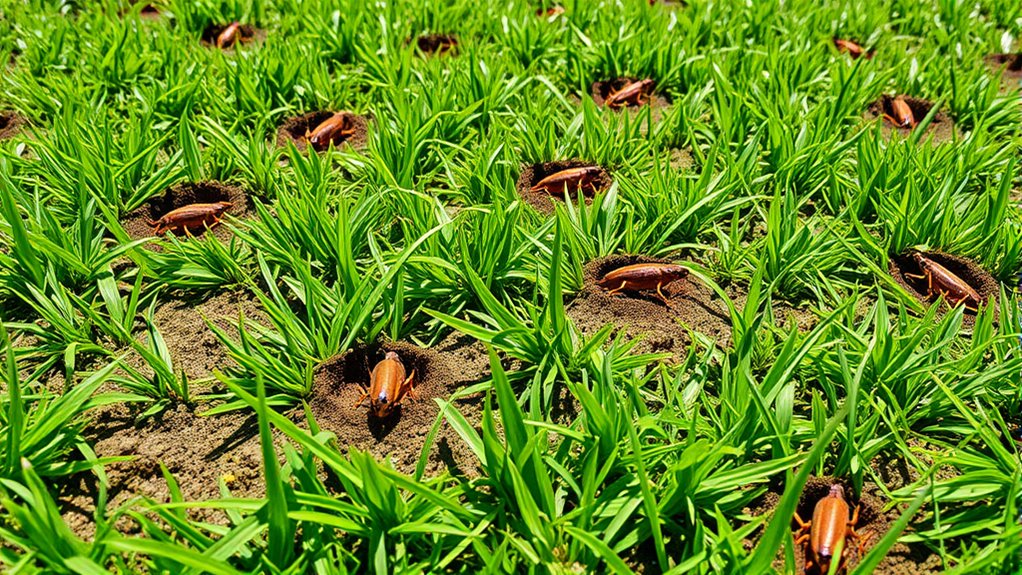
Have you ever wondered when mole crickets become most active? If you’re managing warm-season turf, understanding their activity patterns is essential for effective control. Mole cricket lifecycles play a crucial role in when these pests emerge and cause damage. They typically start their lifecycle as eggs laid in the soil during late summer or early fall. These eggs hatch into nymphs, which then develop through several molts over the course of a year or more, depending on the species and environmental conditions. As the nymphs grow, they become increasingly active, tunneling through the soil and feeding on grassroots. Recognizing this lifecycle helps you anticipate when turf damage might occur and take preventative measures. Integration with other pest management strategies can enhance control efforts and reduce turf damage.
In warm-season turf, mole crickets are most active during the warmer months, particularly from late spring through summer. During this period, adult crickets emerge from their burrows to mate and lay eggs. Their activity peaks when soil temperatures range between 80 and 95 degrees Fahrenheit, providing ideal conditions for tunneling and breeding. This heightened activity not only results in visible surface damage but also weakens the turf’s overall health. By monitoring soil temperatures and observing mole cricket behavior, you can better time your turf damage prevention efforts. Applying control methods before their breeding season begins can noticeably reduce population growth and subsequent damage.
Knowing when mole crickets are most active allows you to implement turf damage prevention strategies proactively. For instance, applying insecticides or biological control agents during early summer can target nymphs before they mature and cause extensive damage. Additionally, cultural practices like aeration, thatch management, and proper watering can make your turf less attractive to these pests. Creating a less hospitable environment discourages mole crickets from tunneling and feeding in your lawn. Regular lawn inspections during peak activity months help you spot early signs of tunneling and surface activity, enabling swift intervention.
Ultimately, understanding the timing of mole cricket lifecycles and their active periods empowers you to protect your turf effectively. Preventing damage before it becomes severe saves time and effort, ensuring a healthier, more resilient lawn. Staying vigilant during the warm-season months and combining cultural, biological, and chemical control methods when appropriate will keep mole crickets at bay. With a proactive approach rooted in knowledge of their lifecycle and activity patterns, you can maintain a lush, damage-free turf throughout the warmer months.
Frequently Asked Questions
How Can I Prevent Mole Crickets From Infesting My Turf?
To prevent mole crickets from infesting your turf, you should set up DIY traps around your yard, placing moist soil or cardboard to attract them. Additionally, apply organic repellents like neem oil or garlic spray to deter these pests naturally. Keep your turf healthy by watering appropriately and removing thatch, which creates hiding spots. Regular monitoring and early intervention help maintain a pest-free, lush lawn.
What Natural Predators Help Control Mole Cricket Populations?
You can encourage natural pest control by attracting predator species like nematodes, birds, and certain beetles to your turf. These predators help keep mole cricket populations in check naturally. To do this, avoid broad-spectrum insecticides that harm beneficial insects, and maintain healthy turf to support predator habitats. Introducing beneficial nematodes is especially effective, as they actively hunt and kill mole crickets underground, reducing their numbers sustainably.
Are There Specific Turf Types More Resistant to Mole Cricket Damage?
Tough turf types tend to resist mole cricket damage better, especially those with resilient turf varieties and well-drained soil compositions. You’ll find that grasses like Bermuda, zoysia, and buffalo grass stand strong against the pests, thanks to their dense growth and deep root systems. By choosing these hardy options and improving soil health, you can help minimize mole cricket damage and maintain a lush, lively lawn.
When Is the Best Time to Apply Treatments for Mole Cricket Control?
You should apply treatments for mole cricket control during their peak activity, typically late spring to early summer. Timing strategies are vital, so aim for application timing when adult mole crickets are actively feeding and laying eggs, usually in late May or early June. This guarantees the insecticide is most effective. Applying treatments at the right time helps prevent damage and reduces the need for repeated applications later in the season.
How Do Environmental Conditions Influence Mole Cricket Activity?
You might notice mole crickets become more active during warm, moist conditions—coincidence or not, soil moisture greatly influences their movement. When temperatures fluctuate or the soil stays damp, they’re more likely to surface and cause damage. These environmental conditions create ideal habitats, so monitoring soil moisture and temperature helps you predict activity peaks. Adjust your control strategies accordingly to stay ahead of these pests and protect your turf effectively.
Conclusion
So, as you watch your lush turf turn into a lunar landscape, remember that mole crickets are just nature’s little underground pranksters. They burrow, they munch, and they leave behind a trail of chaos—like tiny, uninvited landscapers with a penchant for destruction. Next time you see those suspicious mole tunnels, just smile and thank them for reminding you that your perfect lawn was never really that perfect to begin with. Happy gardening!
Fall yard work Picks
leaf blowers
As an affiliate, we earn on qualifying purchases.