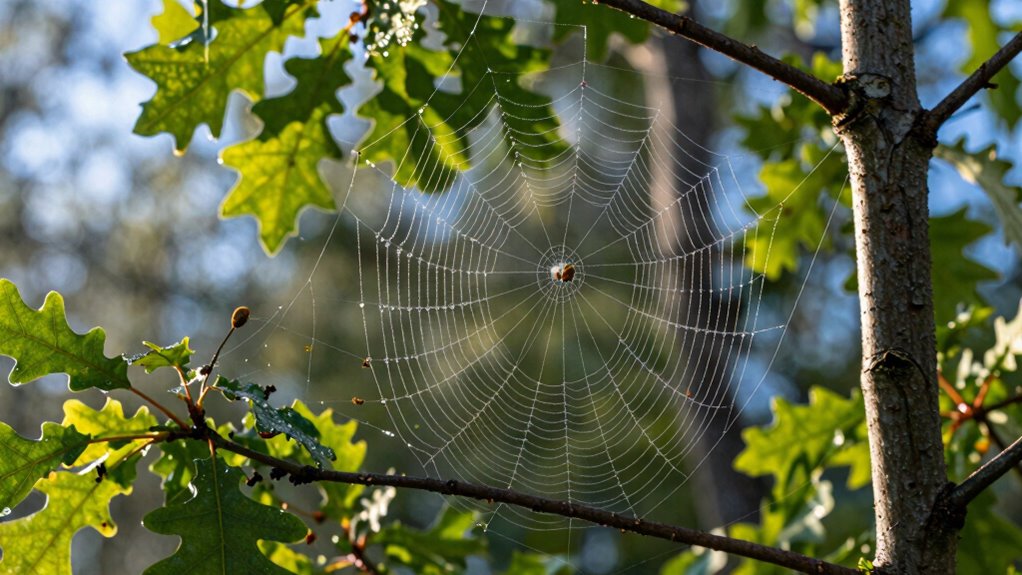

Webbing in trees isn’t always a sign of pest problems; it often indicates beneficial insects like spiders or predatory mites helping control pests naturally. If the tree looks healthy, with minimal leaf damage and no signs of distress, the webbing is likely part of the natural ecosystem. You don’t need to act unless you see excessive damage or discoloration. Still curious? Explore further to understand how to tell the difference and keep your trees thriving.

Get garden gear delivered free — and shop member deals
- Fast, free delivery on millions of items
- Access to Prime Big Deal Days deals on October 6–7
- Prime Video, Amazon Music and more included
Key Takeaways
- Webbing caused by beneficial insects like spiders and predatory mites indicates natural pest control, not a pest problem.
- Excessive leaf damage, discoloration, or defoliation alongside webbing signals a pest infestation requiring intervention.
- Webbing present in a healthy, undamaged tree typically results from harmless, beneficial insects.
- Avoid chemical sprays when webbing is caused by beneficial insects; promote natural pest regulation instead.
- Recognizing the difference helps maintain ecosystem balance and supports eco-friendly garden management.
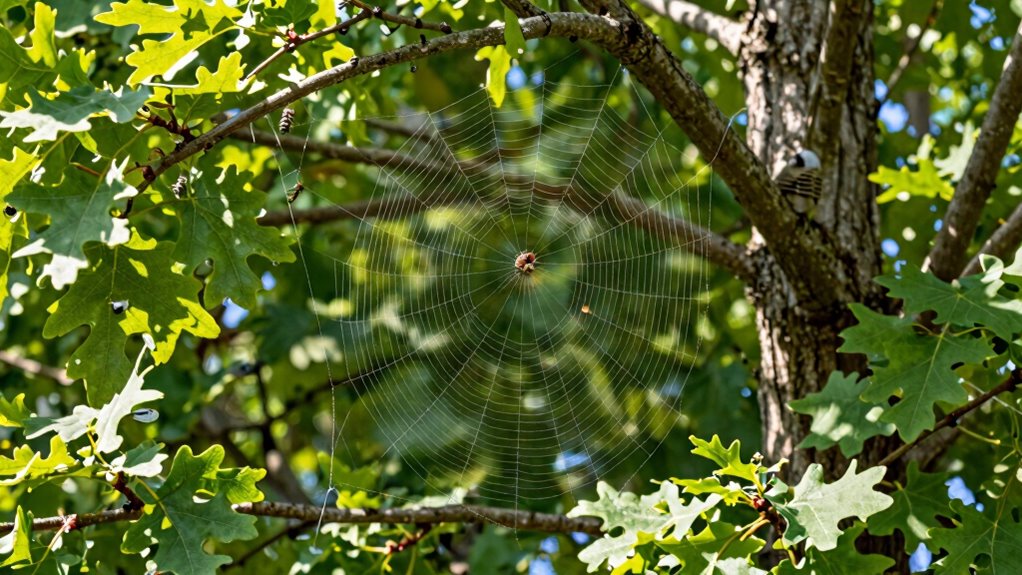
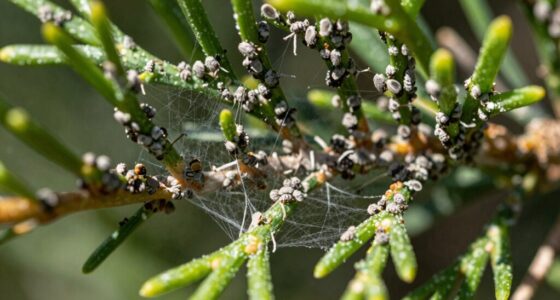
Webbing in trees can often raise alarm, but not every case signals a pest problem. Sometimes, the silky threads you see are simply part of the tree’s natural environment or the activity of advantageous insects. While it’s understandable to worry about pests damaging your trees, it’s important to recognize when webbing is a normal occurrence and when it signals a real threat. In many cases, webbing is created by harmless insects that play a crucial role in natural pest control. These beneficial insects, such as certain species of spiders and predatory mites, weave webs to hunt and trap pests like aphids, scale insects, or caterpillars. Their presence can actually be a good sign that your tree is balancing its ecosystem, reducing the need for chemical interventions. Recognizing the difference between beneficial insect activity and pest infestations is essential for maintaining a healthy environment for your trees.
When you notice webbing in your trees, take a closer look before jumping to conclusions. If the webbing is sporadic and the tree appears healthy—without excessive leaf damage, discoloration, or defoliation—it’s likely that beneficial insects are at work. These insects help keep pest populations in check naturally, promoting overall tree health. They are part of an integrated approach to pest management that emphasizes minimal interference and the preservation of beneficial insect populations. Encouraging natural pest control methods means avoiding unnecessary chemical sprays that could kill both harmful pests and helpful insects alike. In fact, some webs are created by spiders that feed on pests, providing a natural form of pest control without your intervention. Understanding the beneficial role of predatory insects can help you make more informed decisions about whether to intervene or let nature take its course. Recognizing natural pest control strategies can help you support a thriving, balanced ecosystem in your yard. Additionally, understanding how beneficial insects contribute to pest suppression can guide you in maintaining a healthy and sustainable garden environment. Being aware of the ecosystem services offered by these beneficial creatures can further enhance your approach to tree and garden care. Recognizing the natural balance of insects in your trees is key to practicing effective and eco-friendly pest management.
beneficial insect webbing in trees
As an affiliate, we earn on qualifying purchases.
As an affiliate, we earn on qualifying purchases.
Frequently Asked Questions
How Can I Prevent Webbing From Appearing on My Trees?
To prevent webbing from appearing on your trees, start by regularly inspecting for webbing identification and signs of pests. Keep your tree healthy by watering properly, mulching, and fertilizing, which helps resist pest infestations. Remove any webbing you see promptly using a strong stream of water or pruning affected branches. Encourage natural predators like ladybugs, and avoid overusing chemical pesticides, which can harm beneficial insects and compromise your tree’s health.
Are All Webbing in Trees Harmful to the Tree’s Health?
About 80% of webbing in trees isn’t harmful. While webbing identification helps you spot pest infestations, not all webs impact tree health. Some webs are just signs of beneficial insects or harmless arachnids. However, if webs are thick and persistent, they could signal a pest problem that might weaken your tree. Keep an eye on webbing to protect your tree’s health without unnecessary concern.
What Natural Predators Control Webbing Pests in Trees?
You’ll find that predator species like lady beetles, predatory mites, and lacewing larvae naturally control webbing pests in trees. These predators help maintain the natural balance, reducing pest populations without the need for chemical treatments. By encouraging these beneficial insects through minimal disturbance and proper tree care, you support a healthy ecosystem where pests are kept in check, preserving your tree’s health and beauty effectively.
When Should I Consider Professional Pest Control for Webbing?
Think of this like calling in the Ghostbusters for a webbing infestation—if your DIY eradication and chemical treatments don’t work after a couple of weeks, it’s time to contemplate professional pest control. When webs are widespread, or the pests cause significant damage or stress to the tree, experts can assess and apply targeted solutions. Don’t wait too long—early intervention can save your tree from lasting harm.
Do Webbing Insects Also Damage the Tree’s Leaves or Branches?
Webbing insects like spider mites mainly cause webbing damage on the tree’s leaves and branches, but they rarely harm the tree’s overall health directly. You might notice speckled, discolored leaves or webbing buildup, indicating spider mite activity. While they don’t typically cause structural damage, heavy infestations can weaken the foliage and affect growth. Keep an eye out for webbing damage to catch infestations early and manage them effectively.
As an affiliate, we earn on qualifying purchases.
Conclusion
So, next time you spot that shimmering web in your tree, ask yourself: is it just nature’s artwork or a pest’s trap? Recognize the signs, understand the cause, and then decide whether to act or leave it be. Remember, not every web is a villain—sometimes, it’s just a delicate whisper of nature’s balance. After all, isn’t life a web of mysteries waiting to be unraveled? Choose wisely, and watch your trees thrive.
spider web in trees natural pest control
As an affiliate, we earn on qualifying purchases.
As an affiliate, we earn on qualifying purchases.
organic pest management for trees
As an affiliate, we earn on qualifying purchases.
As an affiliate, we earn on qualifying purchases.
Fall yard work Picks
leaf blowers
As an affiliate, we earn on qualifying purchases.