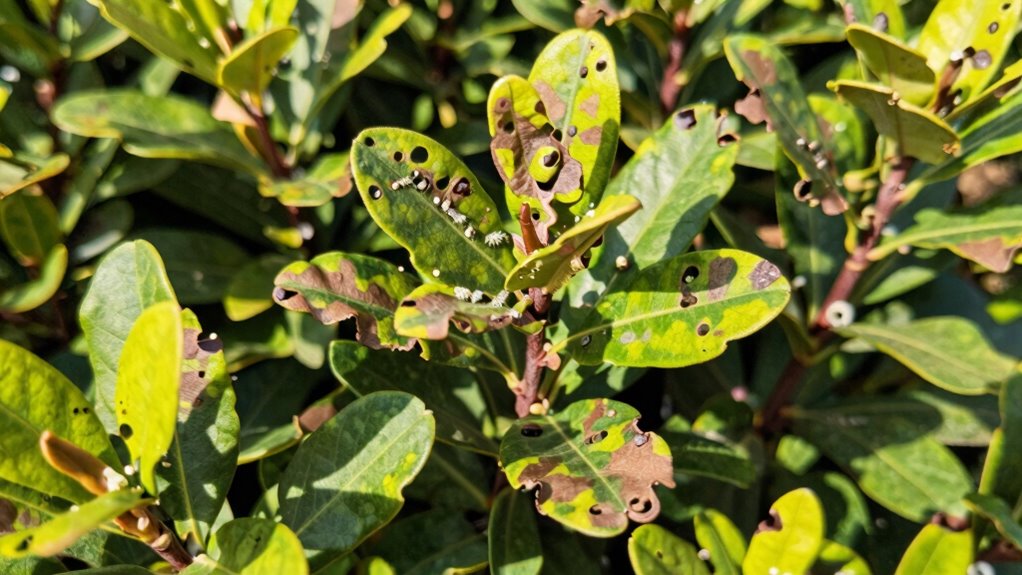
The shrub skeletonizer problem often hides in plain sight because its signs are subtle and easy to overlook amid dense landscapes and debris. You might notice discolored or tattered leaves, tiny frass-like debris, or a sparse, skeleton-like appearance on your shrubs, but these signs can blend into urban clutter. Early detection is key, as infestations can escalate quickly. Keep watching for small clues—if you continue exploring, you’ll discover how to identify and manage this sneaky pest effectively.

Get garden gear delivered free with Prime
- Fast, free delivery on millions of items
- Prime Video, Amazon Music and more included
- Member-only deals all year
Key Takeaways
- Early signs of damage, like skeletonized foliage and frass debris, are subtle and easily overlooked in complex urban landscapes.
- Dense planting and environmental stressors mask visible symptoms, delaying detection of skeletonizer infestations.
- Regular inspections and monitoring are crucial for identifying subtle damage before significant decline occurs.
- Combining mechanical, biological, and chemical controls enhances effectiveness while minimizing harm to beneficial insects.
- Maintaining shrub health through proper care reduces vulnerability and helps prevent hiding pest problems.
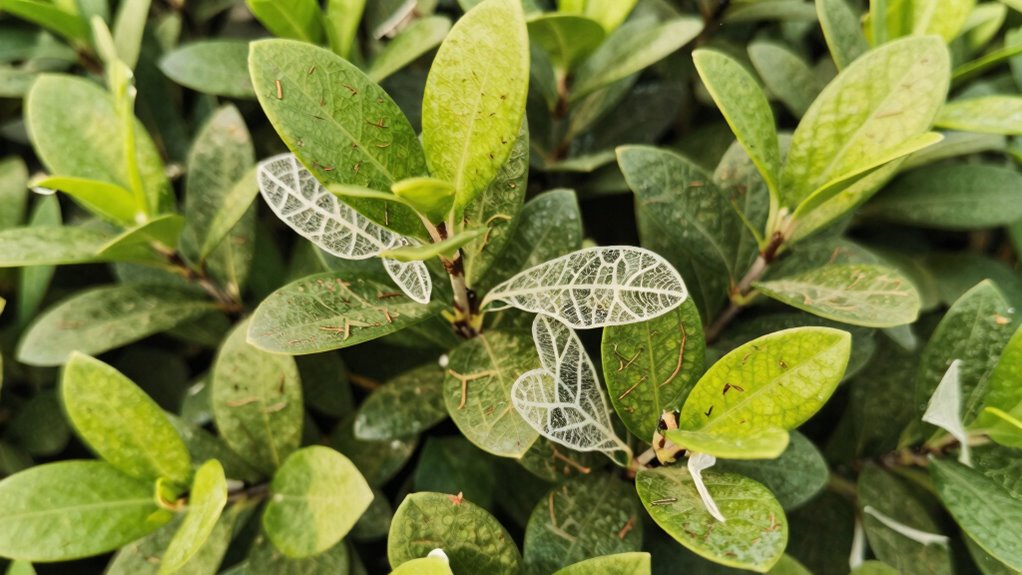
If you’ve noticed your shrubs losing their lush foliage and taking on a skeleton-like appearance, you’re likely dealing with the Shrub Skeletonizer problem. This pest silently wrecks havoc on your urban landscaping, often going unnoticed until the damage is severe. The Skeletonizer moth larvae feed on the leaves, devouring the tissue between the veins while leaving the veins intact. As a result, your plants look like delicate frameworks rather than vibrant greenery. It’s a common issue in city environments where shrubs are often densely planted and exposed to various stressors, making early detection crucial.
In urban landscaping, these pests pose a unique challenge because their presence can be subtle, blending into the landscape’s complexity. The damage may seem minor at first—discolored or tattered leaves—but over time, the infestation can cause significant dieback of branches and even entire shrubs. Recognizing the signs early helps prevent the problem from escalating, saving you time and effort in pest control methods. A telltale sign is the presence of small, frass-like debris on the foliage or near the plant base, often overlooked since it blends with the natural debris of urban environments. Additionally, maintaining plant health through proper care can help reduce susceptibility to pests like the Skeletonizer. Regular inspection is essential, as early detection can significantly reduce the extent of damage. Proper plant care practices, including appropriate watering and fertilization, can strengthen your shrubs’ natural defenses against pests. Implementing integrated pest management strategies can also be effective in controlling this pest while minimizing environmental impact.
Subtle signs like frass debris can indicate Skeletonizer damage in urban landscapes.
When it comes to pest control methods, a combination of cultural, biological, and chemical strategies tends to be most effective. Regular inspection is your best first step—look for signs of skeletonized leaves and larvae. Mechanical removal, such as handpicking larvae off affected plants, can help reduce the population naturally, especially for smaller infestations. Introducing natural predators like parasitic wasps can also keep the Skeletonizer in check, making biological control a sustainable option for urban landscapes. If infestations are severe, targeted insecticides formulated to combat leaf-eating caterpillars can be used, but application should be precise to avoid harming beneficial insects and pollinators. Always follow label instructions to minimize environmental impact.
Maintaining healthy shrubs through proper watering, fertilization, and pruning also helps them resist pests. Avoid over-fertilizing, which can promote tender new growth, attracting more pests. Regularly removing dead or diseased branches improves air circulation and reduces hiding spots. Proper plant care is crucial in building resilience against common urban pests like the Skeletonizer, especially when combined with pest monitoring techniques. By staying vigilant and employing a mix of pest control methods suited for urban landscaping, you can protect your plants from the Skeletonizer’s destructive impact. Recognizing the problem early ensures your shrubs stay healthy, vibrant, and a beautiful part of your cityscape.
shrubs skeletonizer pest control
As an affiliate, we earn on qualifying purchases.
As an affiliate, we earn on qualifying purchases.
Frequently Asked Questions
What Are Common Signs of Shrub Skeletonizer Infestation?
You’ll notice leaves with skeleton-like patterns or extensive webbing, indicating a shrub skeletonizer infestation. You might also see tiny holes or chewed edges on leaves, along with some leaf drop. To manage this, consider treatment options like insecticidal sprays or natural predators. Preventative measures include regular inspection, proper pruning, and maintaining plant health, which can help reduce the risk of future infestations.
How Did the Shrub Skeletonizer Get Its Name?
You might find it interesting that the shrub skeletonizer gets its name from its unique feeding pattern. As it eats, it leaves behind a network of intricate, skeleton-like leaf veins, making the plant look almost transparent. To control it, you can use chemical control methods or cultural practices like removing infested leaves. This distinctive damage is what led to the name, highlighting its signature feeding style.
Are There Natural Predators for Shrub Skeletonizers?
Yes, natural predator relationships exist for shrub skeletonizers. Birds, parasitic wasps, and certain predatory insects hunt them, helping control their populations naturally. These predators play a crucial role in biological control methods, reducing the need for chemical pesticides. By encouraging these natural predators in your garden, you can effectively manage shrub skeletonizer infestations and promote a healthier, more balanced ecosystem.
Can Healthy Shrubs Recover From Skeletonizer Damage?
Yes, healthy shrubs can recover from skeletonizer damage if you act promptly. Use pruning techniques to remove affected foliage, ensuring you cut below the skeletonized areas to promote healthy new growth. Consider chemical treatments if the infestation is severe, targeting larvae before they cause further damage. Consistent care, proper pruning, and timely treatments help your shrubs regain their vigor, restoring beauty and health to your landscape.
What Is the Lifecycle Duration of a Shrub Skeletonizer?
The lifecycle of a shrub skeletonizer typically lasts about four to six weeks, depending on environmental conditions. During this time, they go through egg, larva, pupa, and adult stages. To manage them, you can use chemical control during the larval stage for quick results or biological methods like introducing natural predators. Combining these strategies helps effectively reduce their population and protect your shrubs.
natural predator parasitic wasps for pests
As an affiliate, we earn on qualifying purchases.
As an affiliate, we earn on qualifying purchases.
Conclusion
Just as the fox remains hidden in the shadows, the shrub skeletonizer lurks unnoticed in plain sight. By staying vigilant and recognizing its subtle signs, you can outwit this silent predator. Remember, even the smallest cracks in your defenses can become the Trojan horse of infestation. Stay proactive, monitor your shrubs closely, and don’t let this unseen threat become a modern-day Hydra—defeatable only through awareness and prompt action.
leaf skeletonizer insecticide for shrubs
As an affiliate, we earn on qualifying purchases.
As an affiliate, we earn on qualifying purchases.
plant inspection tools for pest detection
As an affiliate, we earn on qualifying purchases.
As an affiliate, we earn on qualifying purchases.
Fall yard work Picks
leaf blowers
As an affiliate, we earn on qualifying purchases.