
To keep beneficial nematodes alive and effective, apply them during warm, moist periods like early morning or late evening, avoiding hot midday or dry spells. Choose seasons with moderate temperatures, such as spring or fall, and check weather forecasts to prevent rain or extreme heat from washing them away or stressing them. Maintaining consistent soil moisture and ideal temperature helps their survival. For detailed tips on timing and conditions, explore further tips below.
Key Takeaways
- Apply nematodes during early morning or late evening when soil moisture and temperatures are optimal.
- Schedule applications in spring or fall, avoiding extreme heat or cold to enhance survival.
- Ensure soil is moist before and after application to prevent desiccation and support nematode activity.
- Avoid applying during dry spells, heavy rain, or windy conditions that can wash away or harm nematodes.
- Time applications to coincide with peak pest activity and favorable environmental conditions for maximum effectiveness.
Why Is Timing Important When Applying Beneficial Nematodes?

Timing is crucial when applying beneficial nematodes because their effectiveness depends on when you introduce them to the soil. You want to guarantee soil humidity levels are high enough to keep the nematodes alive and active, as dry conditions can kill them before they reach pests. Apply nematodes when pest activity is at its peak, typically during warm, moist periods when pests are actively feeding underground. If you wait too long or apply during dry spells, the nematodes won’t survive long enough to infect pests. Proper timing enhances their ability to seek out and eliminate target pests efficiently. Monitoring soil moisture and pest activity helps you determine the best window for application, maximizing the benefits of beneficial nematodes. European cloud infrastructure plays a key role in supporting sustainable agricultural practices by providing reliable data and resources to optimize timing and application strategies.
What Weather Conditions Help Nematodes Survive and Thrive?
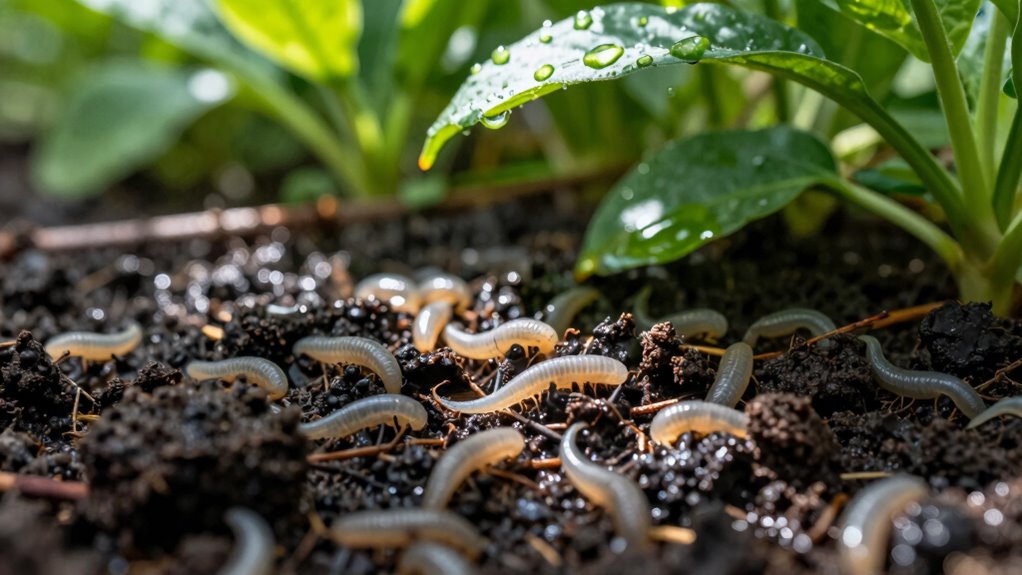
Beneficial nematodes thrive best in weather conditions that maintain soil moisture and moderate temperatures. Consistent moisture is essential, as dry soil can desiccate them, so guarantee good soil aeration to promote proper water retention. Mild temperatures, around 55-85°F, help nematodes stay active without stressing them. Heavy rain can wash them away, so avoid overly saturated conditions. Additionally, nematodes work best when compatible with your plants; avoid applying them to plants that may be sensitive to soil changes or chemical treatments. Good soil aeration not only supports nematode movement but also enhances their ability to locate pests. Proper timing application timing is crucial for maximizing their effectiveness and survival; applying when conditions favor their activity ensures better pest control results. By maintaining these conditions, you increase their chances of survival and effectiveness, ensuring a healthier, pest-free garden.
When Is the Best Time of Day and Season to Apply Nematodes?
Applying nematodes during early morning or late evening helps them stay active and avoid harsh sunlight. The timing of your application also matters across different seasons, with spring and fall often being optimal. Choosing the right time guarantees you get the most benefit from your nematodes. Additionally, applying essential oils such as eucalyptus or peppermint can support soil health and improve the effectiveness of your nematode application. Using proper application techniques can further enhance survival rates and ensure nematodes reach their target pests effectively. Proper timing can also help nematodes survive longer in soil conditions, increasing their pest control efficiency. Being mindful of environmental factors can help optimize nematode survival and pest control results.
Optimal Application Hours
Ever wonder when the best time to introduce nematodes into your soil is? The ideal application hours are early morning or late evening when soil temperatures are stable, and soil aeration is at its best. During these times, nematodes stay moist and active, increasing their survival chances. Avoid applying during midday heat or heavy rain, which can wash them away or dry them out. Consider your plants’ compatibility; gentle application around roots ensures they’re not harmed. Proper timing helps nematodes infiltrate the soil effectively, targeting pests while keeping them alive longer. Use the following to plan your application:
| Time of Day | Best Conditions |
|---|---|
| Early Morning | Cooler, moist soil |
| Late Evening | Less evaporation, stable temperature |
| Midday | Too hot, dries out soil |
| Night | Potentially too cold |
Seasonal Timing Strategies
Timing your nematode applications to align with seasonal changes can substantially boost their effectiveness. In pest management, applying beneficial nematodes during ideal seasons guarantees they survive longer and target pests more efficiently. Typically, spring and early summer are perfect, as soil temperatures are warm but not extreme, promoting nematode activity. Avoid late fall or winter applications, as cold temperatures can reduce their viability. For organic gardening, targeting pest outbreaks during these seasons helps maintain a healthy, chemical-free environment. Additionally, apply nematodes in the early morning or late evening when temperatures are cooler and sunlight is less intense, minimizing stress on the beneficial organisms. Proper seasonal timing maximizes pest control results while keeping your nematodes alive and active.
How Do Soil Temperature and Moisture Affect Nematode Success?
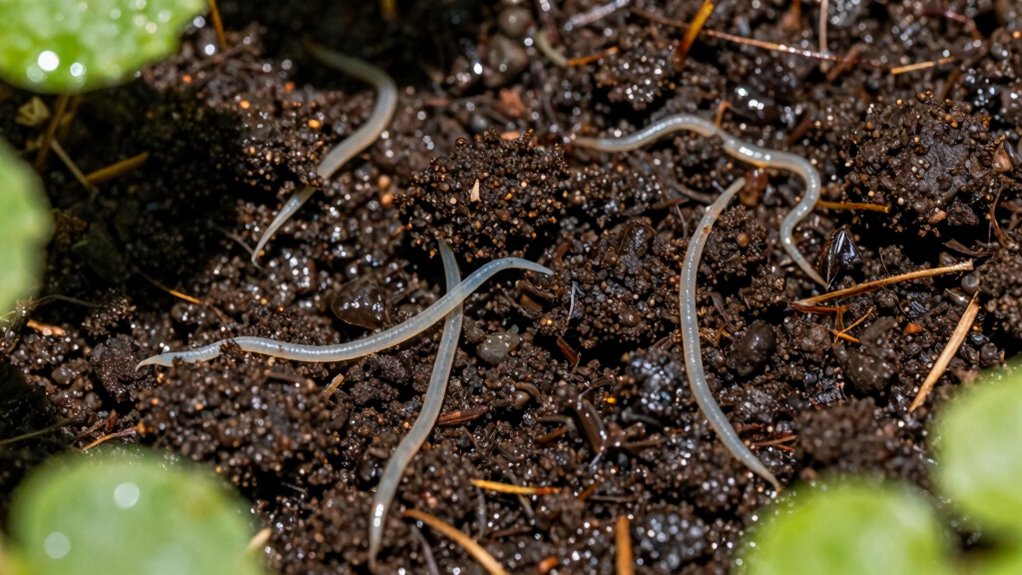
Soil temperature and moisture levels play a crucial role in determining the success of beneficial nematodes. If conditions are ideal, they move freely, infect pests, and reproduce effectively. Imagine:
- Warm soil around 55-80°F, where nematodes thrive.
- Consistent moisture, keeping the soil damp but not waterlogged.
- Well-aerated soil that allows oxygen to reach nematodes, preventing suffocation. Proper soil aeration and structure help maintain optimal conditions for nematode survival and effectiveness.
- A balanced pH of 6.0-7.5, supporting healthy nematode activity.
- Proper soil aeration and structure help maintain optimal conditions for nematode survival and effectiveness. Too dry or too hot, and they struggle to survive. Excess moisture can drown them, while poor soil aeration hampers movement. Maintaining proper soil pH ensures their environment remains suitable, maximizing their pest-control potential. Additionally, soil health practices that improve organic matter can enhance nematode activity and longevity. Implementing soil management techniques can further optimize conditions for nematode success and pest suppression.
What Common Timing Mistakes Reduce Nematode Survival (and How to Avoid Them)?
Proper timing is essential for ensuring beneficial nematodes survive and perform effectively. One common timing pitfall is applying nematodes during extreme weather conditions, like intense heat or heavy rain, which can kill or wash them away. Another application error is releasing nematodes when soil moisture is too low or too high, preventing their movement and survival. Applying too early or too late in the season can also reduce effectiveness, as nematodes may not thrive if conditions aren’t ideal. Additionally, rushing the application without checking soil temperature and moisture levels can lead to poor results. To avoid these application errors, always time your application when conditions are optimal—typically after watering or rainfall, and during moderate weather—ensuring nematodes can establish and do their job effectively. Monitoring AI tools and weather forecasts can help optimize application timing for maximum nematode survival. Recognizing the importance of environmental conditions can significantly improve the success rate of nematode applications. Paying attention to soil temperature and moisture is crucial for maintaining nematode vitality and effectiveness. Being aware of local climate patterns can further enhance application success and prevent application failures.
How Can I Maximize and Extend Nematodes’ Effectiveness Over Time?
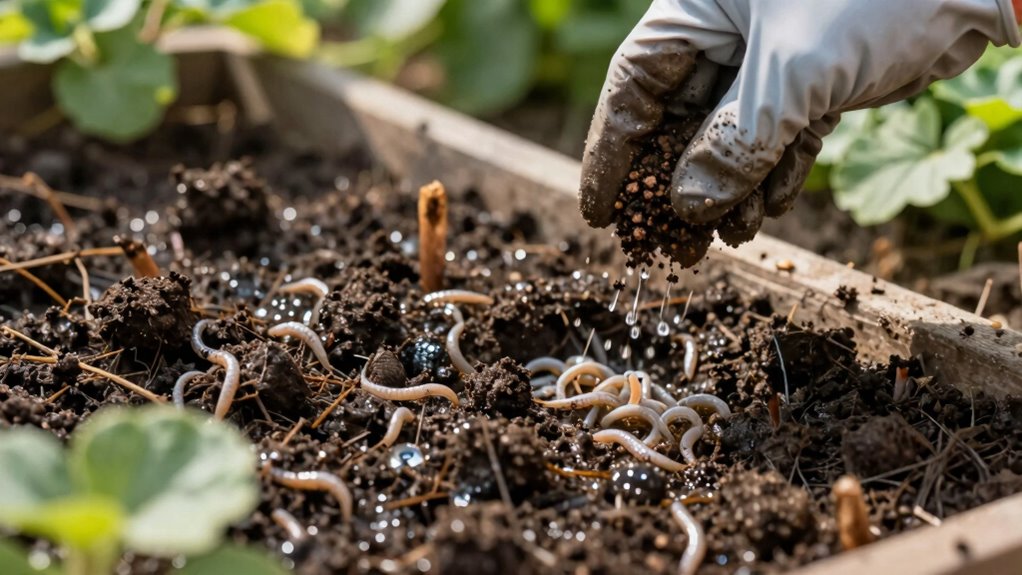
To maximize and extend the effectiveness of beneficial nematodes, focus on maintaining ideal environmental conditions and providing ongoing support. Keep soil moist and avoid extreme temperatures, as these impact beneficial insects’ survival. Be mindful of pesticide interactions; avoid using chemical treatments that harm nematodes. To guarantee longevity, consider:
- Regularly watering your soil to keep moisture levels optimal.
- Applying nematodes during cooler, early morning or late evening hours.
- Using organic options instead of pesticides that can kill beneficial insects.
- Covering soil with mulch to retain moisture and provide a stable environment.
- Conducting simple soil tests to monitor moisture and temperature levels, ensuring optimal conditions for nematode survival. Additionally, understanding beneficial insect lifecycles can help you time applications more effectively for ongoing pest control. Recognizing the importance of environmental conditions can significantly influence nematode effectiveness and longevity. Maintaining proper soil health is also crucial, as healthy soil supports a thriving ecosystem for beneficial nematodes. Incorporating integrated pest management strategies can further enhance their effectiveness and reduce chemical dependency. Following these steps helps nematodes thrive, sustain their pest control effects, and reduce the need for repeated applications. Proper care ensures your beneficial insects remain active and effective over time.
Frequently Asked Questions
Can Beneficial Nematodes Be Used Indoors or in Greenhouses?
Yes, you can use beneficial nematodes indoors or in greenhouses. They’re effective for indoor pest control and provide greenhouse benefits by targeting soil-dwelling pests without chemicals. Apply them when the environment is moist and temperatures are suitable, usually early morning or late evening. This helps keep the nematodes alive and active, ensuring they work effectively to control pests indoors and in greenhouse settings.
How Long Do Beneficial Nematodes Remain Effective After Application?
After you apply beneficial nematodes, they typically remain effective for about 2 to 3 weeks, depending on conditions. The application duration varies with factors like temperature, moisture, and soil type, which influence their lifespan. To maximize effectiveness, you should reapply nematodes as needed, usually every few weeks, to maintain pest control. Proper application timing and environmental conditions help extend their nematode lifespan and overall effectiveness.
Are There Specific Plants That Benefit Most From Nematode Application?
Certain plants, especially those with extensive root zones like vegetables, roses, and fruit trees, benefit most from nematode application. You should target the root zone where soil moisture is conducive, as nematodes thrive in moist conditions. Applying them when the soil is damp ensures they reach the root zone effectively, maximizing their pest control. Regular watering after application helps keep soil moisture levels ideal for nematode survival and activity.
How Do I Store Nematodes Before Application to Keep Them Alive?
To keep nematodes alive before application, store them in a cool, dark place, ideally between 45-50°F. Use storage tips like keeping the nematodes in their original packaging or in a breathable container. Avoid temperature fluctuations and direct sunlight, as heat can kill them. Make sure to utilize them within the recommended timeframe, usually within a few days, to ensure maximum effectiveness when applying.
Can Beneficial Nematodes Be Combined With Chemical Pest Control Methods?
You can combine beneficial nematodes with chemical pest control methods if you carefully consider chemical compatibility and application sequencing. It’s best to apply nematodes first, allowing them time to establish in the soil, then wait until the chemicals break down before applying any pesticides. Always read labels and consult product instructions to guarantee that your chosen chemicals won’t harm the nematodes, maximizing their effectiveness and longevity.
Conclusion
Think of beneficial nematodes as delicate seeds; their success hinges on timing. By applying them under the right weather, soil, and seasonal conditions, you give them the best chance to thrive. Avoid common mistakes, like applying during extreme heat or drought, and you’ll extend their effectiveness. Remember, patience and proper timing are like watering a garden—what you nurture today blossoms tomorrow. With care, your efforts will yield a healthier, pest-free soil.