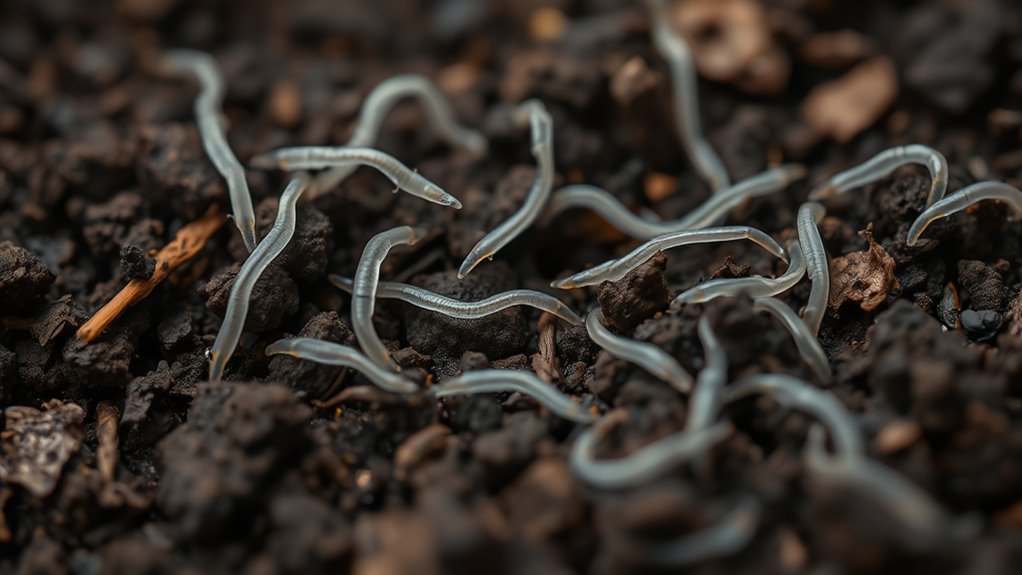

Beneficial nematodes target specific soil pests like grubs, root maggots, and beetle larvae, making them an eco-friendly pest control option. When you apply them properly, they actively seek out these pests in the soil, penetrate their bodies, and kill them within 24-48 hours. To maximize effectiveness, keep the soil moist and avoid hot, sunny conditions. If you want to know more about how these tiny worms can protect your garden naturally, keep exploring the details below.
Key Takeaways
- Beneficial nematodes target soil pests such as grubs, root maggots, and beetle larvae.
- They infect pests by entering their bodies and releasing bacteria that kill within 24-48 hours.
- Nematodes reproduce inside dead pests, producing new infective juveniles to continue pest control.
- Application effectively reduces pest populations naturally, promoting healthier soil ecosystems.
- They are most effective when applied during cool, moist conditions to ensure pest targeting and nematode survival.
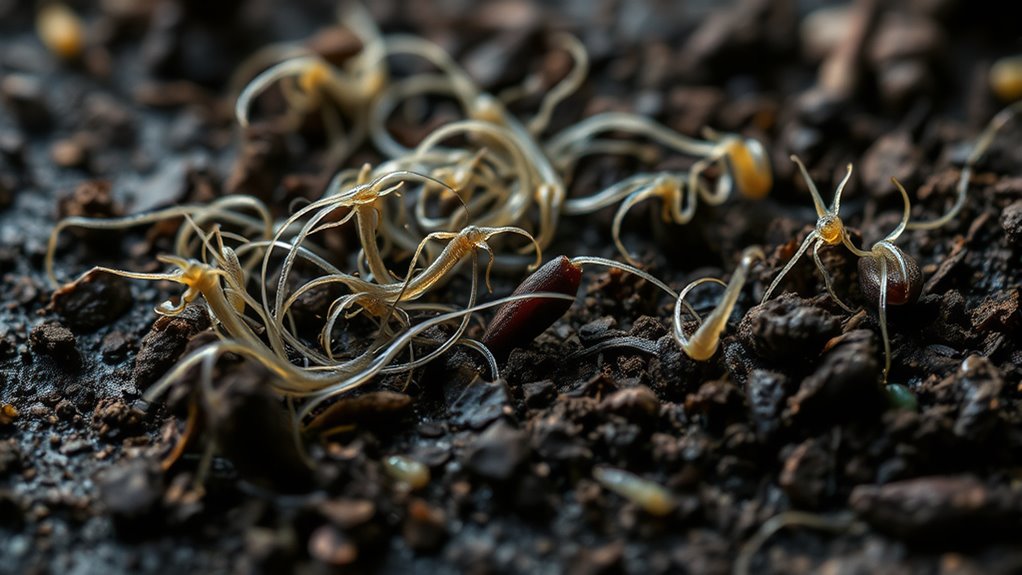
Have you ever heard of beneficial nematodes? These tiny, soil-dwelling organisms are a natural way to control pests without chemicals. Understanding their lifecycle stages can help you use them effectively in your garden or farm. Beneficial nematodes are microscopic worms that target specific soil pests such as grubs, root maggots, and beetle larvae. Their lifecycle begins when mature nematodes are introduced into the soil, often through commercial formulations. Once in the soil, they actively seek out host insects to infect. The infective juvenile stage is their primary form for application, as these are the stages responsible for locating and entering pests. After penetrating the pest’s body, the nematodes release bacteria that kill the host within 24 to 48 hours. The nematodes then reproduce inside the dead pest, producing new infective juveniles that leave the host to continue the cycle. This natural process makes beneficial nematodes a sustainable option for pest management. Understanding their lifecycle can help optimize their use and improve pest control outcomes.
When it comes to application methods, how you introduce these nematodes into your soil can influence their effectiveness. The most common method involves mixing them with water and applying the solution directly to the affected areas using a spray or watering can. It’s best to apply beneficial nematodes during cool, moist conditions—early morning or late evening—to prevent UV damage and guarantee they stay hydrated, increasing their chances of survival and infection. You should also make sure the soil is moist before application, as dry soil can hinder their movement and reduce their ability to find pests. Some gardeners use hoses or backpack sprayers for large areas, while hand-held sprayers work well for smaller plots. It’s essential to apply the nematodes evenly and thoroughly over the target area to maximize pest contact. After application, watering the soil lightly can help to wash the nematodes deeper into the soil and encourage their movement toward pest populations. Keep in mind that beneficial nematodes are sensitive to sunlight and heat, so avoid applying during the hottest part of the day or when the weather forecast predicts rain immediately afterward. Proper timing and method of application can notably boost their effectiveness in pest control.

NaturesGoodGuys Beneficial Nematodes Triple Blend Pack HB+SC+SF – General Biological Pest Control (15 Million)
Beneficial nematodes species: HB + SC + SF
As an affiliate, we earn on qualifying purchases.
As an affiliate, we earn on qualifying purchases.
Frequently Asked Questions
How Long Do Beneficial Nematodes Remain Effective in the Soil?
Beneficial nematodes typically remain effective in the soil for about 2 to 4 weeks, depending on conditions. Their longevity is influenced by soil temperature, moisture, and microbial activity, which affect soil persistence. To maximize their effectiveness, you should reapply nematodes regularly, especially after heavy rain or irrigation. Proper application guarantees ongoing pest control, maintaining a healthy soil environment and protecting your plants from soil-dwelling pests.
Are Beneficial Nematodes Safe for All Garden Plants?
Yes, beneficial nematodes are generally safe for most garden plants. They’re compatible with a wide range of plants, making nematode safety a key advantage. Still, it’s wise to check plant compatibility before application, especially for sensitive species. When used properly, beneficial nematodes won’t harm your plants, and they effectively target soil pests, providing a safe and eco-friendly pest control method for your garden.
Can Beneficial Nematodes Control Multiple Pest Species Simultaneously?
Yes, beneficial nematodes can control multiple pest species at once, thanks to their multi pest targeting ability. Their versatility allows them to seek out and infect various soil-dwelling pests like grubs, root weevils, and beetle larvae. This nematode versatility makes them a powerful, natural solution for integrated pest management. You can confidently use them to target different pests, reducing the need for multiple chemical treatments.
What Are the Environmental Conditions Needed for Nematode Survival?
You need to guarantee the environmental conditions are right for nematode survival. Maintain adequate soil moisture because beneficial nematodes thrive in moist soils; dry conditions can kill them. Keep soil temperatures between 60-85°F (15-29°C), as extremes outside this range reduce their effectiveness. Avoid excessive sunlight or high temperatures, which can dehydrate and damage the nematodes. Properly managing these conditions helps maximize their pest control capabilities.
How Often Should Beneficial Nematodes Be Reapplied for Continuous Pest Control?
You should reapply beneficial nematodes every 2 to 4 weeks to maintain effective pest control. Regular application frequency helps prevent pest resurgence, especially during peak infestation periods or favorable conditions for pests. Keep in mind that environmental factors like soil moisture and temperature influence their effectiveness, so reapply as needed based on pest activity and environmental conditions to guarantee continuous protection for your plants.

BioLogic's Scanmask Steinernema Feltiae (Sf) Beneficial Nematodes for Natural Insect Pest Control, 5 Million Size
NATURAL PEST CONTROL: Kills over 230 different pests. Safe for people, pets, plants and beneficials!
As an affiliate, we earn on qualifying purchases.
As an affiliate, we earn on qualifying purchases.
Conclusion
By choosing beneficial nematodes, you’re revealing nature’s hidden army against soil pests. Think of them as tiny warriors patrolling your garden’s underground kingdom, quietly but powerfully battling pests without chemicals. Embrace these natural allies, and you’ll cultivate a healthier, more resilient soil ecosystem. Just as a well-tuned orchestra creates harmony, harnessing nematodes brings balance to your garden, making pests a thing of the past. Let these tiny heroes turn your soil into a fortress of natural pest control.

Live Beneficial Nematodes Hb+Sc+Sf – Kills Over 200 Different Species of Soil Dwelling and Wood Boring Insects. (5 Million_Nematodes)
Check the "Guide" under images to determine which nematodes you need
As an affiliate, we earn on qualifying purchases.
As an affiliate, we earn on qualifying purchases.
beneficial nematodes application kit
As an affiliate, we earn on qualifying purchases.
As an affiliate, we earn on qualifying purchases.