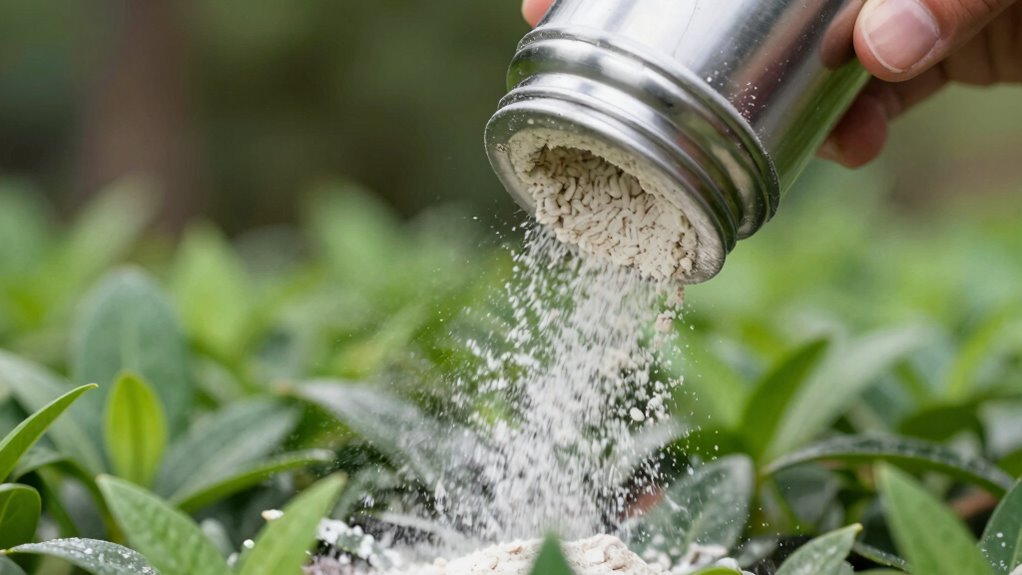

To apply diatomaceous earth without creating a white dust storm, always use controlled, gentle techniques. Work in a well-ventilated space with tools like fine-mesh sieves or dust applicators to prevent airborne particles. Keep containers closed when not in use, wear protective gear, and apply in calm conditions. Following these tips helps keep your workspace clean and dust-free, and you’ll discover more expert methods to achieve a neat, mess-free application.
Key Takeaways
- Use fine-mesh sieves and dust applicators to control particle flow during application.
- Apply DE in calm weather and small sections for even, dust-free coverage.
- Wear protective gear and work in a well-ventilated, organized space to minimize airborne dust.
- Keep containers closed and clean tools immediately to prevent spills and dust buildup.
- Store DE in airtight containers and seal off work areas to maintain long-term cleanliness.

Relime Diatomaceous Earth Powder Duster Adjustable Upto 4 FT, Powder Output Adjustable Pump Applicator, Duster, Dispenser, Sprayer, Dust Application for Diatomaceous Earth
【Pump-Powered Ease】Effortlessly Apply Diatomaceous Earth Powder. No more hand cramps! Our air-pump system replaces manual squeezing of bulb…
As an affiliate, we earn on qualifying purchases.
As an affiliate, we earn on qualifying purchases.
Why Dust Clouds and Waste Happen When Applying Diatomaceous Earth

Applying diatomaceous earth often results in dust clouds and waste because the powder is very fine and lightweight. This makes dust control a challenge during application, as the particles easily become airborne. Without proper techniques, you risk creating a cloud of dust that can settle on unintended surfaces or be inhaled. To guarantee application safety, it’s vital to work carefully and avoid excessive agitation of the powder. Using controlled movements and slow, steady motions minimizes dust dispersion. Proper application tools, like dust spreaders or sifters, help distribute the powder evenly while reducing waste. Being mindful of wind or drafts also supports dust control, preventing unnecessary spread. Additionally, understanding how the powder behaves and interacts with the environment enhances application precision, helping you apply diatomaceous earth efficiently and safely. Recognizing the particle size and weight of the powder allows you to choose the best techniques for minimizing dust during application. Awareness of dust control techniques can significantly improve your results and reduce cleanup time. Incorporating the right application tools and techniques can make a substantial difference in managing dust and waste effectively, especially when considering the airborne nature of the particles.

Sieve Fine Mesh, Stainless Steel Round Sifter for Baking, Flour Sieve, 8 Inch 40 Mesh and 6 Inch 60 Mesh, 2PCS
2 fine mesh sieve of different specs: diameter 6"/60 mesh 1pcs, diameter 8"/40 mesh 1pcs. Different fineness for…
As an affiliate, we earn on qualifying purchases.
As an affiliate, we earn on qualifying purchases.
How to Prepare Your Workspace and Tools for a Dust-Free Application

To minimize dust during diatomaceous earth application, start by thoroughly preparing your workspace and tools. A clean, organized area helps reduce airborne particles and makes cleanup easier. Set up in a well-ventilated space to prevent dust buildup. Wear appropriate protective gear, including a mask, goggles, and gloves, to avoid inhaling dust. Prepare your tools—scoops, shakers, and containers—to ensure they’re free of debris and ready for controlled application. Keep a damp cloth nearby to wipe surfaces immediately after use. Additionally, consider using a drop cloth or plastic sheeting to cover nearby furniture and flooring. This setup not only keeps dust contained but also makes your application cleaner and safer. Proper workspace setup is essential for a dust-free, professional application. Ventilation considerations play a crucial role in maintaining air quality during the process. Ensuring proper dust containment measures further minimizes the risk of airborne particles escaping into your environment. Incorporating air purification strategies can also enhance safety by capturing residual dust particles during and after the application process. Utilizing proper ventilation can significantly improve air circulation and reduce the accumulation of airborne dust particles, creating a safer working environment. Additionally, using tools with controlled dispersal mechanisms can help achieve a more precise and dust-free application.

ZipWall PY50 Dust Barrier Plastic Sheeting, White 10ft x 50ft, 3 mil
Dust Barrier: This plastic sheeting is the perfect size and thickness for setting up a temporary dust protection…
As an affiliate, we earn on qualifying purchases.
As an affiliate, we earn on qualifying purchases.
Best Techniques to Apply Diatomaceous Earth Without Creating Mess
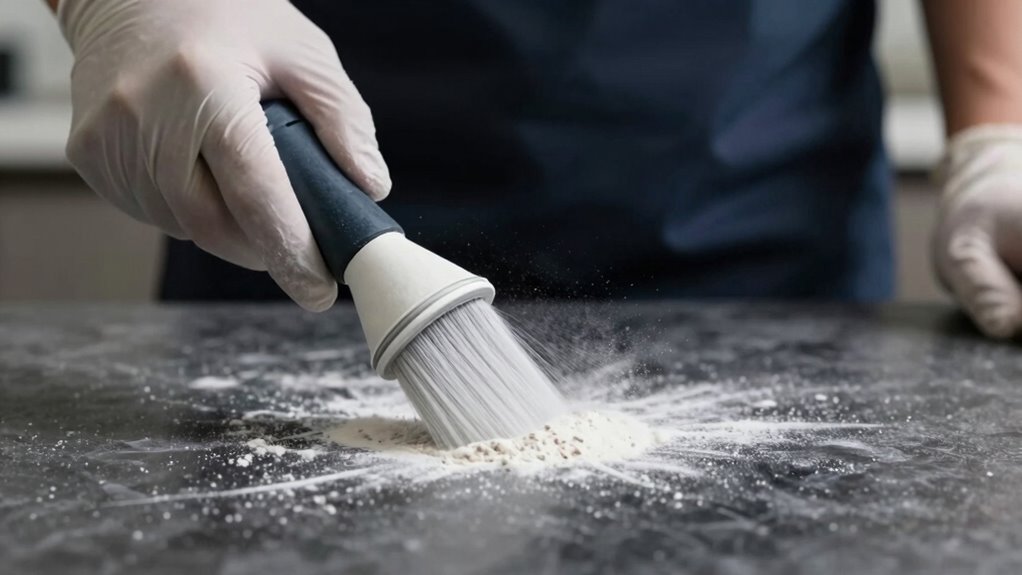
Using proper techniques is key to applying diatomaceous earth cleanly and effectively. To minimize mess and guarantee dust containment, use a dust applicator or sift the powder slowly through a fine-mesh sieve. Wear a mask and goggles to protect yourself from airborne particles. Work in small sections, applying a thin, even layer to prevent excess dust. Keep containers closed when not in use to avoid spillage. Additionally, consider local automation options to set up reminders for reapplication or cleaning schedules, making maintenance more efficient. Being mindful of dust control practices can significantly reduce airborne particles and improve safety. Proper storage of diatomaceous earth in sealed containers also aids in maintaining cleanliness and reducing dust dispersion. Regularly inspecting your application area can help identify potential dust leaks early, further enhancing safety measures. Implementing these techniques can also help you understand the importance of airborne particle management in maintaining a clean environment. Here’s a quick guide:
| Technique | Purpose |
|---|---|
| Use a dust applicator | Precise, minimal dust spread |
| Sift slowly | Prevents clumping and dust |
| Work in small sections | Maintains control |
| Wear protective gear | Ensures safety |
| Keep containers closed | Avoids spills and dust |
These application techniques help you maintain dust containment and apply diatomaceous earth efficiently.

2026 Upgraded Ultrasonic Pest Repeller Indoor Insect Repeller Pestlab, Pest Control Roach, Mouse, Bugs, Mosquito, Mice, Spider, Ant, Rodent Repellent Ultrasonic Plug in, Pet-Friendly, 6 Pack
Core Ultrasonic Technology – Our ultrasonic pest repeller adopts a 25-65kHz wide-spectrum design without gear switching (compatible with…
As an affiliate, we earn on qualifying purchases.
As an affiliate, we earn on qualifying purchases.
Common Problems During Application and How to Fix Them
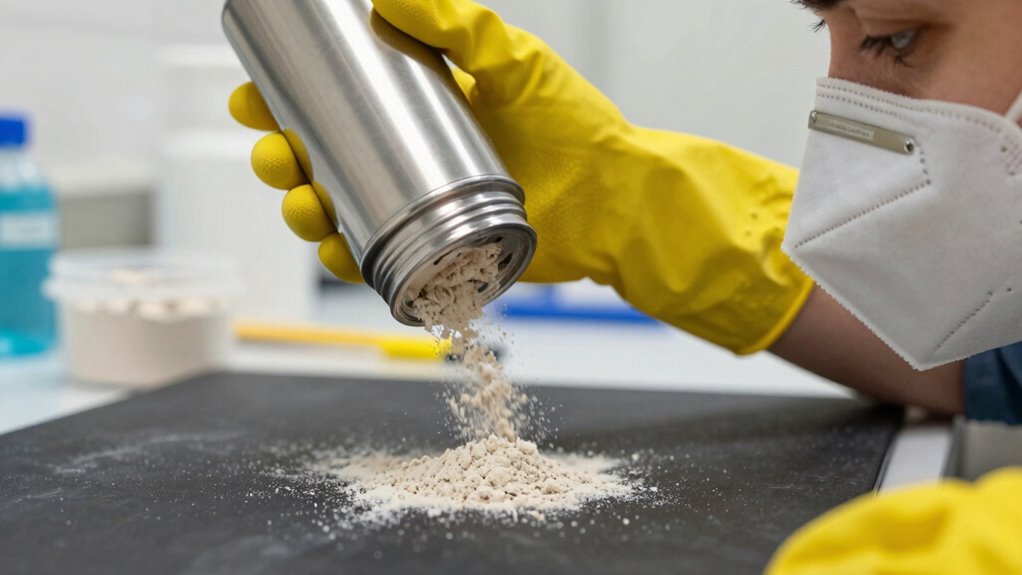
Despite careful preparation, you might encounter common issues during diatomaceous earth application that can hinder its effectiveness. These problems often relate to application safety and cleanup strategies. Dust clouds can spread, reducing coverage and risking inhalation. To fix this, always wear a mask and apply in dry, calm conditions. If the powder clumps or settles unevenly, gently re-sift or redistribute it. Spills can create messes and waste product, so clean promptly with a damp cloth or vacuum. Proper application techniques and effective cleanup strategies are essential for maximizing effectiveness and safety during use. Additionally, controlling application conditions, like wind and humidity, can significantly improve results. Good ventilation can prevent dust buildup and improve air quality during application. Using appropriate tools such as dust spreaders can help distribute diatomaceous earth more evenly and efficiently. Keep these tips in mind to ensure safe, efficient, and mess-free diatomaceous earth application every time.
Easy Tips to Keep Your Diatomaceous Earth Application Neat and Dust-Free Over Time
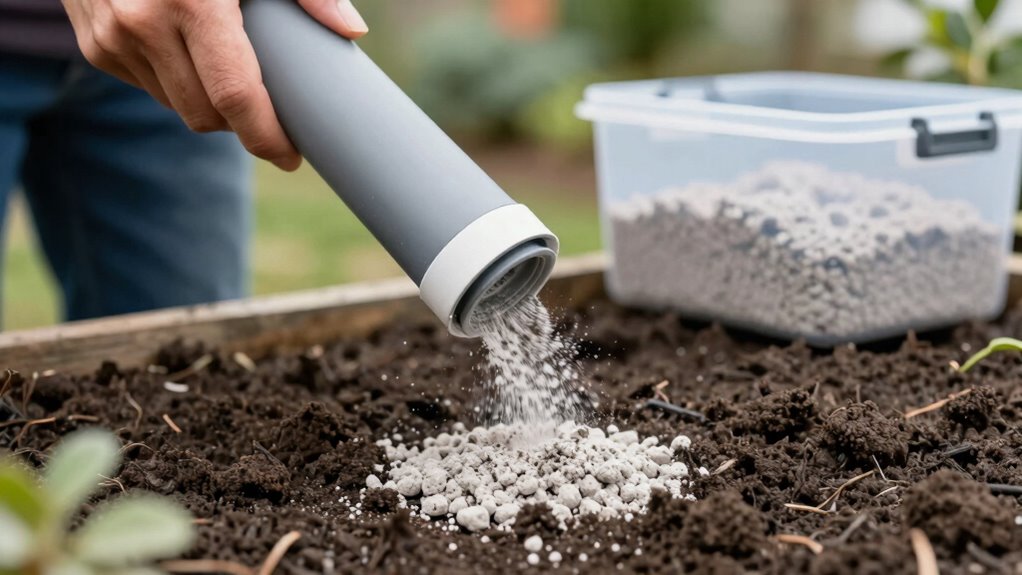
Keeping your diatomaceous earth application neat and dust-free over time requires a few simple habits. First, store unused DE in airtight containers to prevent spills and minimize dust. Always follow safety precautions by wearing a mask and gloves during handling, reducing inhalation risks. To keep your application tidy, apply DE in calm weather, avoiding windy days that can cause dust clouds. When finished, carefully seal the container and clean your tools promptly. Here’s a quick guide:
| Storage Tips | Safety Precautions | Application Tips |
|---|---|---|
| Use airtight containers | Wear a mask and gloves | Apply in calm weather |
| Keep away from moisture | Ventilate the area | Use a dust mask when spreading |
| Label containers clearly | Wash hands thoroughly | Sweep excess dust gently |
| Store in a cool, dry place | Avoid inhaling dust | Keep application area tidy |
Frequently Asked Questions
Can I Use Diatomaceous Earth Indoors Safely?
Yes, you can use diatomaceous earth indoors safely if you follow proper dust mitigation techniques. Guarantee good indoor safety by applying it in well-ventilated areas and wearing a mask to avoid inhaling dust. Use a fine applicator to minimize airborne particles, and clean up thoroughly afterward. This way, you reduce dust hazards while effectively controlling pests, making indoor use safer for you and your pets.
What Type of Protective Gear Is Recommended?
Think of your protective gear as your suit of armor. You should wear protective gloves to prevent skin irritation and a respirator mask to avoid inhaling fine particles. These precautions keep you safe, like a shield in battle. Always opt for a tight-fitting mask and sturdy gloves, especially indoors. This way, you can handle diatomaceous earth confidently, knowing you’re protected from dust and potential respiratory issues.
How Long Does It Take for Diatomaceous Earth to Work?
Diatomaceous earth typically starts working within 24 to 48 hours after application, but it can take up to a week to see full effects. For the best effectiveness timeline, apply it during dry conditions and reapply after rain or heavy dew. The key is consistent application and giving it time to work, as it gradually damages pests’ exoskeletons, leading to their eventual elimination.
Is There a Way to Reduce Dust During Application?
Dust disturbance during diatomaceous earth application can be diminished by diligent dust reduction methods. You should wear a mask, apply the powder slowly, and use a fine-mist spray to moisten the surface first. These application techniques help contain the dust, making the process safer and cleaner. By taking these precautions, you’ll prevent a white dust storm, ensuring a smooth, safe, and effective application every time.
How Often Should I Reapply Diatomaceous Earth?
You should reapply diatomaceous earth every 10 to 14 days for pest prevention, especially after rain or heavy dew. Regular application keeps pests at bay and sustains its effectiveness. Monitor the treated areas, and reapply promptly if you notice pest activity or the powder has been washed away. Consistent application ensures ongoing pest control, making it a reliable part of your pest prevention routine.
Conclusion
With these tips, you’ll master the art of applying diatomaceous earth gracefully, like a painter with a steady hand, avoiding messy white storms. Imagine your workspace as a pristine canvas, where every sprinkle lands softly, transforming chaos into calm. Stay patient and precise, and soon you’ll enjoy a dust-free triumph that feels just as satisfying as a clear blue sky after a storm. Your careful touch turns a messy task into a smooth, satisfying success.