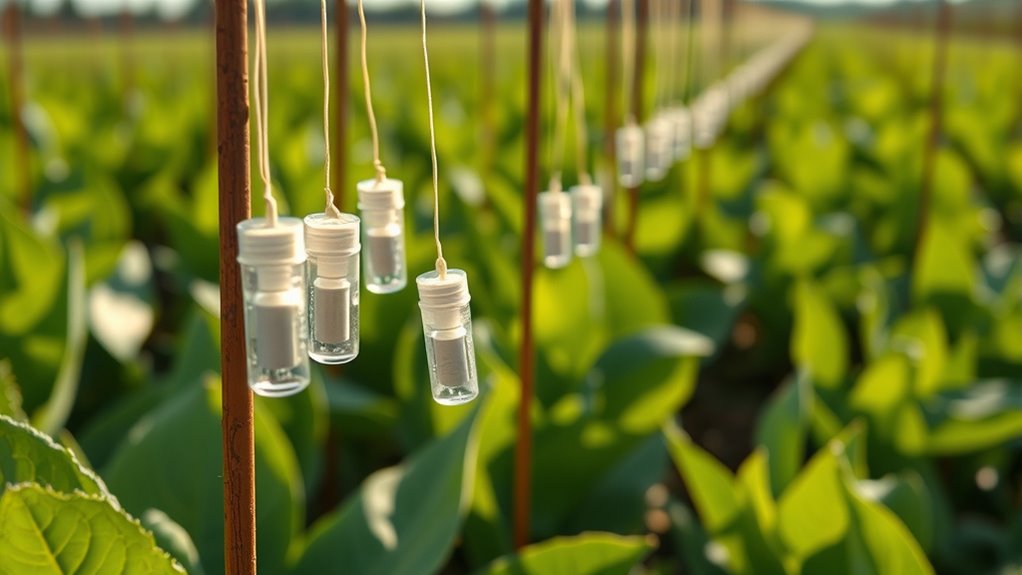

Pheromone traps and mating disruption are key tools in integrated pest management, helping you control pests while reducing chemical use. Pheromone traps attract specific insects with synthetic sex signals, catching them and monitoring populations. Mating disruption floods the area with pheromones, confusing males and preventing successful mating. These methods target pests precisely, protect beneficial insects, and support sustainable practices. To learn how to implement these techniques effectively, keep exploring the essentials of pheromone-based pest control.
Key Takeaways
- Pheromone traps attract specific pests using synthetic sex pheromones to monitor or reduce populations.
- Mating disruption confuses male pests with dispersed pheromones, preventing them from finding females.
- Both methods are targeted, eco-friendly alternatives to chemical pesticides, minimizing harm to beneficial insects.
- Proper timing and application are essential for maximizing effectiveness in pest management.
- These techniques support sustainable agriculture by reducing chemical use and promoting ecosystem health.

Pheromone traps and mating disruption are essential tools in integrated pest management, helping you control pest populations more effectively. These methods are part of modern pest management strategies that aim to reduce reliance on chemical pesticides, which often have considerable environmental impacts. By using pheromones to interfere with pest mating behaviors, you can target specific pests without harming beneficial insects or contaminating the environment. This approach aligns with sustainable pest control practices, making it easier to protect your crops while minimizing ecological risks.
Using pheromones in pest management reduces chemical dependence while protecting beneficial insects and the environment.
Pheromone traps work by attracting pests with synthetic sex pheromones that mimic those produced by female insects. When pests enter these traps, they become caught, preventing them from mating and laying eggs. This method is highly selective, targeting specific pest species without affecting non-target organisms, which is an indispensable consideration in environmentally conscious pest management. The traps also serve as effective monitoring tools, helping you track pest populations and determine the best timing for interventions. By regularly checking traps, you can make informed decisions, reducing unnecessary pesticide applications and lowering environmental impacts. Additionally, understanding local regulations concerning pheromone use can ensure compliance and maximize the effectiveness of your pest control measures.
Mating disruption involves dispersing pheromones in larger areas to confuse male pests and prevent them from locating females. When males can’t find mates, pest populations decline over time. This technique is particularly useful in large-scale agricultural settings or orchards, where traditional control methods may be less practical or environmentally sustainable. Mating disruption reduces the need for broad-spectrum pesticides, which often affect beneficial insects, pollinators, and other wildlife. As a result, it supports a more balanced ecosystem and helps maintain biodiversity within your farming environment. Proper application techniques and timing are essential to maximize the benefits of mating disruption programs.
Implementing pheromone-based strategies requires understanding pest biology and behavior, but the benefits are clear. They offer a targeted, environmentally friendly alternative to conventional pesticides, considerably reducing potential environmental impacts. Additionally, these methods often lead to long-term pest suppression, decreasing the frequency and amount of chemical treatments needed. This not only benefits the environment but can also improve crop quality and yield by avoiding chemical residues. Incorporating integrated pest management practices that include pheromone traps and mating disruption can lead to more sustainable and cost-effective pest control solutions.
Pheromone traps for pest management
As an affiliate, we earn on qualifying purchases.
As an affiliate, we earn on qualifying purchases.
Frequently Asked Questions
How Long Do Pheromone Traps Typically Last Before Replacement?
Pheromone traps typically last about 4 to 6 weeks before you should replace them. Regular trap maintenance is essential to guarantee pheromone longevity and effective pest monitoring. As the scent fades, their ability to attract insects diminishes, so keep an eye on trap performance. Replacing traps on this schedule helps maintain accurate monitoring and control, especially during peak pest activity. Always follow manufacturer recommendations for ideal results.
Can Pheromone Traps Attract Non-Target Insects?
Yes, pheromone traps can attract non-target insects if they aren’t highly specific. Trap specificity depends on the pheromone blend used; if it’s broad or not targeted, you might see non-target attraction. To minimize this, choose traps with specific pheromone formulations designed for your pest species. Regularly monitor traps to identify and reduce any unintended catches, ensuring the trap effectively targets only the pest you’re aiming to control.
Are Pheromone Traps Effective Year-Round or Only Seasonally?
Pheromone traps primarily target pest activity periods, so their seasonal effectiveness varies. You’ll find they work wonders during peak pest activity, which often aligns with specific seasons. Outside those periods, traps may lose their lure, making them less effective. To maximize results, you should monitor pest activity patterns closely and adjust your trap placement accordingly, ensuring you’re catching pests when they’re most active and vulnerable.
What Factors Influence the Success of Mating Disruption?
The success of mating disruption depends on several factors. You need to monitor the pest population closely, as higher populations may require more strategic intervention. Proper trap placement is vital; placing pheromone dispensers in areas with high pest activity enhances effectiveness. Additionally, consistent application throughout the season and understanding pest behavior help guarantee disruption works effectively, reducing pest numbers and limiting damage.
Are There Environmentally Safe Alternatives to Pheromone Trapping?
Imagine a garden where nature’s balance is your shield. Eco-friendly options like biological controls serve as gentle guardians, naturally reducing pest populations without harming the environment. You can introduce beneficial insects such as ladybugs or use microbial agents like Bacillus thuringiensis, which target pests specifically. These environmentally safe alternatives work harmoniously with nature, offering effective pest management without the risks associated with pheromone trapping.
Insect mating disruption pheromone devices
As an affiliate, we earn on qualifying purchases.
As an affiliate, we earn on qualifying purchases.
Conclusion
By mastering the methods of pheromone traps and mating disruption, you can effectively eliminate pests and enhance your harvest. Remember, strategic sensing and subtle suppression work seamlessly to safeguard your space. With patience and practice, you’ll see pests fall, and prosperity flourish. So, stay sharp, stay savvy, and smoothly suppress pest problems with simple, science-backed solutions. Your careful control creates a clean, crop-rich, and carefree countryside you can confidently cultivate.
Synthetic sex pheromone traps for insects
As an affiliate, we earn on qualifying purchases.
As an affiliate, we earn on qualifying purchases.
Eco-friendly pest control pheromone products
As an affiliate, we earn on qualifying purchases.
As an affiliate, we earn on qualifying purchases.