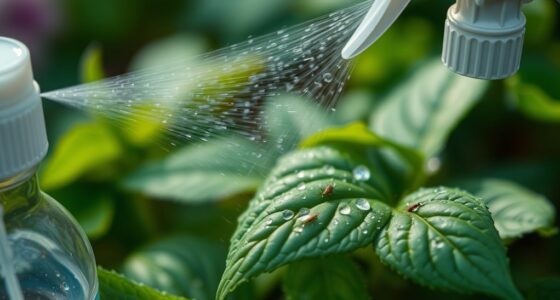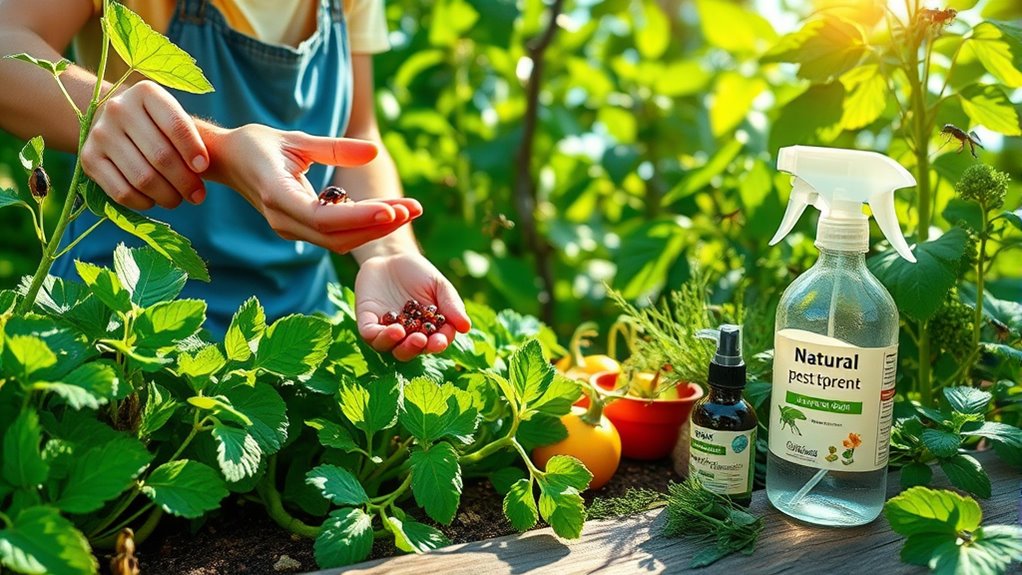

To control pests organically, focus on attracting beneficial insects like ladybugs and lacewings, using natural repellents such as neem oil and garlic sprays, and practicing companion planting with marigolds and basil. Keep your garden healthy with proper watering, mulching, and early pest detection. Manual removal also helps. Combining these methods creates a strong, eco-friendly defense that reduces chemicals. Stay tuned to discover more effective organic strategies that truly work for your garden.

Get garden gear delivered free with Prime
- Fast, free delivery on millions of items
- Prime Video, Amazon Music and more included
- Member-only deals all year
Key Takeaways
- Attract beneficial insects like ladybugs and lacewings to naturally reduce pest populations.
- Use natural repellents such as neem oil, garlic, and hot pepper sprays to deter pests effectively.
- Implement companion planting with marigolds, basil, and other plants that repel or confuse pests.
- Maintain garden health through proper watering, mulching, and regular inspections to prevent pest outbreaks.
- Combine biological controls, repellents, and healthy plant care for an integrated, eco-friendly pest management approach.

If you want to protect your garden without relying on harsh chemicals, organic pest control methods offer safe and effective solutions. One of the most natural and environmentally friendly strategies involves encouraging beneficial insects. These insects, like ladybugs, lacewings, and predatory beetles, prey on common pests such as aphids, mites, and caterpillars. By attracting these helpful creatures to your garden, you create a natural balance that reduces pest populations without the need for synthetic pesticides. You can invite beneficial insects by planting a variety of flowering plants, such as marigolds, dill, and yarrow, which provide nectar and pollen that these insects rely on. Avoiding broad-spectrum chemicals is vital, as they can kill beneficial insects along with pests, disrupting your garden’s natural ecosystem.
Natural repellents also play an important role in organic pest control. These repellents are substances derived from plants or natural sources that deter pests from settling on your plants. For example, sprays made from garlic, neem oil, or hot pepper can be applied directly to foliage to discourage insects from feeding. These repellents are safe for your plants, pets, and the environment, and they tend to break down quickly, reducing the risk of buildup. Consistent application during peak pest activity can greatly decrease infestations. Additionally, companion planting—growing certain plants together—can serve as a natural repellent strategy. Marigolds, for instance, repel nematodes and beetles, while basil deters flies and mosquitoes. Using natural repellents and companion planting together creates a layered defense that keeps pests at bay without chemicals.
Another key aspect of organic pest control is maintaining a healthy garden environment. Healthy plants are more resistant to pests, so providing adequate water, nutrients, and proper spacing helps reduce vulnerability. Mulching can also suppress weeds and create a barrier that pests find difficult to penetrate. Regular inspection of your plants allows you to catch infestations early, making control easier before pests become overwhelming. When you do notice pests, manually removing them or using targeted natural remedies can prevent the problem from spreading. The goal is to create a balanced ecosystem where pests are naturally kept in check by beneficial insects and repellents, making chemical interventions unnecessary. By integrating these organic methods, you can enjoy a thriving, pest-free garden that’s safe for both your plants and the environment.
organic pest control spray neem oil
As an affiliate, we earn on qualifying purchases.
As an affiliate, we earn on qualifying purchases.
Frequently Asked Questions
Are Organic Pest Control Methods Safe for Pets and Children?
You’re wondering if organic pest control methods are safe for pets and children. Generally, they’re safer than chemical options because they avoid harmful toxins. Organic methods focus on pet safety and environmental health, making them a smarter choice for households with kids. When comparing chemicals, organic solutions like neem oil or diatomaceous earth pose less risk, providing effective pest control without compromising your family’s safety.
How Long Does It Take to See Results From Organic Pest Control?
You might wonder how long it takes to see results from organic pest control. Timing expectations vary depending on the pest and method used, but generally, you can expect to notice improvements within a few days to a few weeks. Success rates tend to be high when you follow proper application practices and maintain consistent treatment. Patience is key—organic methods often work more gradually but are safer for your environment.
Can Organic Methods Eliminate All Types of Pests Effectively?
You can effectively eliminate many pests with organic methods, but they might not work on all types. Organic solutions reduce chemical residues and lower pest resistance risks compared to chemicals, making them safer and more sustainable. However, some stubborn pests may require integrated approaches or chemical treatments. Stay consistent with organic practices, monitor pests regularly, and adapt your methods to guarantee you’re giving your garden or home the best chance for control.
Are Organic Pesticides More Expensive Than Chemical Options?
You might think organic pesticides are too pricey, but when you do a cost comparison, you’ll find they’re often comparable to chemical options, especially over time. Organic methods can fit your budget considerations, as they tend to be more sustainable and less harmful. Plus, avoiding chemical exposure saves health costs. So, don’t let cost worries hold you back—organic pesticides can be an affordable, effective choice for pest control.
How Often Should I Apply Organic Pest Control Treatments?
You should consider application frequency based on your pest’s lifecycle and the severity of the infestation. Typically, reapply organic pest control treatments every 7 to 14 days, especially during active pest periods. Monitor your plants closely, as overlapping treatments can be necessary if pests persist or multiply. Adjust your schedule accordingly, ensuring you stay ahead of pests without over-application, which helps maintain effective control and supports your organic approach.
beneficial insects ladybugs and lacewings
As an affiliate, we earn on qualifying purchases.
As an affiliate, we earn on qualifying purchases.
Conclusion
By trying these organic pest control methods, you’re arming yourself with a gentle yet powerful shield against pests. Think of your garden as a delicate symphony—each method is a note that keeps everything in harmony. When you choose natural solutions, you’re nurturing a thriving ecosystem, not just fighting pests. So, embrace these methods and watch your garden bloom into a vibrant masterpiece, where balance and beauty flourish hand in hand.
companion planting marigolds basil
As an affiliate, we earn on qualifying purchases.
As an affiliate, we earn on qualifying purchases.
natural pest repellent garlic hot pepper spray
As an affiliate, we earn on qualifying purchases.
As an affiliate, we earn on qualifying purchases.
Fall Picks
fall essentials
As an affiliate, we earn on qualifying purchases.