To effectively control pests organically, you can encourage beneficial insects like ladybugs and lacewings, use natural repellents such as neem oil, garlic spray, and chili solutions, and practice regular plant inspection for early intervention. Mulching helps block crawling pests and improves soil health, while avoiding broad-spectrum pesticides preserves helpful insects. Combining these methods creates a strong, eco-friendly pest defense. Stay with us to discover more proven strategies for keeping your garden pest-free naturally.
Key Takeaways
- Use beneficial insects like ladybugs and lacewings to naturally reduce pest populations without harming plants or the environment.
- Apply natural repellents such as neem oil, garlic spray, or chili pepper solutions to deter pests effectively.
- Incorporate mulching and plant diversity to create barriers and promote healthy ecosystems that resist pests.
- Regularly inspect plants and intervene early with organic methods to prevent pest establishment and damage.
- Avoid broad-spectrum organic pesticides, focusing instead on targeted, environmentally friendly pest control strategies.

When pests threaten your garden or home, switching to organic control methods offers a safe and environmentally friendly solution. Instead of relying on harsh chemicals, you can harness the power of beneficial insects and natural repellents to keep unwanted visitors at bay. Beneficial insects, like ladybugs, lacewings, and parasitic wasps, are nature’s pest control agents. They target specific pests without harming your plants, pets, or the environment. Releasing or encouraging these insects in your garden can markedly reduce populations of aphids, caterpillars, and other common pests. To attract beneficial insects, plant a variety of flowering plants, herbs, and native species that provide nectar and pollen. This natural food source keeps beneficial insects thriving and actively controlling pests.
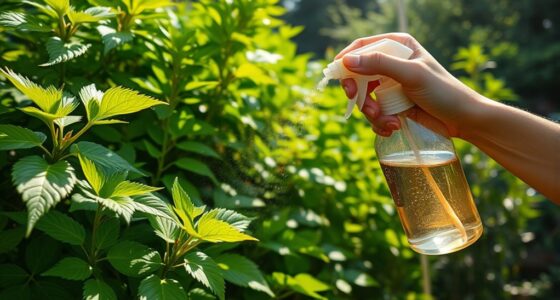
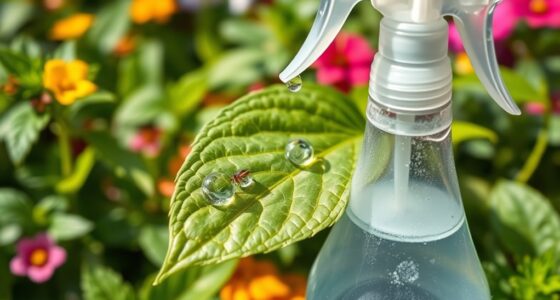
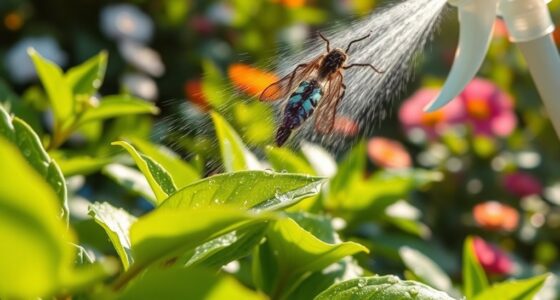
Natural repellents are another effective organic method. These include substances derived from plants, such as neem oil, garlic spray, and chili pepper solutions. They work by disrupting pests’ feeding or breeding habits, encouraging them to move elsewhere. For example, neem oil acts as a natural insect growth regulator, preventing pests from maturing or reproducing. When applied properly, it’s safe for beneficial insects and won’t harm your plants. Garlic spray, on the other hand, emits a strong odor that pests dislike, deterring them from settling on your plants. Combining these natural repellents with beneficial insects creates a layered defense, making it difficult for pests to establish themselves.
You’ll find that organic pest control requires consistent effort and observation. Regularly inspect your plants for signs of pests and act early, using natural repellents or releasing beneficial insects as needed. Mulching can also help by creating a barrier that discourages crawling pests and maintaining soil health. Avoid broad-spectrum organic pesticides, which can kill beneficial insects along with pests, undermining your integrated pest management strategy.
Frequently Asked Questions
Are Organic Pest Control Methods Safe for Pets and Children?
You’re wondering if organic pest control methods are safe for pets and children. Generally, these methods prioritize pet safety and children protection, using natural ingredients like neem oil, diatomaceous earth, or essential oils. Unlike chemical pesticides, organic options tend to be less toxic and safer when used properly. However, always read labels, follow instructions, and store products securely to guarantee your pets and kids stay safe while managing pests organically.
How Long Does It Take to See Results With Organic Pest Control?
Did you know 80% of organic pest control users notice improvements within two weeks? The waiting period for results varies, depending on the pest and method used. Usually, you’ll see the effectiveness timeline start within a few days, but complete elimination can take up to a month. Patience is key; consistent application boosts your chances of successful pest control without harmful chemicals.
Can Organic Methods Eliminate All Types of Pests Effectively?
You wonder if organic methods can eliminate all pests effectively. While organic solutions often work well, they might not fully prevent issues like chemical resistance or pest resurgence. Organic methods can reduce pest populations, but some stubborn pests may need integrated approaches. Consistent application and monitoring are key. Though they’re eco-friendly, understanding their limits helps you decide if they’re right for your specific pest problem.
Do Organic Pest Controls Require Repeated Applications?
You’ll find that organic pest controls often require repeated applications due to their application frequency. This helps manage pests effectively and prevents pest resistance. Unlike chemical pesticides, organic methods may need more frequent treatments to stay effective, especially during active pest seasons. Consistent application guarantees you maintain control and reduce the chances of pests developing resistance, keeping your garden or home healthier without relying on harsh chemicals.
Are Organic Pest Control Products More Cost-Effective Than Chemical Options?
You might wonder if organic pest control products are more cost-effective than chemical options. Generally, the cost comparison varies; organic products often have higher upfront costs but can save you money long-term due to better product longevity and less frequent applications. Plus, their eco-friendly nature reduces environmental impact. So, while initial expenses may be higher, the overall value and sustainability make organic methods a smart choice for many.
Conclusion
By embracing these organic pest control methods, you become the gardener tending a thriving, balanced ecosystem. Imagine your garden as a peaceful haven, where healthy plants stand tall like guardians, and natural predators roam freely like silent protectors. With patience and care, you nurture a resilient landscape that resists pests naturally. Ultimately, your effort transforms your garden into a vibrant sanctuary—where harmony blooms, and pests are kept at bay by nature’s gentle, unwavering hand.