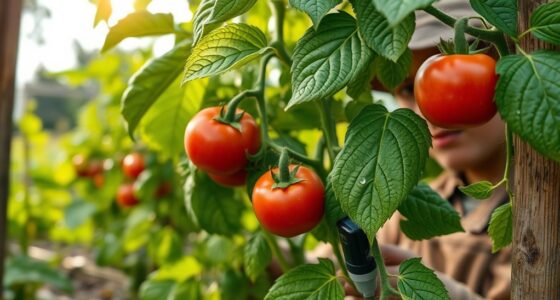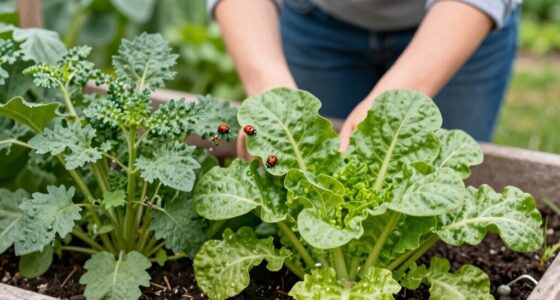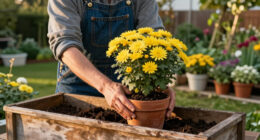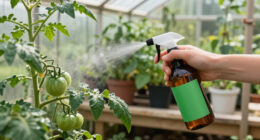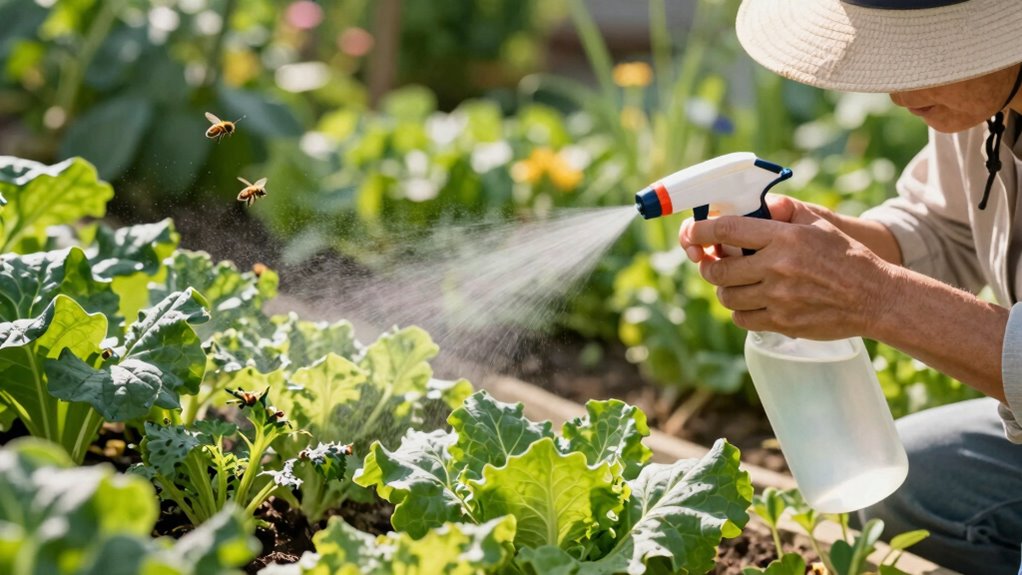

To avoid harming pollinators during organic pest control, choose targeted methods like neem oil, insecticidal soaps, or diatomaceous earth, which minimize impact on beneficial insects. Apply treatments during early morning or late evening when pollinators are less active. Use physical barriers like row covers or traps and focus on habitat preservation by planting native, flowering plants that support pollinator health. Following these practices helps protect pollinators while keeping pests in check—learn more ways to balance pest control with pollinator safety as you continue.

Get garden gear delivered free with Prime
- Fast, free delivery on millions of items
- Prime Video, Amazon Music and more included
- Member-only deals all year
Key Takeaways
- Apply organic pest controls like neem oil or insecticidal soaps during early morning or late evening when pollinators are less active.
- Use physical barriers such as row covers or traps to prevent pest access without chemical sprays.
- Target pests precisely with spot treatments to avoid unnecessary exposure to beneficial insects.
- Maintain and nurture native flowering plants to support pollinator health and habitat.
- Follow label instructions carefully to ensure safe, effective, and pollinator-friendly application.
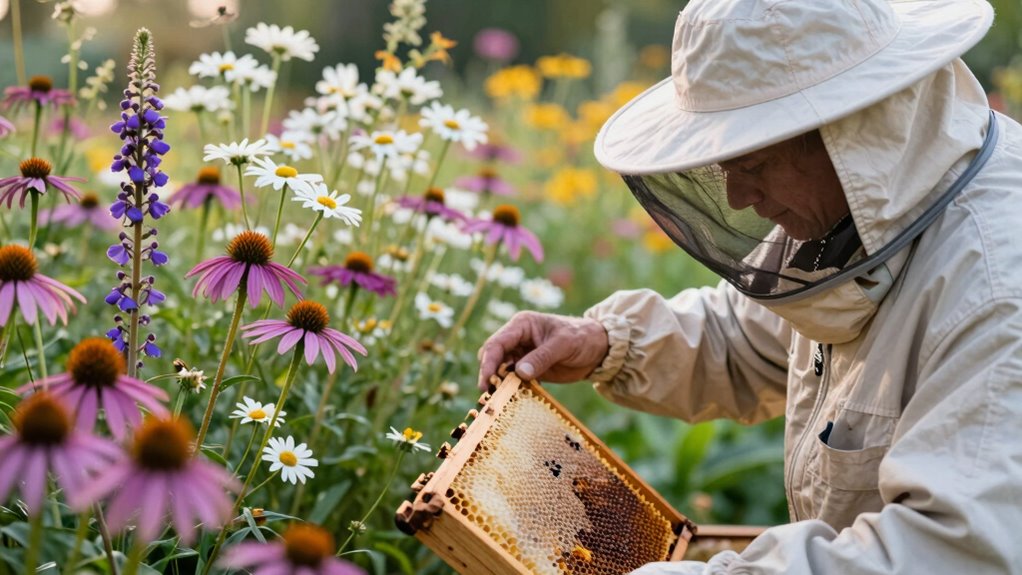
Pollinators like bees, butterflies, and other insects play an essential role in maintaining healthy ecosystems and ensuring food production. When you’re managing pests organically, it’s important to prioritize methods that protect these critical creatures. One effective way is to explore pesticide alternatives that are less harmful to pollinators. Instead of chemical sprays, consider using natural options such as neem oil, insecticidal soaps, or diatomaceous earth, which target pests but are gentle on beneficial insects. Always apply these during times when pollinators are less active, like early morning or late evening, to minimize accidental contact. Additionally, you can encourage pest control through physical barriers like row covers or traps, which keep pests away without risking pollinator health.
Protect pollinators with natural pest control methods and apply them during times of low insect activity.
Habitat preservation is another key strategy you should adopt. Maintaining and creating pollinator-friendly environments around your garden or farm benefits both your crops and local ecosystems. Plant native flowering plants that bloom at different times of the year, providing a continuous source of nectar and pollen for bees, butterflies, and other beneficial insects. Avoid removing wildflower areas or hedgerows that serve as natural habitats, and instead, nurture these spaces to support pollinator populations. By preserving natural habitats, you reduce the need for invasive pest control measures, which often pose risks to insects and other wildlife. Supporting pollinator habitats can also boost the overall health of your garden or farm ecosystem. Incorporating native plants is especially effective in fostering resilient pollinator populations. Creating habitat corridors can further connect isolated pollinator populations, enhancing their survival and diversity. Engaging in pollinator monitoring can also help you assess the health of local insect communities and adapt your practices accordingly.
Furthermore, integrating crop diversity into your planting layout naturally deters pests while supporting pollinator activity. Diverse plantings attract a broader range of beneficial insects that help keep pest populations in check without the use of harmful chemicals. Rotating crops and practicing intercropping can also contribute to a balanced ecosystem, making it less likely you’ll need to resort to aggressive pest controls. When you do need to intervene, focus on targeted, organic methods that do not harm pollinators. For example, spot-treat infested plants rather than blanket-spraying entire fields, and always follow label instructions carefully. Employing integrated pest management**** techniques can further help minimize risks to pollinators while effectively controlling pests.
In the end, your goal should be to maintain a harmonious balance between pest management and pollinator safety. By choosing pesticide alternatives thoughtfully and prioritizing habitat preservation, you create an environment where both your crops and pollinators can thrive. These practices not only protect essential insects but also promote sustainable and resilient agricultural systems, ensuring a healthier planet for everyone.
As an affiliate, we earn on qualifying purchases.
Frequently Asked Questions
Are There Specific Times of Day Best for Applying Organic Controls?
The ideal timing for applying organic controls is early in the morning, around dawn. During dawn applications, pollinators tend to be less active, reducing the risk of harm. It’s best to avoid spraying during peak pollinator activity, which usually occurs midday. By choosing dawn and early morning hours, you minimize contact with beneficial insects while effectively managing pests, ensuring your organic approach remains environmentally friendly.
Can Organic Pesticides Affect Beneficial Insects Other Than Pollinators?
Organic pesticides can indeed impact beneficial insects beyond pollinators, posing risks to natural pest control allies. While these products are generally safer, they still carry potential benefits insect impacts if misapplied or used excessively. You should understand organic pesticide risks and target their application carefully, avoiding times when beneficial insects are active. By doing so, you protect your ecosystem’s balance while effectively managing pests, ensuring both plant health and beneficial insect survival.
How Do I Identify if Pollinators Are Harmed After Application?
You can identify if pollinators are harmed by observing their activity and health after application. Look for declines in pollinator activity, such as fewer bees visiting flowers or reduced insect presence. Check for visible signs of distress or disorientation. Monitoring pollinator health after application helps gauge the impact of your organic pesticides. If you notice a decrease in pollinator activity or health, it indicates the application impact may be more than intended, and you should adjust your methods.
Are There Organic Controls Safe for All Types of Pollinating Insects?
You can use organic controls that are safe for most pollinating insects, like neem oil, which has a favorable pollinator habitat profile. In a case study, farmers applied neem oil cautiously, avoiding bloom periods, and noticed no decline in pollinator activity. Organic pesticide safety varies, so always select products specifically labeled as pollinator-friendly, and apply them during times when insects are less active to protect all pollinators effectively.
What Alternative Methods Can I Use to Protect Pollinators From Pests?
You can protect pollinators by creating habitat preservation areas that offer shelter and nesting sites, reducing their stress and encouraging beneficial insect attraction. Use targeted, organic pest control methods like handpicking pests or applying biological agents that specifically target pests without harming beneficial insects. Additionally, planting diverse, pollinator-friendly flowers can support their health and help maintain a balanced ecosystem, reducing the need for chemical interventions.
pollinator friendly insecticidal soap
As an affiliate, we earn on qualifying purchases.
As an affiliate, we earn on qualifying purchases.
Conclusion
By choosing organic methods carefully, you protect pollinators and guarantee your garden thrives. But what if a simple step you overlooked could make all the difference? The next time you act, remember that even the smallest change might hold the key to safeguarding these essential creatures. Your efforts could tip the balance between harm and harmony, revealing a secret that might just change the way you nurture your garden forever. Will you take that extra step?
diatomaceous earth for garden pests
As an affiliate, we earn on qualifying purchases.
As an affiliate, we earn on qualifying purchases.
pollinator habitat planting native flowers
As an affiliate, we earn on qualifying purchases.
As an affiliate, we earn on qualifying purchases.
Fall Picks
fall essentials
As an affiliate, we earn on qualifying purchases.