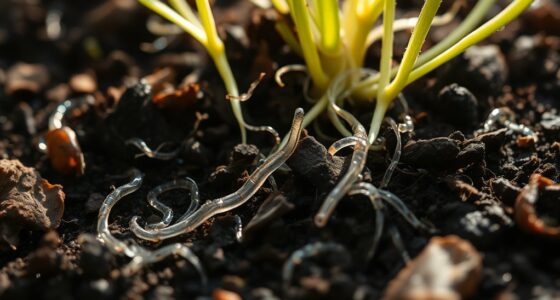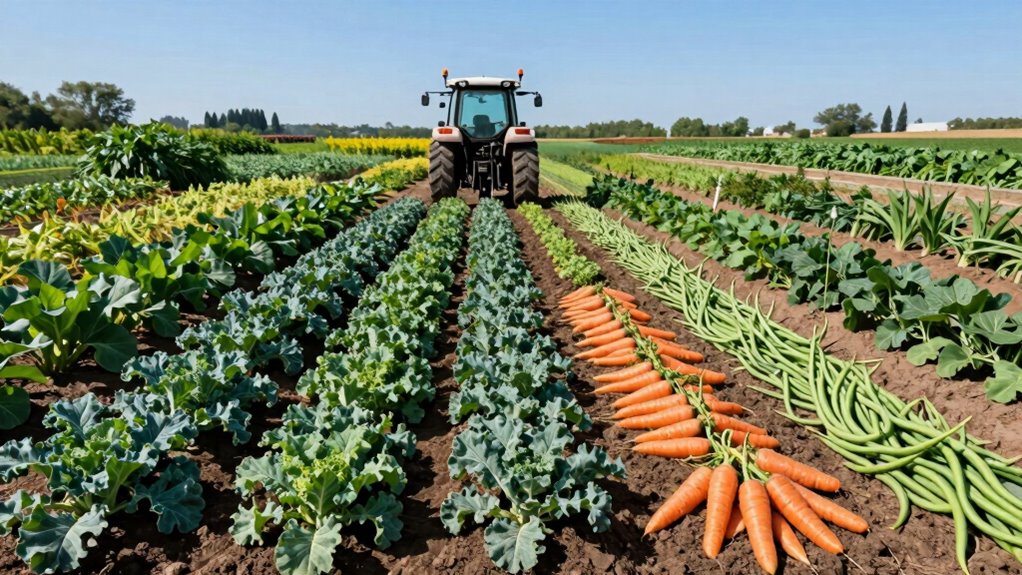

Crop rotation is essential in organic systems because it keeps your soil healthy and prevents nutrient loss. By rotating crops, especially nitrogen-fixing ones like legumes, you naturally enrich the soil. It also breaks pest and disease cycles, reducing the need for chemicals. Plus, using cover crops protects your soil, suppresses weeds, and boosts biodiversity. If you want to understand how rotation supports long-term farm resilience, there’s more to discover below.

Get garden gear delivered free with Prime
- Fast, free delivery on millions of items
- Prime Video, Amazon Music and more included
- Member-only deals all year
Key Takeaways
- Crop rotation maintains soil fertility by preventing nutrient depletion and encouraging nutrient diversity.
- It disrupts pest and disease cycles, reducing the need for chemical controls.
- Rotation promotes biodiversity, attracting beneficial insects and supporting ecosystem resilience.
- Cover crops in rotation protect soil from erosion and boost organic matter naturally.
- Overall, rotation enhances long-term farm productivity and sustainability in organic systems.
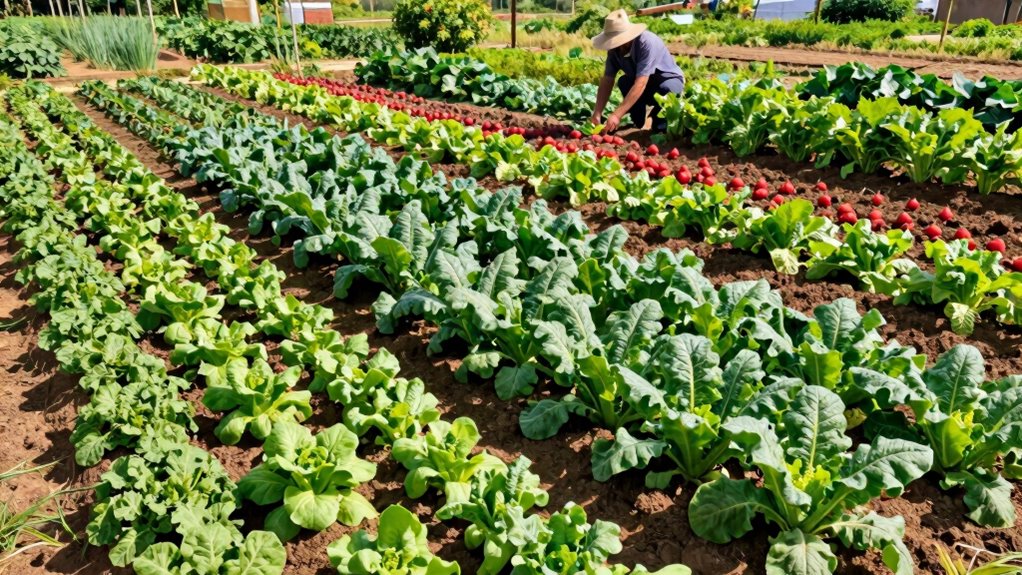
Have you ever wondered how organic farmers maintain healthy soils and prevent pests without relying on synthetic chemicals? The answer lies in the time-tested practice of crop rotation. Unlike conventional systems, where chemical inputs often do the heavy lifting, organic farming depends on strategic planning and natural methods to keep crops productive and pest-free. Rotation plays an essential role in this approach, helping to break pest and disease cycles while improving soil health.
Crop rotation is key to healthy soils and natural pest control in organic farming.
When you incorporate crop rotation into your system, you give your soil a chance to recover and stay balanced. Different crops have varying nutrient needs and root structures, which means rotating them can prevent nutrient depletion. For instance, planting legumes after heavy feeders like corn allows you to naturally add nitrogen to the soil through fixation, reducing the need for external inputs. This rotation not only sustains soil fertility but also minimizes the risk of soil degradation over time. Incorporating soil health practices such as crop rotation further enhances the resilience of your farm ecosystem. Additionally, rotating crops can help manage weeds by disrupting their growth cycles, which is especially important in organic systems that avoid chemical weed control methods.
Cover cropping is another fundamental component of rotation strategies. When you plant cover crops during fallow periods or in between main crops, you protect the soil from erosion and suppress weeds. Cover crops, such as clover or vetch, also fix nitrogen and add organic matter, enriching the soil naturally. These crops act as a living mulch, shielding the soil and creating an environment that discourages pests and diseases. By integrating cover cropping into your rotation, you improve pest management naturally, reducing reliance on chemical controls. Additionally, cover crops can enhance soil biodiversity**, which is vital for maintaining a resilient ecosystem. Incorporating diverse plantings within your rotation can further support a balanced and healthy soil microbiome**.
Pest management in organic systems relies heavily on crop rotation. Pests and diseases tend to target specific crops or families, so rotating crops interrupts their lifecycle. For example, if a particular pest thrives on tomatoes, planting a different crop the following season can break its cycle. This natural interruption reduces pest populations and decreases the need for interventions. Rotation also encourages biodiversity in your fields, attracting beneficial insects that prey on pests and further supporting your pest management efforts. Implementing crop rotation also helps maintain plant diversity, which is crucial for a resilient organic farming system.
In essence, rotation isn’t just a traditional farming practice; it’s an indispensable strategy that sustains your organic farm’s health. It helps maintain soil fertility, manages pests naturally, and enhances the overall resilience of your system. By planning your crop sequence carefully and integrating cover cropping, you create a self-sustaining cycle that promotes long-term productivity. Rotation keeps your fields healthy, your pests in check, and your organic practices truly sustainable. Incorporating biodiversity into your rotation plan further strengthens your system by attracting beneficial organisms and creating a resilient ecosystem.
As an affiliate, we earn on qualifying purchases.
Frequently Asked Questions
How Does Crop Rotation Affect Soil Microbial Diversity?
Crop rotation boosts soil microbial diversity by introducing different plants that provide varied nutrients and root exudates. This practice enhances soil health and encourages a diverse microbial balance, which helps break pest cycles and suppress diseases. As you rotate crops, you support a resilient ecosystem that promotes beneficial microbes, improves nutrient cycling, and maintains soil fertility, ultimately leading to healthier, more productive organic systems.
Can Rotation Reduce the Need for Organic Pesticides?
Think of crop rotation as a shield that keeps pests at bay. By changing crops, you disrupt pest habitats, reducing their numbers naturally. This approach enhances pest management and improves crop compatibility, making chemical pesticides less necessary. With each planting, you’re painting a barrier that confuses pests, encouraging healthier plants and a balanced ecosystem. Rotation becomes your organic armor, safeguarding your fields without relying heavily on pesticides.
What Are the Economic Benefits of Crop Rotation?
Crop rotation offers you economic benefits by promoting market stability and reducing reliance on crop specialization. When you rotate crops, you diversify your offerings, lowering risks associated with price fluctuations and market demand. It also enhances soil health, leading to better yields and reduced input costs. This sustainable practice helps you maintain consistent income, adapt to market changes, and build resilience against pests and diseases, ultimately boosting your farm’s profitability.
How Does Rotation Influence Nutrient Cycling in Organic Farms?
Rotation improves nutrient cycling by breaking pest and disease cycles, which reduces the need for synthetic inputs. Cover cropping enriches the soil, fixes nitrogen, and adds organic matter, enhancing nutrient availability. As you rotate crops, pests are managed naturally, and soil health improves. This process promotes a balanced ecosystem where nutrients are recycled efficiently, supporting sustainable growth and reducing external dependencies, essential for organic farm success.
Are There Crops That Should Never Be Rotated With Each Other?
In the age of chivalry, some crops shouldn’t be rotated together, just like knights and dragons. You should avoid pairing nightshades with members of the Brassica family, as they can hinder each other’s growth. Using companion planting helps with pest suppression, but certain crops, like beans and onions, don’t mix well. Keep these apart to maintain healthy, productive organic systems and prevent disease or pest issues.
As an affiliate, we earn on qualifying purchases.
Conclusion
So, despite all the talk about innovations, it turns out that rotation still holds its ground in organic systems. You’d think modern techniques would replace something as simple as crop rotation, but nope—nature’s wisdom endures. Ironically, what’s old is often what’s best. By ignoring this age-old practice, you risk undoing all your efforts. Sometimes, the most overlooked strategies are the ones that truly keep your system healthy and thriving.
As an affiliate, we earn on qualifying purchases.
As an affiliate, we earn on qualifying purchases.
Fall yard work Picks
leaf blowers
As an affiliate, we earn on qualifying purchases.