
To use row covers without causing heat stress, choose breathable fabrics that allow air and moisture to pass through, and create a slight arch with hoops or stakes for better airflow. Install covers early or late in the day, and remove or lift them during peak heat hours, especially in hot weather. Regularly monitor your plants for stress signs and adjust coverage accordingly. For more tips on maintaining a healthy microclimate, keep exploring effective strategies.

Get garden gear delivered free with Prime
- Fast, free delivery on millions of items
- Prime Video, Amazon Music and more included
- Member-only deals all year
Key Takeaways
- Install covers early morning or late afternoon to avoid trapping heat during peak sun hours.
- Ensure proper spacing between covers and plants to promote airflow and prevent heat buildup.
- Use lightweight, breathable fabrics designed for crop protection to allow air and moisture passage.
- Regularly monitor plants for signs of heat stress and adjust or remove covers as needed.
- Incorporate shading or partially lift covers during hot days to reduce temperature and humidity underneath.
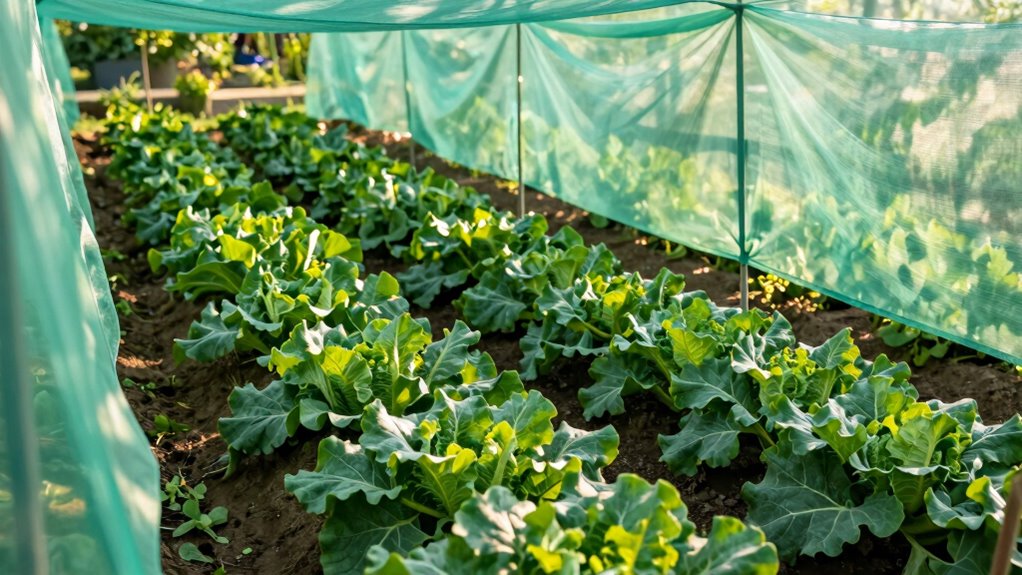
Row covers are a great way to protect your plants from pests and harsh weather, but if you’re not careful, they can also cause heat stress during hot days. When used improperly, row covers can trap heat and moisture, creating an environment that’s uncomfortable for your crops. To maximize pest protection and crop insulation without risking heat stress, you need to be strategic about when and how you deploy these covers.
Start by selecting lightweight, breathable materials designed specifically for crop protection. These fabrics allow air and moisture to pass through while still providing a barrier against pests. Using the right type of cover helps prevent excessive heat buildup underneath. When the weather turns particularly hot, consider removing or lifting the covers during the hottest parts of the day, typically between late morning and early afternoon. This simple step reduces heat accumulation and prevents your plants from experiencing stress caused by high temperatures. Additionally, understanding the importance of proper ventilation can significantly improve airflow and reduce heat buildup under covers. Proper ventilation techniques can help maintain a stable microclimate that benefits your crops.
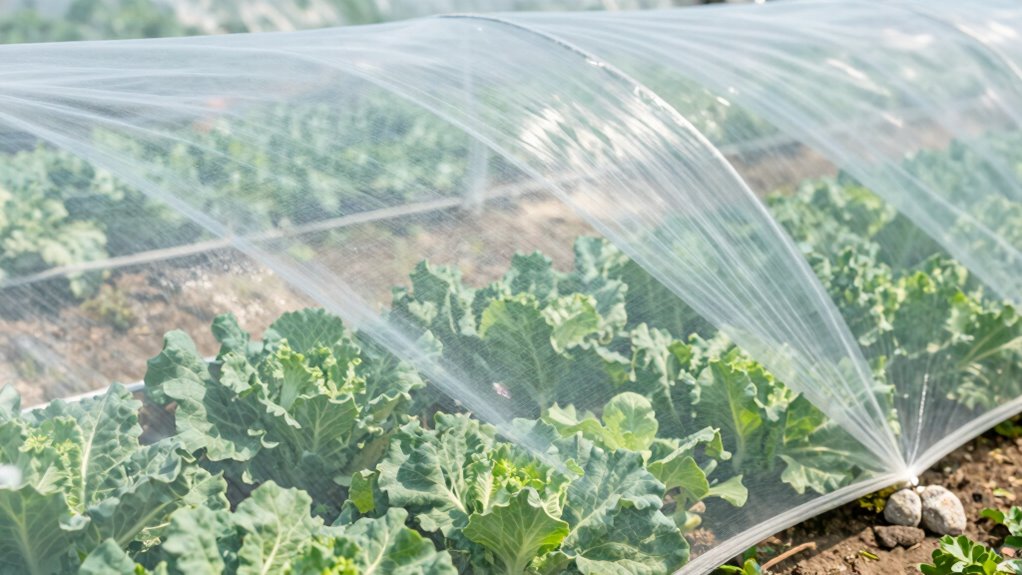
Another effective method is to install the covers with plenty of space between the fabric and your plants. Using hoops or stakes to create a slight arch ensures good airflow and prevents the cover from lying flat against the foliage. This setup enhances crop insulation by maintaining a microclimate that’s warm enough to protect against cold snaps but not so enclosed that it traps excessive heat. It also minimizes humidity buildup, which can encourage disease. Ensuring adequate air circulation is essential to prevent issues related to trapped moisture and heat. Proper spacing and microclimate management are key to avoiding heat stress while still providing effective protection. Incorporating shade solutions can also help reduce the temperature underneath covers during peak heat, further protecting your plants.
Timing is crucial. Put the row covers on early in the morning or late in the afternoon when temperatures are cooler, and remove them during the peak heat hours. This approach allows your plants to benefit from pest protection and crop insulation during vulnerable times while avoiding heat stress. If you’re growing during a heatwave, consider installing shading materials over the covers or partially lifting them to provide additional relief. Monitoring your plants regularly is essential. Check for signs of heat stress such as wilting, leaf scorch, or unusual coloring. If you notice these signs, take immediate action by removing or adjusting the covers. Also, ensure your soil remains well-watered, as dry soil can exacerbate heat stress.
breathable row covers for vegetables
As an affiliate, we earn on qualifying purchases.
As an affiliate, we earn on qualifying purchases.
Frequently Asked Questions
Can Row Covers Be Reused for Multiple Growing Seasons?
Yes, you can reuse row covers for multiple seasons if you check their cover durability regularly. After each use, clean the covers gently to remove dirt and pests, which helps prolong their lifespan. Store them in a cool, dry place when not in use. Proper care guarantees your row covers stay effective, protect your crops, and save you money over time. Just keep an eye out for tears or damage before reuse.
How Do Row Covers Affect Pollination and Insect Activity?
Row covers can limit pollinator access, affecting pollination and insect behavior. To protect pollinators, lift covers during flowering or choose permeable materials that allow insect activity while shielding plants from pests. You help support pollinator protection by ensuring insects can visit flowers, which benefits fruit and seed production. Managing covers thoughtfully keeps your crops healthy and promotes a balanced ecosystem, preventing unintended disruptions to natural insect behavior.
Are There Specific Materials Better for Preventing Heat Buildup?
Think of your row cover as a hat for your plants—certain materials keep them cooler. To prevent heat buildup, choose lightweight, breathable cover materials like spunbonded polypropylene or shade cloth, which allow airflow and reduce heat absorption. These materials act like a cool breeze, helping your crops stay healthy without overheating. Opting for the right cover material guarantees your plants thrive without the risk of heat stress.
How Do I Monitor Temperature Under the Row Covers Effectively?
You should use temperature sensors to monitor the temperature under your row covers accurately. Place sensors at plant canopy level for real-time readings. Combine this with effective ventilation techniques, like opening edges or lifting covers during the hottest parts of the day, to prevent heat stress. Regularly check your sensors, and adjust ventilation as needed to maintain ideal temperatures, ensuring your plants stay healthy without overheating.
What Are Signs of Heat Stress in Covered Plants?
Heat stress in covered plants hits like a thunderstorm, so watch closely. Signs of dehydration and leaf curling are your early warnings. If leaves start to curl tightly or look wilted despite watering, your plants are struggling with heat. You might also notice leaves turning yellow or brown at the edges. Keep an eye on these signs, so you can take quick action and save your plants from the fiery furnace!
As an affiliate, we earn on qualifying purchases.
Conclusion
By following these tips, you’ll turn your row covers into a gentle shield, not a blazing hot prison. Imagine your plants basking in a cool, cozy cloud of protection, avoiding the fiery furnace of heat stress. With careful timing and ventilation, you’ll transform your garden into a lush oasis, where veggies thrive and stress takes a backseat. Say goodbye to scorching disasters—your garden will thank you with bountiful, healthy harvests!
As an affiliate, we earn on qualifying purchases.
shade cloth for vegetable garden
As an affiliate, we earn on qualifying purchases.
As an affiliate, we earn on qualifying purchases.
Halloween Picks
halloween
As an affiliate, we earn on qualifying purchases.