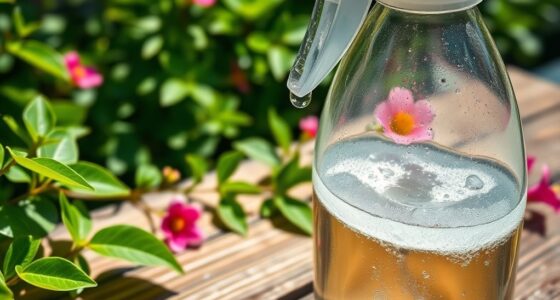
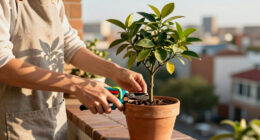
To make a DIY soap spray for your garden, mix 1-2 tablespoons of gentle liquid soap, like castile or biodegradable dish soap, with a quart of water. Shake well, then pour into a spray bottle. Spray thoroughly on affected plants, making sure to cover both sides of leaves for best results. Reapply every few days or after rain. If you’d like more detailed tips and techniques, keep exploring these simple, eco-friendly pest control options.

Get garden gear delivered free with Prime
- Fast, free delivery on millions of items
- Prime Video, Amazon Music and more included
- Member-only deals all year
Key Takeaways
- Mix 1-2 tablespoons of gentle liquid soap with a quart of water to create an effective DIY insecticidal spray.
- Shake well and spray thoroughly on affected plants, covering both tops and undersides of leaves.
- Apply regularly and after rain to maintain pest control, focusing on soft-bodied insects like aphids and spider mites.
- Use biodegradable or castile soap for an eco-friendly, chemical-free pest management solution.
- Perform a patch test before widespread use to ensure plant safety and avoid potential damage.

Are you tired of using chemical insecticides that harm your garden and the environment? If so, it’s time to explore natural alternatives like soap sprays, a simple yet effective DIY insecticide. When it comes to pest control methods, soap sprays stand out because they’re affordable, eco-friendly, and safe for your plants, pets, and family. Plus, they fit perfectly within organic gardening techniques, which prioritize sustainable and chemical-free practices. Instead of reaching for harsh chemicals, you can create your own solution using ingredients you probably already have at home.
Discover safe, affordable, eco-friendly soap sprays for natural pest control in your garden.
The basic idea behind soap sprays is to use a mild soap solution to suffocate and deter common garden pests like aphids, spider mites, and whiteflies. The soap acts as a surfactant, breaking down the pests’ protective outer layer and causing dehydration. To make your own soap spray, all you need is a gentle liquid soap—preferably pure castile soap or a biodegradable dish soap—and water. Mix about one to two tablespoons of soap with a quart of water. Shake well to combine, and pour the mixture into a spray bottle. Before applying it broadly, always do a patch test on a few leaves to guarantee your plants won’t be harmed.
Applying soap sprays is straightforward. Spray the solution thoroughly on affected plants, making sure to cover both the tops and undersides of leaves where pests often hide. Reapply every few days or after rain to maintain its effectiveness. Soap sprays work best on soft-bodied insects like aphids, mealybugs, and spider mites, but they’re generally safe for most plants when used correctly. Regular use can help keep pest populations under control without exposing your garden to harmful chemicals. Using proper spraying techniques ensures better coverage and reduces the chance of plant damage.
Using soap sprays aligns with organic gardening techniques because they’re non-toxic and biodegradable. They don’t linger in the soil or water supply, reducing environmental impact. Plus, soap sprays are a versatile pest control method that you can incorporate into your overall pest management plan. They’re a great first line of defense or an effective supplementary treatment alongside other organic methods like companion planting or introducing beneficial insects. The simplicity of making and applying soap sprays makes them accessible for gardeners of all experience levels, encouraging a more natural and sustainable approach to maintaining a healthy garden.
DIY natural insecticide spray for garden
As an affiliate, we earn on qualifying purchases.
As an affiliate, we earn on qualifying purchases.
Frequently Asked Questions
How Often Should I Reapply Soap Sprays?
You should reapply soap sprays every 7 to 10 days, depending on pest activity and weather conditions. Regular reapplication helps prevent pest resistance and keeps your plants protected. Keep an eye on affected areas and reapply after rain or heavy dew, as it can wash away the spray. Proper application timing and consistent use guarantee your soap spray remains effective without harming beneficial insects.
Can Soap Sprays Harm Beneficial Insects?
They say “a little caution goes a long way,” and that’s true with soap sprays. While they’re a great choice for non-toxic pest control, they can harm beneficial insects if applied indiscriminately. To guarantee beneficial insect safety, spray early in the morning or late at night when pollinators are less active. Use targeted applications to protect helpful bugs while controlling pests effectively, making your garden balanced and healthy.
Are Soap Sprays Effective Against All Garden Pests?
You might wonder if soap sprays work on all pests, but they do have limitations. While effective against soft-bodied insects like aphids and spider mites, soap sprays aren’t a cure-all; some pests develop pest resistance, making treatments less effective over time. Additionally, soap spray limitations include potential plant damage if misapplied, so always follow instructions carefully. Use soap sprays as part of an integrated pest management plan for best results.
What Ingredients Are Safest for Homemade Soap Sprays?
Imagine spraying your tomato plants and knowing your ingredients are safe. For homemade soap sprays, use pure liquid castile soap or mild dish soap, as they have low ingredient toxicity and promote plant safety. Always test a small area first, ensuring your plants won’t suffer adverse reactions. Avoid harsh chemicals or additives, which can harm your garden and reduce plant safety. Simple, gentle ingredients safeguard your plants and the environment.
How Do I Store Leftover Soap Spray Solution?
You should store leftover soap spray solution in an airtight container, preferably glass or plastic, and keep it in a cool, dark place. Use storage tips like labeling the container clearly to avoid confusion. Proper storage helps maintain solution longevity, preventing degradation or separation. Make sure to shake or stir the solution well before reuse, and check it for any signs of spoilage if you plan to use it after several days.
As an affiliate, we earn on qualifying purchases.
Conclusion
Now that you’ve got the hang of making soap sprays, you’re well-equipped to tackle pesky insects naturally. Just remember, a little effort goes a long way, and with patience, you’ll see your garden thrive without harmful chemicals. Keep an eye on your plants, and don’t be afraid to fine-tune your recipe along the way. After all, good things come to those who nurture their garden wisely—so roll up your sleeves and enjoy the process!
eco-friendly plant pest control spray
As an affiliate, we earn on qualifying purchases.
As an affiliate, we earn on qualifying purchases.
homemade insecticidal soap spray
As an affiliate, we earn on qualifying purchases.
As an affiliate, we earn on qualifying purchases.
Halloween Picks
halloween
As an affiliate, we earn on qualifying purchases.