When choosing basil varieties, keep in mind that sweet basil is highly vulnerable to downy mildew, especially in humid or wet conditions. Thai basil and purple basil tend to be more resistant, making them better options for such environments. To prevent infection, guarantee good air circulation, avoid overhead watering, and promptly remove infected leaves. Want to discover tips on selecting the best basil for your garden? Keep exploring to find out more.
Key Takeaways
- Sweet basil is highly susceptible to downy mildew, especially in humid conditions.
- Thai and purple basil varieties are generally less vulnerable to the disease.
- Proper spacing and good airflow help prevent downy mildew development in basil plants.
- Avoid overhead watering and remove infected leaves promptly to reduce spore spread.
- Using resistant strains or organic fungicides at early signs can help control susceptibility.
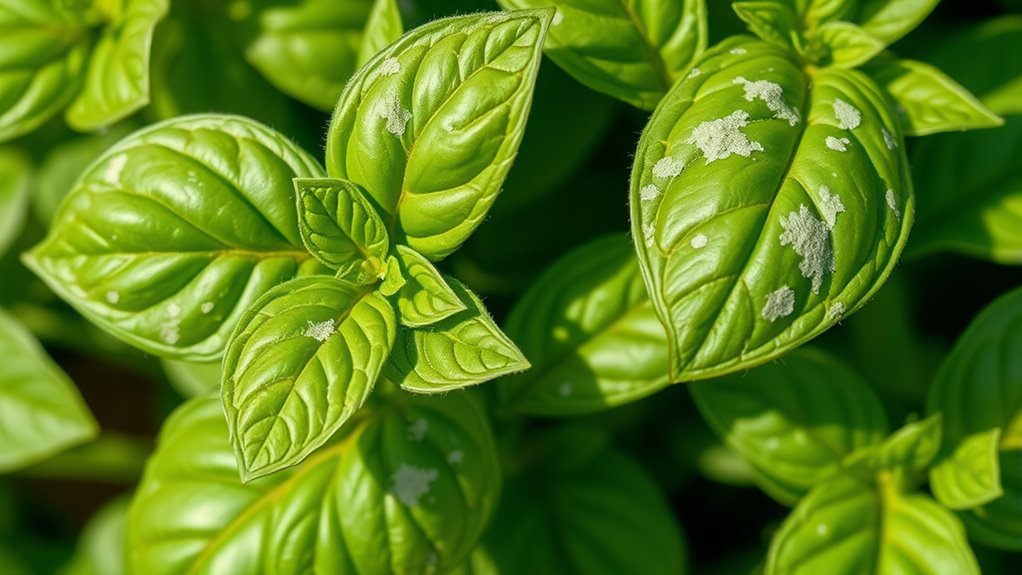
Basil is a versatile herb with many different types, each offering unique flavors and uses in the kitchen. However, when you’re cultivating basil, especially if you’re growing multiple varieties, it’s important to understand their susceptibility to diseases like downy mildew. Downy mildew is a common fungal-like pathogen that can quickly devastate your basil plants, causing yellowing leaves, fuzzy gray or purple patches, and ultimately, plant death if not managed properly. Knowing which basil types are more vulnerable helps you implement effective herb garden tips and pest prevention strategies to keep your plants healthy.
Many basil varieties, such as sweet basil, are particularly susceptible to downy mildew, especially in humid or wet conditions. If you’re growing basil in a moist environment, you might notice early signs of the disease—distorted, yellowing leaves with a velvety grayish mold underneath. To prevent this, it’s essential to practice good herb garden tips, like spacing your plants adequately to improve air circulation and avoid overcrowding. Proper spacing helps reduce humidity around the plants, making it less hospitable for downy mildew spores to settle and grow.
Spacing basil plants improves airflow and helps prevent downy mildew in humid conditions.
Another key pest prevention strategy involves watering techniques. Instead of overhead watering, which can spread spores and keep foliage damp, focus on watering at the base of the plants. This keeps the leaves dry and minimizes infection risk. Mulching around the base also helps retain soil moisture and prevents soil-borne spores from splashing onto the leaves during watering or rain. Regularly inspecting your basil for early signs of disease allows you to act quickly—removing and destroying infected leaves prevents the spread to healthy tissues.
Some basil types, like Thai basil and purple basil, tend to be less susceptible to downy mildew but aren’t entirely immune. For these varieties, you still need to stay vigilant. Incorporate pest prevention strategies such as crop rotation and avoiding planting basil in the same spot year after year. Using resistant strains or organic fungicides at the first sign of trouble can also be effective. Remember, maintaining overall plant health through proper fertilization, watering, and pruning boosts their immune response, making them less prone to infections.
Frequently Asked Questions
How Can I Prevent Downy Mildew on Basil?
You can prevent downy mildew on basil by choosing disease-resistant cultivars, which naturally resist the fungus. Make certain proper air circulation around your plants, and avoid overhead watering to keep leaves dry. Apply preventative fungicides early in the season, following label instructions, to create a protective barrier. Regularly inspect your basil for early signs, and remove any infected leaves promptly to stop the spread of the disease.
Are There Basil Varieties Naturally Resistant to Downy Mildew?
Yes, some basil varieties naturally resist downy mildew. Look for varieties like ‘Genovese’ or ‘Greek’ basil, which tend to have better disease resistance. You can also choose heirloom or organic options that are bred for resilience. By planting these resistant basil varieties, you reduce your risk of downy mildew outbreaks. Remember to make certain of good air circulation and proper watering to further protect your basil from disease.
What Environmental Conditions Favor Downy Mildew Development?
You should watch humidity levels and leaf wetness, as high humidity and prolonged leaf wetness promote downy mildew development. When the air stays moist and leaves remain wet for extended periods, the pathogen thrives. To prevent this, avoid watering from above, ensure good air circulation, and water early in the day so leaves dry quickly. Keeping humidity moderate and reducing leaf wetness helps protect your basil from downy mildew.
Can Organic Methods Effectively Control Downy Mildew in Basil?
Yes, organic controls can effectively manage downy mildew in basil. You should improve air circulation and avoid overhead watering to reduce humidity. Applying organic fungicides like neem oil or copper sprays can also help prevent the disease. Consistent monitoring and early intervention are key for successful disease management. By combining cultural practices with organic treatments, you can keep your basil healthy and minimize downy mildew outbreaks naturally.
How Often Should I Inspect Basil Plants for Downy Mildew?
An ounce of prevention is worth a pound of cure. You should inspect your basil plants at least twice a week, especially during damp or cool weather. Regular inspection frequency and symptom monitoring help catch downy mildew early, preventing its spread. Look closely for yellowing leaves and fuzzy gray spores. Staying vigilant guarantees you catch problems early and keep your basil healthy and thriving throughout the season.
Conclusion
As you explore different basil types, remember that even the most resilient varieties can surprise you. Sometimes, a sudden change in weather or unexpected pests remind us that nature’s balance is delicate. Just like your garden, life requires attention and adaptability. So, choose your basil wisely, but stay mindful of the unexpected—because in both gardening and life, a little coincidence can lead to the most rewarding growth.