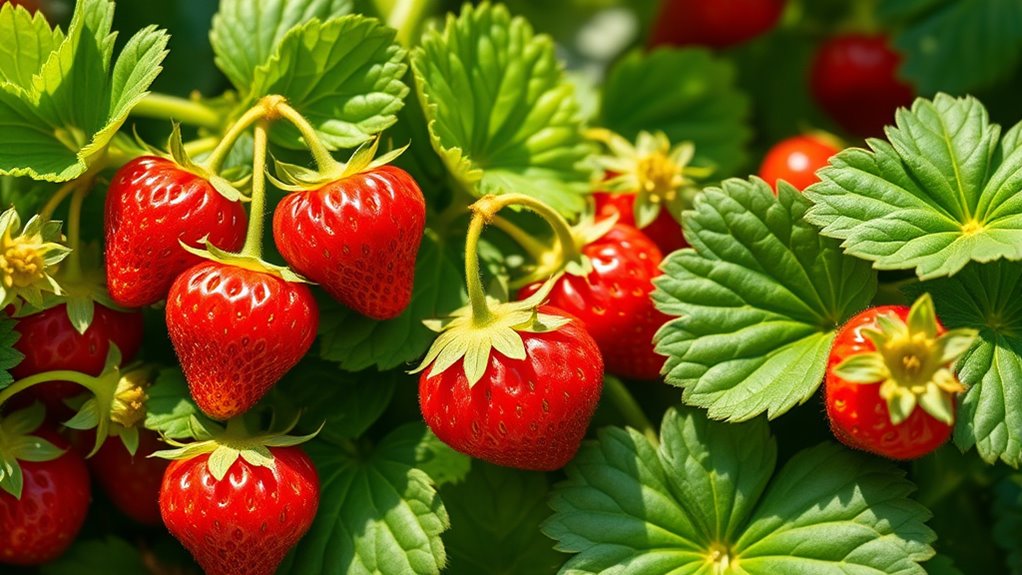

In your strawberry crop, pest timing varies between June-bearing and day-neutral varieties. With June-bearing strawberries, pests like aphids and spider mites peak during flowering and fruiting, allowing you to time treatments effectively. In contrast, day-neutral strawberries face pests such as beetles and fruit flies over a longer season, requiring ongoing monitoring. Understanding these patterns helps you plan pest control better; if you keep exploring, you’ll find ways to stay ahead of pests throughout the season.

Get garden gear delivered free with Prime
- Fast, free delivery on millions of items
- Prime Video, Amazon Music and more included
- Member-only deals all year
Key Takeaways
- June-bearing strawberries have pest peaks during flowering and fruiting, allowing targeted pest control in a narrow window.
- Day-neutral strawberries face sporadic pest emergence over a longer season, requiring ongoing monitoring and management.
- Pest types differ: June-bearing are more affected by aphids and spider mites; day-neutral are susceptible to slugs and beetles.
- Timing of pest control in June-bearing crops is predictable, focusing on critical flowering and fruiting stages.
- Continuous vigilance in day-neutral crops is essential to manage pests appearing at various times throughout the extended harvest period.

Are you trying to decide between planting June-bearing or day-neutral strawberries? Understanding their differences in pollination strategies and harvest scheduling can help you make the right choice. June-bearing strawberries produce a concentrated crop once a year, typically in late spring or early summer. Their pollination strategies rely heavily on natural pollinators like bees, which are essential for fruit set and uniformity. Since these strawberries bloom and fruit all at once, their harvest window is relatively short, often lasting just a few weeks. This means you’ll need to plan your pest management efforts carefully, timing them to protect the crop during its critical flowering and fruiting period. Pests such as aphids, tarnished plant bugs, and spider mites tend to peak during this time, so early intervention can prevent significant damage.
In contrast, day-neutral strawberries produce fruit continuously from late spring until the first frost, providing a more extended harvest schedule. Their pollination strategies can involve both natural pollinators and manual pollination, especially if you’re growing in a protected environment or greenhouse. The extended harvest means pests can strike at different times, making pest timing and management more complex but also giving you flexibility to tackle issues as they arise. Because these strawberries are producing fruit over a longer period, pests like slugs, beetles, and fruit flies may become problematic at different stages, so regular monitoring becomes essential to prevent infestations from taking hold.
When it comes to pest timing, June-bearing strawberries tend to be more predictable because their entire crop develops within a narrow window. This makes it easier to schedule pest control measures around peak flowering and fruiting periods. You’ll want to implement preventative measures beforehand, such as mulching or netting, to ward off early pests. For day-neutral varieties, pest management requires more vigilance since pests can appear sporadically over several months. You might need to adjust your strategies, applying targeted treatments to specific pest outbreaks as they happen. The longer harvest window also means you should keep an eye on pest populations throughout the growing season, not just during flowering.
As an affiliate, we earn on qualifying purchases.
Frequently Asked Questions
How Do Pest Control Methods Differ Between June-Bearing and Day-Neutral Strawberries?
You should tailor pest control methods based on pest life cycles and chemical application timing. For June-bearing strawberries, pests emerge mainly during flowering and fruiting, so apply treatments early in these stages. Day-neutral strawberries, with a longer growing season, require ongoing monitoring and timely chemical applications throughout the season. Adjust your approach to target pests when they’re most vulnerable, reducing damage and improving control efficiency.
What Environmental Factors Influence Pest Activity on Strawberry Varieties?
Climate conditions and soil health considerably shape pest activity on strawberries. Warm, wet weather encourages pests to multiply and move more actively, while dry, cool conditions can suppress their spread. Healthy soil promotes strong plant growth, making strawberries more resilient against pests. You should monitor environmental changes closely, as shifts in temperature, humidity, or soil quality can dramatically alter pest patterns, helping you time your pest control strategies effectively.
Are There Specific Pests That Target Only One Type of Strawberry?
Some strawberry pests show pest specificity, targeting only one strawberry variety. For example, certain pests may prefer June-bearing or day-neutral strawberries due to their growth stages or fruit characteristics. You should monitor pests like strawberry root weevils or tarnished plant bugs carefully, as they can be more active on specific types. Knowing these pest preferences helps you implement targeted control measures, reducing damage and protecting your crop effectively.
How Can I Monitor Pest Populations Effectively in My Strawberry Patch?
Did you know that using trap placement at strategic timing intervals can boost pest monitoring by up to 80%? To do this effectively, place traps near strawberry plants, especially where pests are likely to land or hide. Check traps regularly, ideally weekly, to track pest activity. This helps you catch infestations early and take timely action, protecting your berries and ensuring a healthy crop.
What Are Organic Pest Management Options for Strawberries?
You can use organic pest management methods like applying compost teas to boost your soil health and deter pests naturally. Introducing beneficial insects such as ladybugs, predatory mites, or parasitic wasps helps control common strawberry pests without chemicals. Regularly monitoring your plants and encouraging biodiversity creates a balanced ecosystem, making pest problems less severe and reducing the need for synthetic pesticides.
garden insect netting for strawberries
As an affiliate, we earn on qualifying purchases.
As an affiliate, we earn on qualifying purchases.
Conclusion
So, when choosing between June-bearing and day-neutral strawberries, remember that understanding pest timing can make all the difference. Some believe that planting at the right time can outsmart pests altogether, and there’s truth to it. Imagine enjoying a bountiful harvest, free from pest worries, simply by aligning your planting schedule wisely. It’s more than just gardening—it’s about mastering nature’s timing to protect your plants and maximize your reward.
slug and beetle traps for strawberries
As an affiliate, we earn on qualifying purchases.
As an affiliate, we earn on qualifying purchases.
pest monitoring tools for strawberries
As an affiliate, we earn on qualifying purchases.
As an affiliate, we earn on qualifying purchases.
Fall yard work Picks
leaf blowers
As an affiliate, we earn on qualifying purchases.