If you’re new to berry growing, bush berries are easier to manage since they’re low-maintenance, require less pruning, and are less prone to pests hiding in dense foliage. Cane berries, however, need annual pruning and ongoing pest control, making them more complex but rewarding for experienced gardeners. If you want simple care routines with fewer worries, bush berries are your best option. Want to discover more tips to grow your berries successfully? Keep exploring.

Get garden gear delivered free with Prime
- Fast, free delivery on millions of items
- Prime Video, Amazon Music and more included
- Member-only deals all year
Key Takeaways
- Bush berries are generally easier to manage due to their compact shape and minimal pruning requirements.
- Cane berries require annual pruning and strategic maintenance, increasing their overall management complexity.
- Bush berries are less prone to hiding pests, making pest inspections simpler for beginners.
- Cane berries need more frequent inspections and targeted pest control due to their longer canes and hiding spots.
- Overall, bush berries are more beginner-friendly, while cane berries demand more involved maintenance routines.
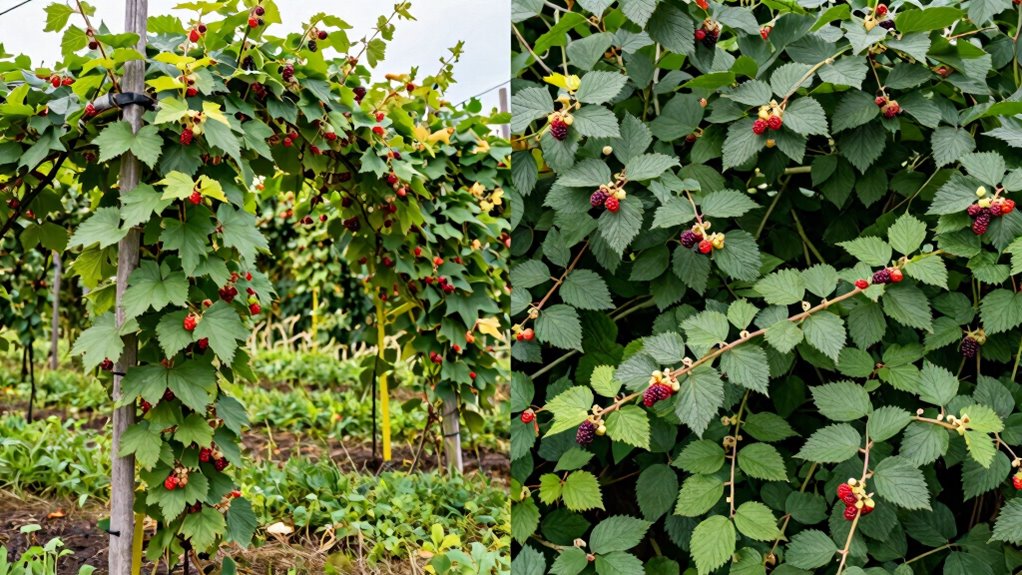
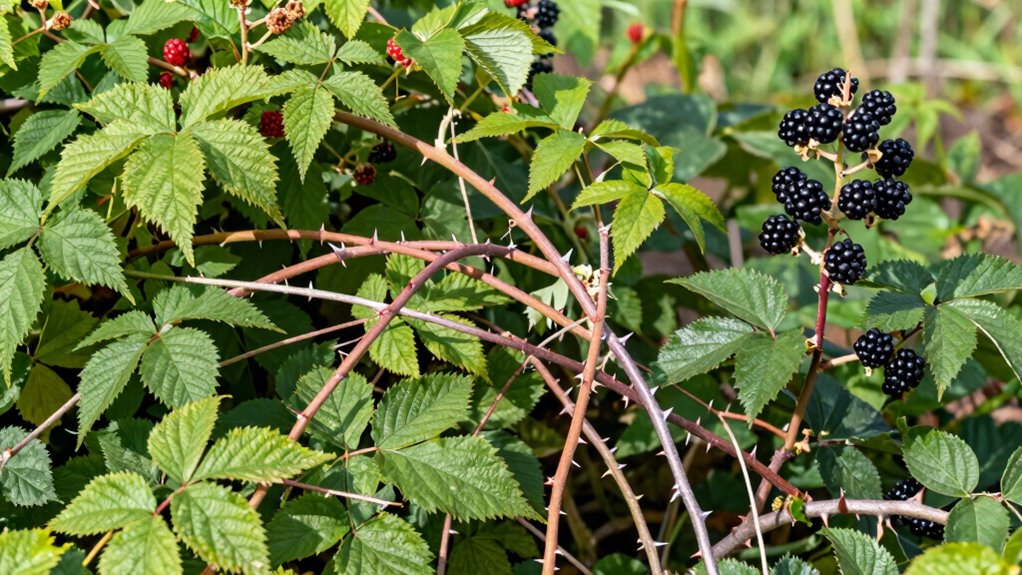
When choosing between cane berries and bush berries, understanding their fundamental differences can help you decide which best suits your garden. Cane berries, like raspberries and blackberries, grow on long, woody canes that can reach several feet in height. These canes produce fruit on one-year-old growth, making proper pest management and pruning techniques essential for a healthy harvest. Managing pests is a key aspect of caring for cane berries. Their tall, sprawling canes can create hiding spots for pests like aphids, spider mites, and fruit flies, which can quickly damage your crop. Regular inspections are crucial to catch infestations early. Pruning techniques for cane berries involve removing old, dead, or weak canes annually to encourage new growth and better airflow. This not only reduces pest hiding spots but also helps prevent fungal diseases that thrive in crowded, damp conditions. Proper pruning also makes it easier to spot pests and treat infestations promptly. In contrast, bush berries generally require less intensive pest management. Their dense foliage can sometimes harbor pests, but their smaller size makes it simpler to inspect and treat affected areas with minimal effort. Additionally, bush berries tend to be more forgiving if you miss a few pests, making them more beginner-friendly for novice gardeners. When managing these plants, understanding plant growth habits can help you develop more effective care routines. Additionally, understanding the life cycle of pests can help you time your treatments more effectively. A comprehensive maintenance routine, including timely pruning and pest control, can significantly improve your berry yield and plant health. It’s also beneficial to consider plant disease prevention strategies to keep your berries healthy throughout the season. When it comes to pruning, cane berries demand a strategic approach. You need to cut back the canes that have already borne fruit, usually after harvest, to stimulate new growth for the next season. This process, called renewal pruning, can be more involved but ultimately results in a more productive plant. Bush berries, on the other hand, often require minimal pruning—mainly removing dead or damaged branches to maintain shape and airflow. Their low-maintenance nature means you spend less time on pruning, which appeals to gardeners seeking easier options.
As an affiliate, we earn on qualifying purchases.
Frequently Asked Questions
Which Berry Variety Produces More Fruit per Season?
Cane berries generally produce more fruit per season than bush berries, thanks to their vigorous plant growth habits. You’ll notice that cane berries like raspberries and blackberries develop long canes that yield abundant berries, offering richer berry flavor and higher yields. Bush berries tend to have a more compact growth habit and may produce less fruit overall, making cane berries a better choice if you’re aiming for maximum harvest.
Are Cane Berries More Resistant to Pests Than Bush Berries?
Think of pest resistance as a shield—cane berries generally have better pest resistance than bush berries. You’ll find cane varieties less susceptible to common pests and diseases, making them easier to manage. While bush berries can be more prone to disease susceptibility, cane berries often withstand pests better, reducing your need for chemical treatments. So, if ease of management is your goal, cane berries are the smarter choice.
How Do Soil Requirements Differ Between Cane and Bush Berries?
You’ll find that soil requirements differ for cane and bush berries markedly. Cane berries prefer slightly acidic soil, with a pH around 5.5 to 6.5, and need rich, well-drained soil to thrive. Bush berries often tolerate a broader pH range but still favor slightly acidic conditions. Both require ample nutrients, but cane berries particularly need higher nitrogen and potassium levels to support vigorous growth and fruit production.
Can Both Types Be Grown in Containers Easily?
Yes, both cane and bush berries can be grown in containers easily. In container gardening, choose a large, well-draining pot and use quality soil. You’ll need to apply proper pruning techniques regularly to keep plants healthy and productive. Cane berries, like raspberries, require support, while bush berries, such as blueberries, can be managed with minimal staking. Consistent watering and fertilization will guarantee a fruitful harvest.
Which Type Has a Longer Harvesting Period?
Cane berries generally have a longer harvesting window than bush berries, offering a more extended seasonal duration. You’ll find that cane berries, like raspberries and blackberries, often produce fruit over several weeks, giving you more flexibility during harvest time. Bush berries, such as blueberries, tend to have a more concentrated harvesting period. If you’re seeking a prolonged harvest, cane berries are usually the better choice for an extended seasonal duration.
As an affiliate, we earn on qualifying purchases.
Conclusion
So, whether you fancy wrestling with towering cane berries or tiptoeing around bush berries, the choice is yours—just like choosing between a rollercoaster and a merry-go-round. Either way, both demand your sweat and patience, so why not embrace the chaos? After all, who needs calm gardens when you can have a wild, berry-filled adventure? Pick your poison, don your gloves, and get ready for a berry good time—manageability be damned!
As an affiliate, we earn on qualifying purchases.
As an affiliate, we earn on qualifying purchases.
Halloween Picks
halloween
As an affiliate, we earn on qualifying purchases.