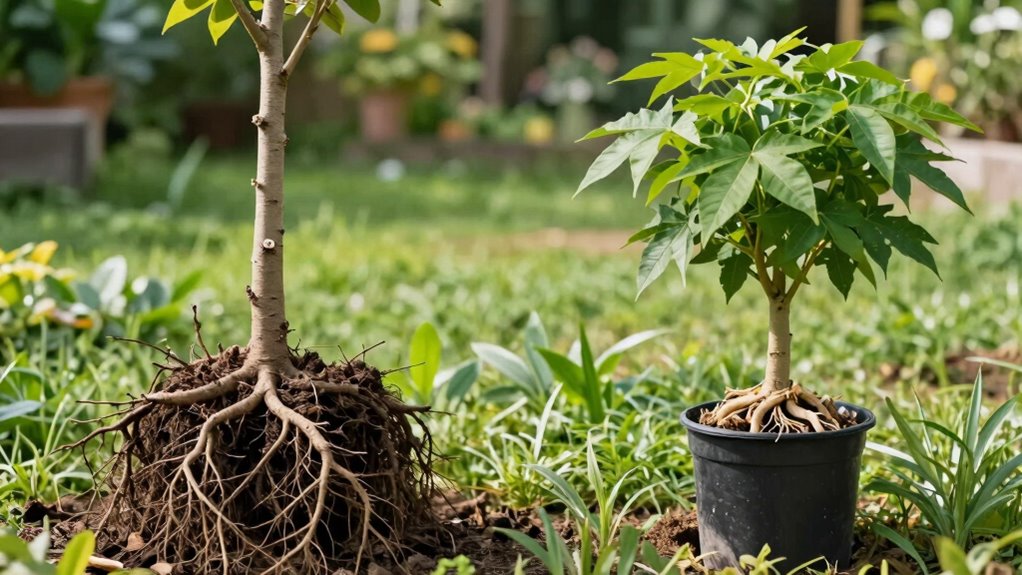
Bare root trees generally establish faster than container-grown trees because they develop more natural, extensive root systems that help them adapt quickly to new soil. While they’re more sensitive and require careful handling during planting, their roots aren’t restricted by containers, promoting quicker growth. Container-grown trees tend to take longer to settle in due to their root conditions. To discover how to optimize planting success, keep exploring the details below.

Get garden gear delivered free — and shop member deals
- Fast, free delivery on millions of items
- Access to Prime Big Deal Days deals on October 6–7
- Prime Video, Amazon Music and more included
Key Takeaways
- Bare root trees generally establish faster due to their extensive, natural root systems.
- Container-grown trees may take longer to establish because their roots are confined and less developed.
- Proper soil preparation significantly impacts the establishment speed of both tree types.
- Bare root trees require careful handling to reduce transplant shock and promote rapid growth.
- Container-grown trees are more protected during planting, but may need root pruning for optimal establishment.
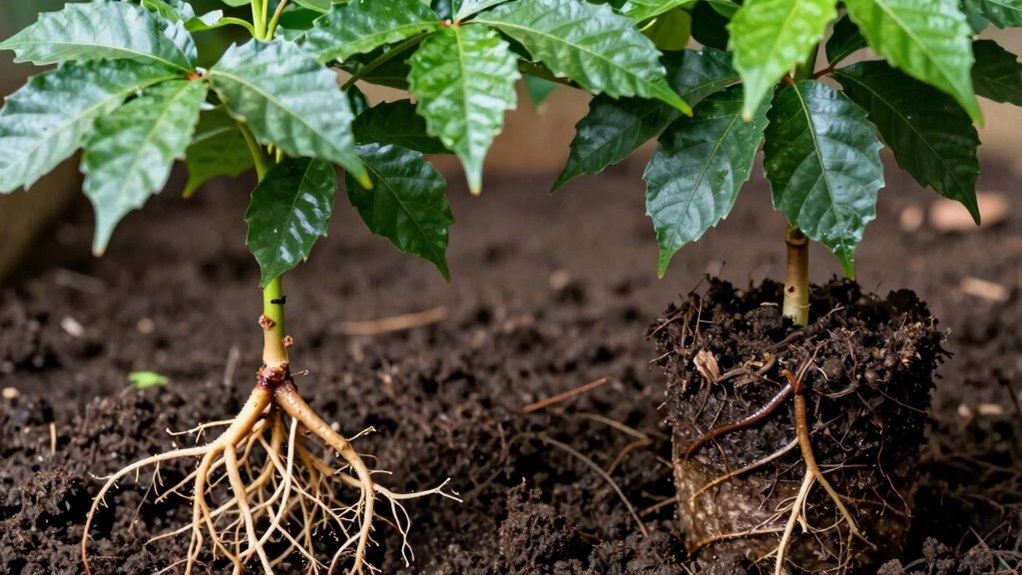
When choosing trees for your landscape, understanding the differences between bare root and container-grown options can help you make the best decision. One of the key factors to consider is how each type influences root development and soil adaptation. Bare root trees, typically sold when dormant, have exposed roots that are washed free of soil. This means their root systems are often less disturbed and can establish more quickly once planted, especially if you take the time to prepare the soil properly. Because their roots are not confined by a container, they tend to develop a more natural and extensive root system, which can lead to faster establishment and stronger growth over time. However, bare root trees are more sensitive to planting and environmental conditions, making proper handling and planting in suitable soil critical for successful establishment. Proper planting techniques can significantly impact the success of bare root trees by minimizing stress and encouraging healthy root growth. Additionally, understanding the importance of soil preparation can further enhance their establishment success.
Container-grown trees come with their root systems enclosed in a pot, which offers some advantages in terms of soil familiarity and ease of planting. Since these trees are already grown in soil, their roots are accustomed to the current environment, making them somewhat more resilient during planting. This can be especially helpful if you’re planting in less-than-ideal soil or in climates where moisture retention is a concern. The container also protects the roots during transport and handling, reducing the risk of damage. However, container-grown trees can develop circling roots or root-bound conditions, which may hinder root development if not properly pruned or managed when planting. As a result, these trees may require some root pruning or careful planting techniques to ensure they adapt well to the new soil environment. Additionally, understanding the potential for root-bound conditions can help you take proactive steps to promote healthy growth. Proper soil preparation and root management are essential to prevent these issues and support robust development.
As an affiliate, we earn on qualifying purchases.
Frequently Asked Questions
Which Tree Type Is More Cost-Effective Long-Term?
You’ll find that bare root trees are more cost-effective in the long run because they typically cost less upfront and establish quickly with proper planting. When selecting a tree, consider its growth rate and your maintenance strategies; younger bare root trees often require less ongoing care if properly planted and pruned. Container trees might be pricier initially but can be more convenient, so weigh your budget and long-term goals carefully.
How Do Soil Requirements Differ Between Bare Root and Container Trees?
You need to take into account soil preparation and root penetration differences. Bare root trees prefer well-drained, loose soil that encourages roots to penetrate easily, so amend the soil accordingly. Container trees are more adaptable, thriving in various soil types, but they still benefit from rich, well-draining soil. Properly prepared soil guarantees healthy root growth and quicker establishment, whether you’re planting bare root or container trees, ultimately supporting their overall stability and growth.
Are There Specific Tree Species Better Suited for Each Method?
Certain species are better suited for each planting method based on their growth potential and species suitability. For example, bare root trees often work well for hardy, fast-growing species like oak or maple, as they establish quickly and adapt easily. Conversely, container trees are ideal for delicate or slow-growing species like magnolia or fruit trees, providing extra protection and a better chance for successful establishment and healthy growth.
What Are Common Mistakes to Avoid When Planting Each Type?
They say “measure twice, cut once,” and the same applies to planting trees. Avoid common mistakes by carefully preparing roots and choosing the right container. For bare root trees, root preparation is essential; loosen and trim roots gently. For container trees, select a container with proper drainage. Don’t rush the planting process—improper handling can slow establishment. Take your time to guarantee proper root care and container selection for best results.
How Does Transplant Shock Vary Between Bare Root and Container Trees?
Transplant shock generally affects bare root trees more because their root systems are more exposed and delicate during planting. Container trees usually experience less shock due to their established root systems, which stay intact. To minimize shock, you should consider transplant timing carefully—preferably during dormancy—and handle the root system gently, ensuring it remains moist. Proper planting and care help both types recover quickly.
container tree root pruning tools
As an affiliate, we earn on qualifying purchases.
As an affiliate, we earn on qualifying purchases.
Conclusion
Choosing between bare root and container trees isn’t just about speed; it’s about destiny. Bare root trees may establish faster, but their vulnerability can evoke concern, like a fragile hope. Container trees offer immediate strength, yet their slower growth can feel like a cautious promise. Ultimately, your choice reflects your patience or urgency—whether you’re enthusiastic to see life flourish quickly or willing to nurture it patiently. Both paths grow, but only your decision shapes the future.
tree planting soil preparation tools
As an affiliate, we earn on qualifying purchases.
As an affiliate, we earn on qualifying purchases.
tree transplant shock reduction products
As an affiliate, we earn on qualifying purchases.
As an affiliate, we earn on qualifying purchases.
Fall yard work Picks
leaf blowers
As an affiliate, we earn on qualifying purchases.