
You’ll find leaf miner pressure is generally higher on Swiss chard because its broad leaves and growth habit make it more attractive to pests than spinach. Swiss chard’s large foliage provides more habitat and feeding sites for these pests, increasing damage risk. To keep both crops healthy, it’s important to monitor pests closely, use physical barriers, and rotate crops. If you want practical tips on managing leaf miners effectively, keep going to learn more.
Key Takeaways
- Swiss chard’s larger, broader leaves may attract more leaf miners compared to spinach.
- Both crops are susceptible to leaf miner infestation, requiring vigilant monitoring and management.
- Crop rotation and physical barriers effectively reduce leaf miner pressure on both greens.
- Proper cultural practices, like mulching and removing affected leaves, help control infestations.
- Proactive pest management preserves plant health and minimizes chemical use in both spinach and Swiss chard.
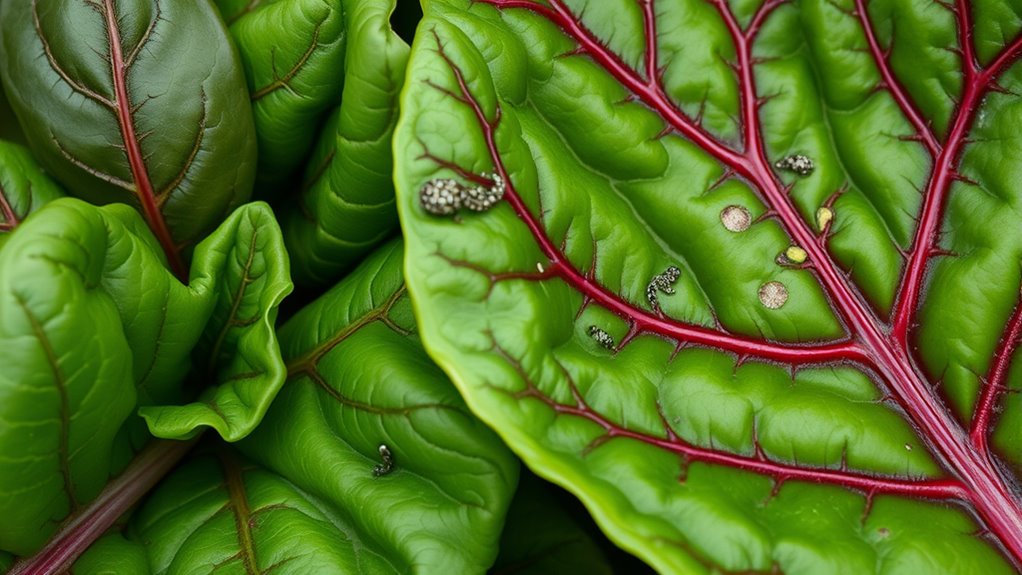
When choosing between spinach and Swiss chard, understanding their differences can help you make the best decision for your diet. But beyond taste and nutritional content, it’s important to consider how each crop handles pest pressure, especially from leaf miners. Leaf miners are tiny pests that tunnel through leaves, creating unsightly trails and reducing the plant’s overall health. Both spinach and Swiss chard are vulnerable to these pests, but the way you manage them can vary based on your gardening practices.
Effective pest management starts with understanding the pests’ lifecycle and preferred conditions. Leaf miners tend to target leafy greens like spinach and Swiss chard when they’re growing in warm, sunny environments. To minimize damage, you should implement integrated pest management strategies that include monitoring pests regularly and removing affected leaves early. Using row covers can also physically block adult leaf miners from laying eggs on your crops. However, chemical controls should be a last resort, as they can harm beneficial insects and disrupt your garden’s ecosystem.
Start with understanding leaf miner habits, monitor regularly, and use physical barriers for effective pest control.
Crop rotation plays a vital role in reducing leaf miner pressure. By rotating your leafy greens with non-host plants, you break the pest’s life cycle and decrease their population over time. Avoid planting spinach or Swiss chard in the same spot year after year. Instead, alternate with crops like legumes or root vegetables, which aren’t attractive to leaf miners. This practice not only helps control pests but also improves soil health by preventing disease buildup and nutrient depletion.
In addition to crop rotation, maintaining healthy soil and plant vigor can make your crops more resilient against pests. Healthy plants are better at resisting infestations and recovering from minor damage. Mulching around your plants can also deter adult leaf miners from laying eggs and keep weeds at bay, reducing hiding spots for pests. If you notice early signs of infestation, manually removing affected leaves can buy you time and reduce the pest population naturally. Incorporating Gold IRA strategies into your overall garden planning can also help you invest in long-term pest management solutions and sustainable practices.
While both spinach and Swiss chard require vigilant pest management, Swiss chard’s broader leaf surface and growth habit might make it slightly more attractive to leaf miners. Nevertheless, consistent practices like crop rotation and physical barriers will considerably reduce pest pressure for either crop. By integrating these strategies into your gardening routine, you’ll protect your plants, minimize chemical use, and enjoy healthy, pest-free greens. Remember, proactive management and proper crop planning are your best tools against leaf miner damage.
Frequently Asked Questions
Which Plant Is More Resistant to Leaf Miners Overall?
You’ll find Swiss chard more resistant to leaf miners overall. Its tougher leaves and different growth habits make it less attractive to pests. When considering plant nutritional benefits, Swiss chard provides high levels of vitamins A, C, and K, while also being easy to cultivate with proper practices. To protect your crops, use cultivation practices like crop rotation and organic pest control, which help minimize leaf miner damage and boost plant health.
Do Leaf Miners Prefer Spinach or Swiss Chard?
Leaf miners prefer Swiss chard over spinach, as studies show they damage chard considerably more. To reduce this issue, you should choose pest resistant varieties and practice crop rotation, which disrupts leaf miner life cycles. By diversifying your planting strategies and selecting resistant types, you can effectively minimize damage and protect your greens. Keep an eye on pest activity and adapt your methods accordingly for healthier crops.
How Can I Identify Early Leaf Miner Damage?
You can identify early leaf miner damage by inspecting your plants regularly. Look for tiny, serpentine trails on the leaves, which are clear signs of leaf miner activity. Early leaf miner signs also include small, discolored spots or faint mottling on the foliage. By closely monitoring your plants, you’ll catch leaf miner damage early and can take prompt action to prevent further damage. Regular checks are key to effective leaf miner damage identification.
Are There Natural Predators for Leaf Miners?
Yes, beneficial insects like parasitic wasps naturally control leaf miners by laying eggs inside the pest larvae. You can attract these helpful predators by planting flowering plants nearby. Also, practicing crop rotation helps reduce leaf miner populations, as they don’t thrive in the same location year after year. Combining these methods creates a natural defense, minimizing the need for chemical controls and promoting healthier, pest-resistant crops.
What Are Effective Organic Control Methods?
Imagine your garden as a fortress under siege; effective organic control methods are your defenses. You can use companion planting, such as marigolds or basil, to repel leaf miners. Homemade sprays made from neem oil or garlic are like secret weapons, disrupting pests’ life cycles. Regularly handpick and remove affected leaves, keeping your plants healthy and resilient without chemicals. These natural strategies create a thriving, pest-resistant garden.
Conclusion
Ultimately, choosing between spinach and Swiss chard depends on your garden’s leaf miner pressure. Both crops have their strengths, but staying vigilant and practicing good pest management makes all the difference. Remember, “A stitch in time saves nine”—address issues early before they spread. With care and attention, you can keep your greens healthy and vibrant, turning your garden into a lush, thriving paradise that’s worth every effort.