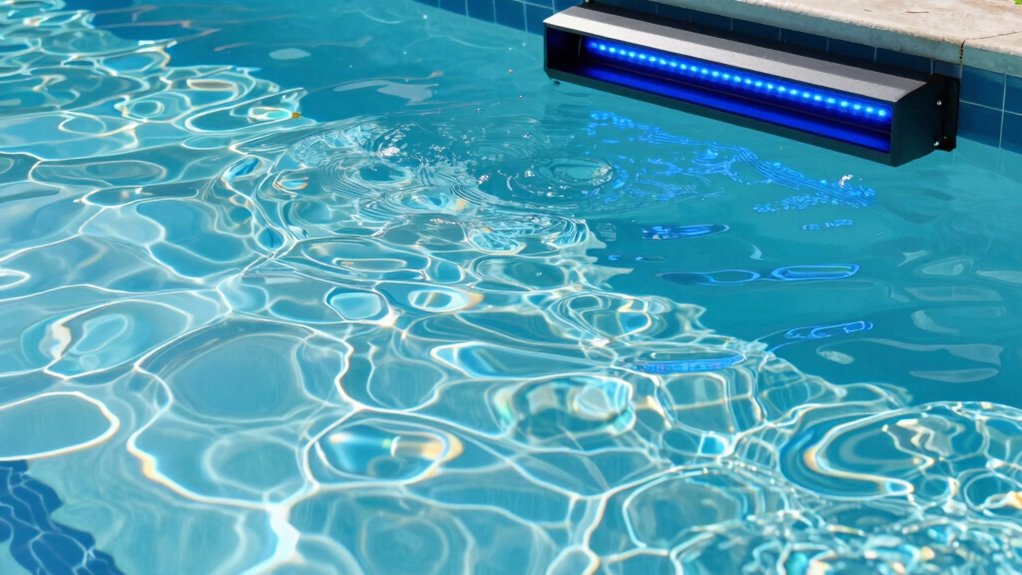

UV clarifiers disinfect water by targeting microorganisms with ultraviolet light, damaging their DNA or RNA to stop reproduction, all without using chemicals. In contrast, filters physically trap particles based on size, removing debris but not necessarily killing germs. This means UV systems provide a more thorough sterilization, especially for bacteria and viruses, without introducing chemical residues. Want to see how each method works and which might suit your needs better? Keep exploring to find out more.

Get garden gear delivered free — and shop member deals
- Fast, free delivery on millions of items
- Access to Prime Big Deal Days deals on October 6–7
- Prime Video, Amazon Music and more included
Key Takeaways
- Filters physically trap particles, while UV clarifiers chemically inactivate microorganisms in the water.
- UV systems use ultraviolet light to disrupt pathogen DNA or RNA, providing sterilization without removing particles.
- Filters rely on mechanical barriers based on size, whereas UV clarifiers target biological contaminants directly.
- UV clarifiers disinfect water rapidly and effectively without chemicals, unlike filters that mainly remove debris.
- UV treatment prevents microbial reproduction and infection without producing chemical residues or byproducts.
While traditional filters physically trap debris and contaminants, UV clarifiers use ultraviolet light to eliminate microorganisms, offering a different approach to water purification. Unlike filters that rely on mechanical barriers, UV systems target the biological components within water, disrupting their cellular functions without using chemicals. When water passes through a UV clarifier, the ultraviolet rays penetrate the cell walls of bacteria, viruses, and other pathogens, damaging their DNA or RNA. This process prevents microorganisms from reproducing or causing infection, providing a rapid and effective method of sterilization. The key difference lies in how these systems interact with the contaminants: filters remove particles based on size, while UV clarifiers neutralize microorganisms through chemical interactions within their biological structures. Because UV treatment directly inactivates microorganisms, it is often favored for applications requiring water sterilization and safety. This biological effect is achieved without introducing chemicals into the water, which can sometimes lead to byproducts or residuals that filters might not address. Additionally, UV systems can be easily maintained and quickly adapt to different water qualities, making them a versatile choice for many purification needs. They also provide a chemical-free approach to disinfection, reducing the risk of chemical residues in drinking water. Moreover, UV systems are capable of treating large volumes efficiently, making them suitable for both residential and commercial applications. Furthermore, because UV treatment doesn’t rely on chemical reactions with contaminants, it’s a cleaner, more environmentally friendly option. It also avoids the potential for chemical resistance, which can develop with chemical disinfectants over time.
As an affiliate, we earn on qualifying purchases.
Frequently Asked Questions
How Long Do UV Clarifiers Typically Last Before Bulb Replacement?
UV clarifiers typically last about 9 to 12 months before needing a bulb replacement. The bulb lifespan varies depending on usage and water conditions, so it’s crucial to follow the recommended replacement schedule. You should monitor the bulb’s performance and replace it promptly once it reaches the end of its effective life to guarantee continuous water clarity. Regular maintenance helps keep your UV clarifier working efficiently.
Can UV Clarifiers Treat All Types of Water Contaminants?
Can UV clarifiers treat all types of water contaminants? Well, think of them as warriors against microorganisms, but not as magicians for every pollutant. They primarily target pathogens, making water safe for drinking, but don’t excel at chemical removal or sediment filtration. For thorough purification, combine UV treatment with other methods like sediment filters and chemical removers. This layered approach ensures your water is truly clean and safe.
Are UV Clarifiers Effective in Outdoor or Well Water Systems?
Yes, UV clarifiers are effective in outdoor or well water systems. They work well for aquarium sterilization and pool sanitation by neutralizing bacteria and viruses. You should guarantee your UV system is properly sized and maintained for your specific water volume. Regularly check the UV bulb and keep the water flow steady to optimize performance. This way, you can enjoy clearer, safer water for your outdoor activities.
What Maintenance Is Required for UV Clarifiers Over Time?
Think of your UV clarifier as a diligent guardian, needing regular care to stay effective. You should perform UV maintenance by periodically cleaning the quartz sleeve and monitoring the bulb lifespan. Typically, the UV bulb needs replacing every 9 to 12 months, depending on use. Keeping the unit in good condition guarantees it continuously fights bacteria and viruses, maintaining clear water and safeguarding your health.
Do UV Clarifiers Impact Water Taste or Smell?
UV clarifiers generally don’t impact water taste or smell directly. However, if the UV bulb isn’t maintained properly, algae or bacteria might grow, causing water odor or taste alteration. Regular cleaning and timely replacement of the UV bulb prevent these issues. If you notice a strange taste or smell, check the system’s maintenance, as the clarifier itself isn’t usually responsible for changing water’s flavor or odor.
As an affiliate, we earn on qualifying purchases.
Conclusion
Just as Athena’s wisdom guides her, UV clarifiers illuminate the path to clearer water in ways traditional filters can’t match. They don’t just trap impurities—they actively destroy harmful microorganisms, offering a different kind of clarity. Think of them as the modern-day Minerva, wielding technology to protect your water. Embrace this innovation with confidence, knowing you’re not just filtering, but transforming your water into a pure, pristine source—like a myth come to life.
UV water disinfection bulb replacement
As an affiliate, we earn on qualifying purchases.
As an affiliate, we earn on qualifying purchases.
As an affiliate, we earn on qualifying purchases.
Fall yard work Picks
leaf blowers
As an affiliate, we earn on qualifying purchases.