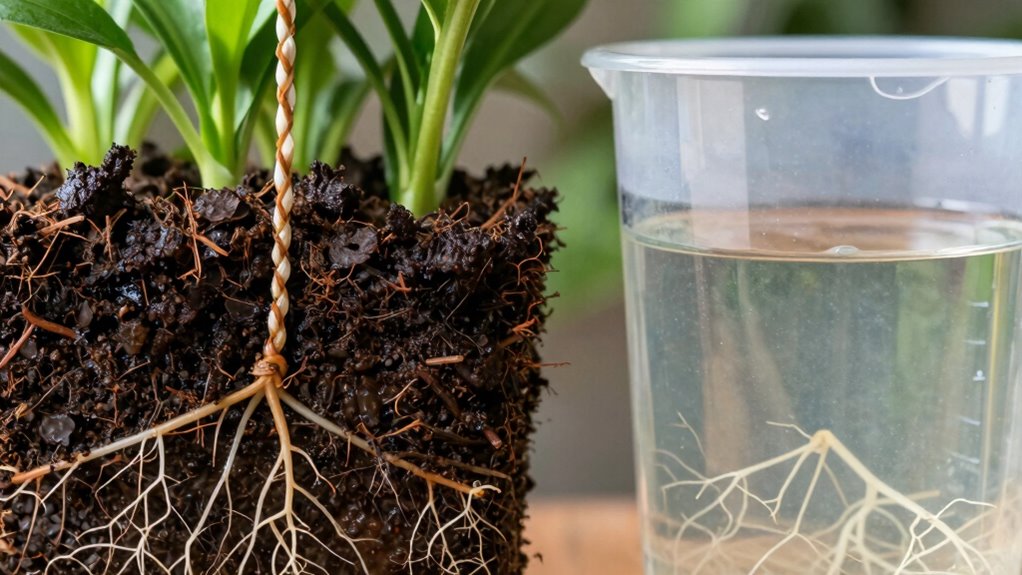

In wick beds, water moves gradually through capillary action, promoting soil aeration and preventing waterlogging, which benefits plants needing good airflow and well-drained soil. Self-watering pots keep a consistent moisture level at the root zone by supplying water directly from a reservoir, ideal for plants with high water needs. Both systems change the root environment differently—wick beds favor aeration, while self-watering maintains stable moisture—discover more to see how each impacts your plants’ health.

Get garden gear delivered free — and shop member deals
- Fast, free delivery on millions of items
- Access to Prime Big Deal Days deals on October 6–7
- Prime Video, Amazon Music and more included
Key Takeaways
- Wick beds promote soil aeration and prevent waterlogging, supporting healthy root development through gradual moisture supply.
- Self-watering pots maintain consistent moisture levels, reducing root stress but risking oxygen deprivation if overwatered.
- Wick beds allow excess water to drain freely, enhancing root oxygenation, whereas self-watering systems keep roots in stable, moist conditions.
- The root zone in wick beds experiences fluctuating moisture, while self-watering pots provide a more constant, controlled environment.
- Maintenance focus differs: wick beds need moisture management for soil health, while self-watering pots require reservoir level monitoring.

Are wick beds or self-watering pots better for your gardening needs? When deciding between these two watering systems, understanding what happens at the root zone can make all the difference. Wick beds rely on capillary action, drawing water from a reservoir into the soil or growing medium, which influences soil aeration and plant compatibility. Self-watering pots, on the other hand, use a water reservoir attached to a wicking or flooding system, providing consistent moisture directly to the roots. Both methods aim to keep plants hydrated, but they impact the root environment differently.
Wick beds promote aeration, while self-watering pots provide consistent moisture tailored to plant needs.
In wick beds, moisture is delivered gradually through wicks embedded in the soil, promoting a steady water supply. This setup encourages better soil aeration because excess water can drain freely, preventing waterlogging that suffocates roots. Improved soil aeration is essential because it allows oxygen to reach the root zone, fostering healthy root growth and reducing the risk of diseases caused by overly wet conditions. Wick beds are especially suitable for plants that prefer well-drained soil and require good airflow around their roots, like herbs or vegetables with shallow root systems. However, they might not be ideal for plants that need consistent moisture levels, as the capillary action depends on the wick’s quality and the soil’s moisture retention properties. Additionally, soil moisture levels in wick beds can fluctuate based on environmental conditions, which is important to consider for optimal plant health. Ensuring proper soil moisture retention is crucial for maximizing the benefits of wick beds. Proper watering frequency also plays a role in maintaining the ideal moisture balance at the root zone.
Self-watering pots provide a more controlled environment at the root zone, maintaining a stable moisture level by constantly supplying water from the reservoir. This consistency benefits plants that thrive in moist conditions or have high water demands, such as leafy greens or certain flowering plants. The downside is that if the reservoir isn’t monitored regularly, overwatering can occur, leading to poor soil aeration and root rot. Compatibility plays a vital role here—some plants tolerate or prefer the damp environment, while others may suffer from overly wet roots. Additionally, self-watering systems often limit soil volume, which can restrict root expansion, so plant compatibility with the container size and water retention capacity becomes essential. Understanding watering system efficiency can help in choosing the best method for your specific plant types and gardening environment. Regular checks of the water level in the reservoir are recommended to prevent issues related to over- or under-watering.
wicker beds for vegetable gardening
As an affiliate, we earn on qualifying purchases.
As an affiliate, we earn on qualifying purchases.
Frequently Asked Questions
Which System Is More Cost-Effective Long-Term?
Self-watering pots tend to be more cost-effective long-term because they require less water and maintenance, leading to significant cost savings over time. While the initial investment comparison might be higher for self-watering systems, their efficiency in water use and reduced need for frequent refilling make them more economical in the long run. You’ll save money by minimizing water waste and labor, making them a smarter investment for sustained gardening.
How Do Maintenance Requirements Differ Between the Two?
Like a trusty old knight’s armor, maintenance differs between the two. With wick beds, you’ll regularly check water levels, ensuring proper water retention efficiency and adjusting wick placement for best root zone aeration. Self-watering pots require less frequent attention—mainly refilling water reservoirs and cleaning filters. Overall, wick beds demand more consistent monitoring, while self-watering pots offer a more hands-off approach, saving you time and effort.
Can Both Systems Be Used Indoors?
Yes, both systems can be used indoors. You’ll need to take into account indoor humidity levels, as wick beds might increase humidity around your plants, while self-watering pots are more self-contained. Also, make sure your plants get enough light; both systems work well with proper placement near natural or artificial light sources. Adjust watering schedules accordingly, and you’ll successfully grow healthy plants indoors with either method.
Are There Specific Plants That Thrive Better in One System?
You’ll find that plants with consistent moisture needs, like herbs and leafy greens, thrive better in self-watering pots, promoting healthy root development. Conversely, wick beds suit plants that prefer slightly drier conditions or benefit from aerated roots, such as succulents or certain flowering plants. Matching plant compatibility with each system guarantees ideal root health, reduces overwatering, and encourages vigorous growth. Pay attention to each plant’s moisture preferences for best results.
How Do These Systems Impact Soil Oxygen Levels?
Imagine soil as a lively dance floor—when you use wick beds, it’s like guests are free to breathe, enhancing soil aeration and preventing root suffocation. Self-watering pots, however, can turn into a stuffy room where oxygen struggles to reach roots. This affects soil oxygen levels, risking root diseases. So, wick beds promote healthier roots, while self-watering pots might leave roots gasping for air.
self-watering plant pots for herbs
As an affiliate, we earn on qualifying purchases.
As an affiliate, we earn on qualifying purchases.
Conclusion
Ultimately, choosing between wick beds and self-watering pots depends on your gardening style and space. Both bring convenience and healthier roots—like a trusty steed versus a swift bicycle. Remember, even as you rely on modern tech, don’t forget the wisdom of old, like the wise owl overseeing your garden’s future. Whether you lean towards the traditional or the innovative, nurturing your roots guarantees your plants thrive, just as the ancients knew to tend their own.
As an affiliate, we earn on qualifying purchases.
As an affiliate, we earn on qualifying purchases.
Fall yard work Picks
leaf blowers
As an affiliate, we earn on qualifying purchases.