Blossom end rot mainly occurs when plants don’t get enough calcium, often caused by inconsistent watering or fluctuating soil moisture. It’s a myth that adding calcium alone solves the problem quickly; your watering habits and environmental stresses matter just as much. Overwatering or drought can prevent calcium from reaching fruit tissues. If you keep uneven watering or stress your plants, you’re more likely to see this issue. Stay tuned to learn how proper watering and care can help prevent blossom end rot effectively.
Key Takeaways
- Blossom end rot mainly results from calcium deficiency in fruit tissues, caused by inconsistent watering and environmental stress.
- Proper deep, even watering and mulching help maintain soil moisture, improving calcium uptake.
- Excess nitrogen and high temperatures can stress plants, impair calcium transport, and increase rot risk.
- Adding calcium to soil alone doesn’t immediately prevent blossom end rot; consistent watering is crucial.
- Myth: Blossom end rot is solely caused by calcium deficiency; in reality, watering practices and environmental factors play significant roles.
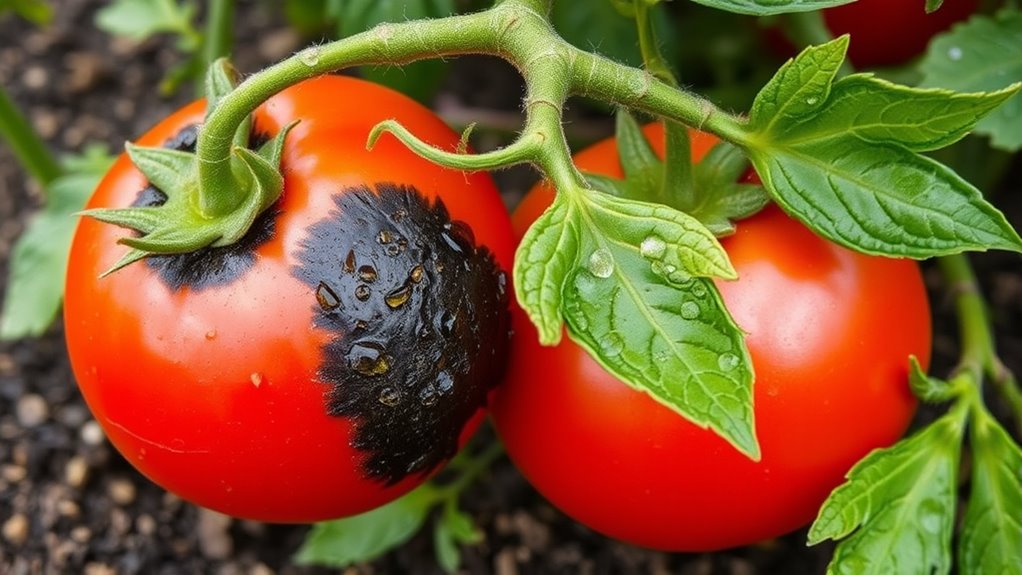
Have you ever noticed a dark, sunken spot at the blossom end of your tomatoes or peppers? If so, you’re likely dealing with blossom end rot, a common problem that can be frustrating for gardeners. One of the key factors behind this issue is the imbalance or deficiency of soil calcium. Calcium is crucial for cell wall development in plants, and when plants can’t get enough, their tissues weaken, leading to the characteristic dark, leathery spots. But it’s not just about soil calcium levels; watering practices play a significant role too.
You might think that adding calcium to your soil will fix the problem immediately, but if your watering habits are inconsistent, the issue can persist. Fluctuations in watering cause the plant’s roots to struggle with nutrient uptake, including calcium. When the soil dries out, calcium becomes less available to the plant, even if it’s present in the soil. Conversely, overwatering can lead to poor root health and reduced calcium absorption. To prevent this, you need to maintain steady, even moisture levels. Water your plants deeply and regularly, aiming to keep the soil evenly moist but not waterlogged. Using mulch can help retain soil moisture and ensure a consistent supply of water to your plants.
Another misconception is that blossom end rot is solely caused by calcium deficiency. While calcium deficiency is a primary factor, it’s often a symptom of other issues. For example, rapid growth due to excess nitrogen can outpace the plant’s ability to take up calcium, putting stress on the developing fruit. Additionally, environmental stresses—like high temperatures or uneven watering—disrupt calcium transport within the plant, making it unavailable at critical growth points. Proper watering techniques are essential for optimizing calcium uptake and preventing blossom end rot. It’s also crucial to recognize that the problem isn’t just about adding calcium but also about providing the right growing conditions that facilitate calcium uptake.
Frequently Asked Questions
Can Blossom End Rot Occur in Plants Other Than Tomatoes?
Blossom end rot can occur in plants beyond tomatoes, including fruiting trees like peppers and eggplants, as well as some ornamental plants. You might notice dark, sunken spots on the fruit or vegetables, indicating this issue. It’s caused by calcium deficiency and irregular watering. To prevent it, guarantee consistent moisture and add calcium-rich fertilizers. Recognizing this problem early helps you take steps to protect your plants and keep them healthy.
Does Overwatering Contribute to Blossom End Rot?
Beware, watering stress can worsen blossom end rot! Overwatering causes nutrient imbalance, leading to calcium deficiency, which triggers the rot. When you water excessively, roots struggle to absorb essential nutrients, making plants more susceptible. To prevent this, water wisely, ensuring consistent moisture without flooding. Proper watering promotes healthy calcium uptake, helping your plants resist blossom end rot. Remember, balance is key—avoid overdoing it to keep your crops thriving!
Are There Organic Remedies for Preventing Blossom End Rot?
Yes, you can use organic prevention methods for blossom end rot. Natural remedies like applying calcium-rich organic amendments, such as crushed eggshells or bone meal, help strengthen your plants. Consistent watering guarantees your tomatoes absorb nutrients evenly, reducing stress. Mulching retains moisture and maintains soil health. By incorporating these organic prevention techniques and natural remedies, you give your plants the best chance to avoid blossom end rot naturally.
How Does Soil Ph Affect Blossom End Rot Development?
Think of your soil as the foundation of a sturdy house; if it’s too acidic or alkaline, your plants struggle to thrive. Soil pH directly influences nutrient availability, essential for preventing blossom end rot. When the soil’s pH is off-balance, calcium and other nutrients become less accessible, leaving your tomatoes vulnerable. By maintaining the right soil acidity, you foster a healthy environment where nutrients flow freely, shielding your plants from rot.
Can Pruning Help Reduce the Risk of Blossom End Rot?
Pruning techniques can help reduce the risk of blossom end rot by improving your plant’s overall health management. By removing dead or diseased leaves and stems, you enhance airflow and reduce stress, which supports better calcium uptake. Proper pruning encourages stronger plants that are less susceptible to deficiencies. Just be careful not to over-prune, as it may stress the plant further. Consistent plant health management is key to preventing blossom end rot.
Conclusion
So, next time you see that pesky black patch at the end of your tomatoes, remember it’s not always a sign of bad luck or a cursed garden. Blossom end rot might just be your plant’s way of telling you it needs a little more water or calcium. Ironically, after all the myths and fuss, sometimes the simplest fix is just giving your plant a drink. Who knew gardening could be so straightforward—and so full of surprises?