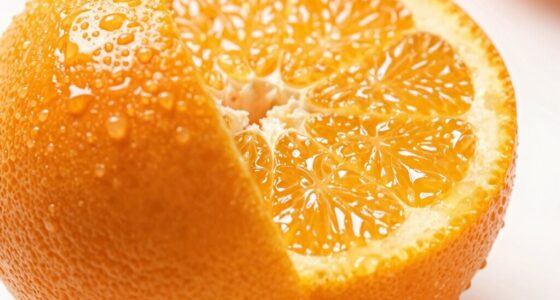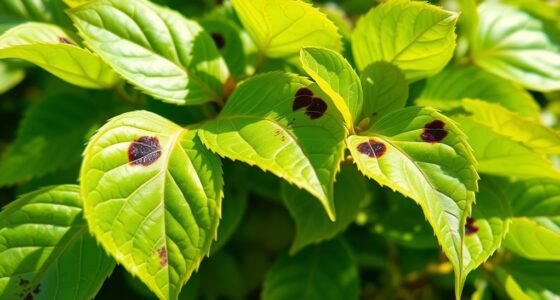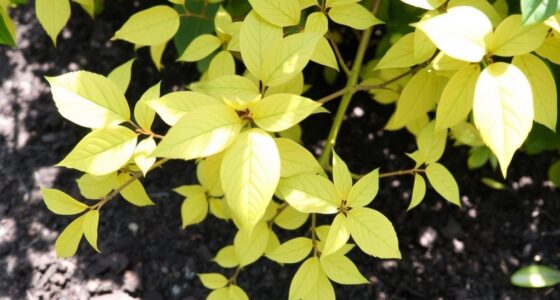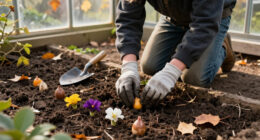
Sunscald on fruit and bark happens when intense sunlight and high temperatures cause the plant tissues to scorch, crack, or develop pale patches. To prevent this, keep plants well-watered, as healthy, hydrated tissues resist sun damage better. Protect exposed areas with shade cloths or reflective mulches, and prune excess foliage for better airflow. Pests can weaken bark, so regular inspections help. If you want to learn more about protecting your plants from sunscald, keep going.

Get garden gear delivered free — and shop member deals
- Fast, free delivery on millions of items
- Access to Prime Big Deal Days deals on October 6–7
- Prime Video, Amazon Music and more included
Key Takeaways
- Sunscald appears as pale, scorched patches on fruit or bark caused by intense sunlight and high temperatures.
- Proper watering and mulching strengthen plant tissues, reducing vulnerability to sun damage.
- Pests weaken bark, creating entry points that increase the risk of sunscald development.
- Installing shade cloths or reflective mulches helps diffuse sunlight and protect vulnerable areas.
- Regular monitoring and early intervention prevent progression of tissue injury and maintain healthy fruit and bark.
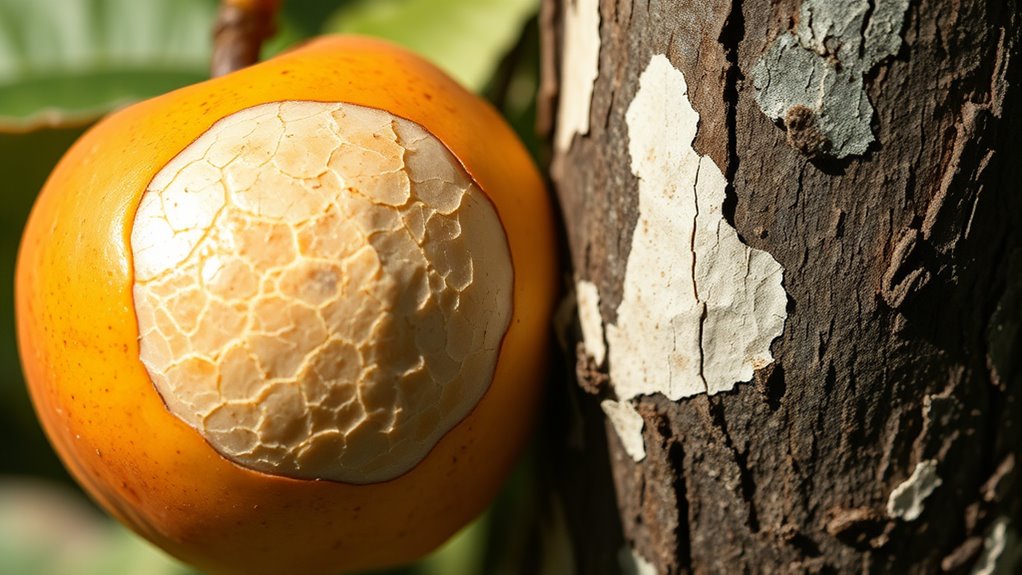
Have you ever noticed pale, scorched patches on fruit or bark during hot, sunny days? That’s sunscald, a common problem that can seriously damage your trees and fruit. It occurs when the sun’s intense rays heat the plant’s surface, especially on the side exposed to direct sunlight, causing tissue injury. If you want to protect your plants from this harsh damage, understanding how to manage watering practices and pest control is vital. Proper watering helps keep the plant’s tissues healthy and resilient against sun damage. When your trees are well-hydrated, their bark and fruit are better equipped to withstand the stress caused by high temperatures and direct sunlight. Conversely, drought-stressed plants are more susceptible to sunscald because their tissues become brittle and less capable of handling environmental stressors. You should guarantee consistent watering, especially during dry spells, by applying deep, thorough soakings that reach the roots. Mulching around the base of the trees can also help retain soil moisture and stabilize temperature fluctuations, reducing the risk of sunscald. Maintaining healthy plant tissues through proper care is essential for preventing sun damage. Pest control plays an essential role as well. Some pests, like borers or beetles, can weaken the bark, making it more vulnerable to sun damage. If pests are present, they create entry points or weaken the tissue, which can accelerate sunscald development. Regular inspections and prompt pest management can prevent these issues from compounding. Using appropriate organic or chemical controls, depending on your preference, can keep pests at bay and preserve the integrity of your tree’s bark. When the bark remains intact and healthy, it offers a natural barrier against the sun’s rays, lowering the chances of sunscald. Another effective strategy involves providing physical protection. Installing shade cloths or reflective mulches can help diffuse sunlight and reduce heat buildup. Positioning trees or sensitive fruits in areas with some natural shade, such as near taller plants or structures, also minimizes sun exposure. Pruning excess foliage can improve air circulation and reduce heat buildup around the fruit or trunk, further decreasing the likelihood of sunscald. Remember, consistent monitoring and early intervention are vital. By paying attention to watering practices and maintaining effective pest control, you create a healthier environment that naturally resists sun damage. These measures work together to strengthen your trees’ defenses, guaranteeing your fruit remains healthy and your bark stays intact despite the relentless summer sun.
As an affiliate, we earn on qualifying purchases.
Frequently Asked Questions
How Can I Prevent Sunscald on Young Trees?
To prevent sunscald on young trees, you should start by providing tree shading during the hottest parts of the day, especially in summer. Use burlap or shade cloth to protect the trunk and branches. Additionally, apply bark insulation or white latex paint to reflect sunlight and keep the bark cool. These steps help prevent damage, promote healthy growth, and guarantee your young trees thrive in sunny conditions.
Does Sunscald Affect Only Certain Fruit Varieties?
Sunscald can affect various fruit varieties, especially those with thin skin or high bark vulnerability. Some varieties are more susceptible due to their genetic traits, making them prone to damage when exposed to intense sunlight. You should monitor these vulnerable fruit varieties closely, especially during hot, sunny periods. Protecting them with shade or wrapping can help minimize sunscald, ensuring healthier, better-quality fruit.
Are There Natural Remedies for Existing Sunscald Damage?
You can try natural remedies to help with sunscald repair. Applying organic aloe vera gel or a diluted milk solution can soothe and promote healing on affected areas. While these remedies won’t fully reverse damage, they help protect the tissue and encourage recovery. Keep damaged parts shaded and avoid further sun exposure to prevent worsening. Consistent care and natural remedies can support your plant’s healing process effectively.
How Does Sunscald Impact Tree Lifespan?
Sunscald can shorten your tree’s lifespan by damaging bark and underlying tissues, making it more vulnerable to pests and diseases. This damage can reduce tree longevity and compromise orchard productivity over time. When your trees suffer from sunscald, they may weaken and decline faster, affecting fruit yield and overall health. Protecting your trees from sun exposure helps maintain their resilience, ensuring they live longer and produce more consistently.
Can Sunscald Be Treated After It Occurs?
Did you know that prompt post-treatment care can greatly improve sunscald recovery? Yes, sunscald can be treated after it occurs. You should first remove any loose bark or damaged tissue. Then, apply a protective barrier like tree wound paint or a natural tree wound dressing. Consistent moisture and avoiding further sun exposure help healing. Proper post-treatment care ensures your tree recovers faster and reduces future sunscald risks.
As an affiliate, we earn on qualifying purchases.
Conclusion
To prevent sunscald on your fruit and bark, you need to provide shade, apply protective coverings, and guarantee proper pruning. By shielding vulnerable areas, avoiding excessive sun exposure, and maintaining healthy tree health, you create a strong defense. Protecting your trees from sunscald means protecting their growth, preserving their beauty, and prolonging their lifespan. When you take these steps, you’re not just preventing damage—you’re nurturing resilience, fostering vitality, and securing the future of your trees.
As an affiliate, we earn on qualifying purchases.
As an affiliate, we earn on qualifying purchases.
Fall Picks
fall essentials
As an affiliate, we earn on qualifying purchases.