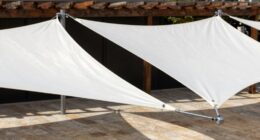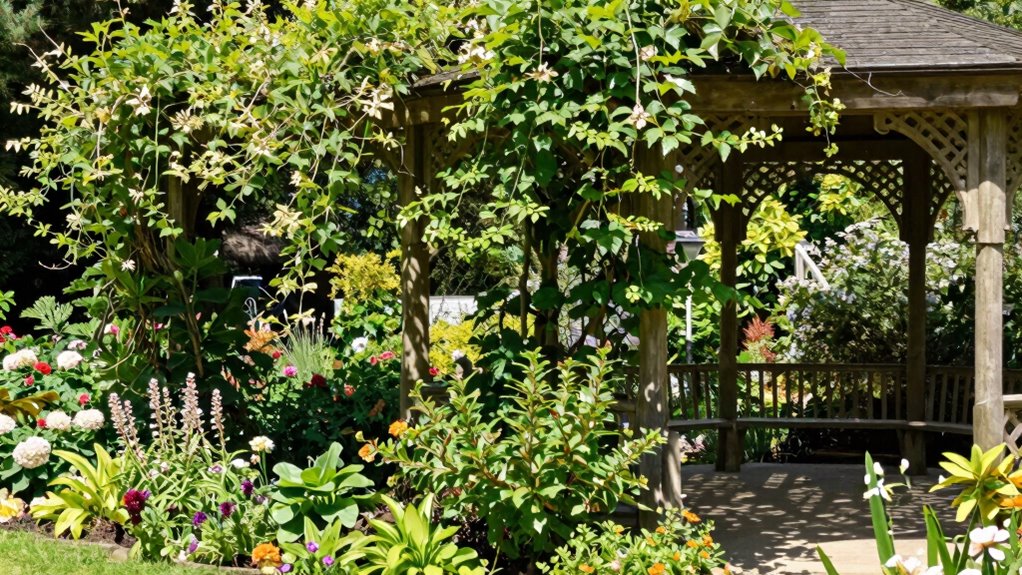

Installing pergolas or gazebos provides your plants with shade that reduces heat stress, preventing overheating and water loss. The shade helps keep soil cooler and retains moisture longer, decreasing your watering needs. It also moderates temperatures to avoid sudden fluctuations that can stress plants. By creating a more stable microclimate, these structures help plants stay healthy and conserve water, making your garden more sustainable—exploring this further can reveal even better ways to optimize your garden’s microclimate.
Key Takeaways
- Shade structures reduce direct sunlight, lowering leaf temperature and minimizing heat stress on plants.
- Partial shading decreases soil evaporation, helping maintain soil moisture and reducing water requirements.
- By moderating temperature fluctuations, pergolas and gazebos protect roots from thermal stress and dehydration.
- Reduced solar radiation limits water loss through transpiration, conserving water and promoting healthier plant growth.
- Proper placement and ventilation of shade structures improve airflow, decreasing humidity-related pests and diseases.
How Pergolas and Gazebos Reduce Plant Stress

Pergolas and gazebos can considerably reduce plant stress by providing essential shade and shelter. When plants are exposed to intense sunlight, their leaves can overheat, disrupting plant respiration, which is crucial for energy production. By offering shade, these structures help maintain ideal leaf temperatures, ensuring efficient respiration. Additionally, shade structures protect roots from extreme temperature fluctuations and direct sunlight, preventing dehydration and root damage. Shielding roots from excessive heat minimizes water loss and supports healthy nutrient uptake. This protection helps plants conserve energy, promotes steady growth, and reduces stress-related issues. Proper shade management is essential for enhancing plant health and resilience in outdoor spaces. Furthermore, implementing these structures can also improve overall microclimate conditions, creating a more favorable environment for diverse plant species. Incorporating natural elements like surrounding greenery can further enhance the cooling effect and promote a balanced ecosystem. Introducing shade structures can also reduce the need for supplemental watering, conserving water resources during dry periods. Additionally, well-designed shade features can help mitigate the impact of extreme weather events, supporting long-term plant vitality.
How Shade Structures Lower Your Garden’s Water Needs

Shade structures like pergolas and gazebos considerably reduce the amount of water your garden needs by limiting direct sunlight and minimizing evaporation. With less exposure to intense heat, soil moisture stays higher longer, helping you maintain a more stable environment for your plants. This can also support the development of nanostructured materials that enhance water retention and soil health. Incorporating these structures can promote soil stability, leading to healthier root systems and better plant growth. Additionally, these structures help regulate soil temperature, preventing extreme fluctuations that can stress plants. Properly designed shade structures can also facilitate microclimate regulation, creating optimal growing conditions. This can contribute to enhanced plant resilience, making your garden more adaptable to environmental stresses. This means you can adjust your watering schedules, watering less frequently and more efficiently. By protecting your soil from rapid drying, these structures prevent unnecessary water loss, saving you time and resources. Consistent soil moisture becomes easier to achieve, reducing the risk of overwatering or underwatering. Overall, incorporating shade structures helps create a more sustainable watering routine while supporting healthier plant growth with less water.
Microclimate Benefits of Pergolas and Gazebos for Plant Growth

Pergolas and gazebos can create a microclimate that benefits your plants by moderating temperature fluctuations. They also improve humidity levels and airflow, helping plants stay healthier and more resilient. These structures give you a simple way to optimize growing conditions right in your garden. Additionally, understanding color temperature adjustments can help you further tailor the environment for optimal plant health. Being aware of solar radiation helps you select the best placement and shading levels to protect your plants from excessive heat or sun damage. Incorporating shade management techniques can further enhance the microclimate benefits offered by these structures. Employing sustainable practices in the design and placement of pergolas and gazebos ensures that your garden remains environmentally friendly and supports plant growth.
Temperature Regulation Benefits
By providing partial cover from direct sunlight, pergolas and gazebos help create a more stable microclimate that benefits plant growth. They reduce solar radiation reaching plants, preventing overheating and stress caused by intense sun exposure. This shading moderates temperature fluctuations, keeping temperatures more consistent throughout the day. As a result, plants experience less thermal shock, promoting healthier development and reducing water loss. With better temperature regulation, plants aren’t forced to use extra energy to cope with extreme heat or cold, making their growth more efficient. This microclimate stability allows you to extend the growing season and protect sensitive species. Additionally, ventilation systems can further enhance microclimate control by maintaining air quality and humidity levels around your plants, and climate management tools can help optimize conditions for different plant types. Incorporating natural shade options like pergolas and gazebos can also support sustainable gardening practices by reducing the need for artificial cooling or watering. These structures can be designed with smart irrigation systems that respond to microclimate conditions, further conserving water and energy. Overall, pergolas and gazebos act as natural temperature buffers, supporting your plants’ well-being by minimizing the stress caused by temperature extremes.
Humidity and Airflow Enhancement
Creating a balanced microclimate also involves managing humidity levels and promoting proper airflow around your plants. Pergolas and gazebos provide shade enhancement, which helps reduce excessive evaporation and maintain stable humidity. This creates a more consistent environment, preventing stress from extreme dryness or dampness. Additionally, their open design encourages airflow improvement, allowing fresh air to circulate freely. Proper airflow reduces humidity pockets that can foster mold, mildew, and pests, safeguarding plant health. By enhancing airflow, you help regulate moisture levels and prevent fungal issues. This combination of shade and ventilation supports ideal growth conditions, making your plants more resilient. Furthermore, incorporating architectural solutions like pergolas and gazebos can be tailored to optimize microclimate management in your garden. Proper microclimate management is vital for optimizing plant growth and health. Overall, pergolas and gazebos serve as essential tools to fine-tune humidity and airflow, creating a healthier microclimate for your garden.
How to Choose the Best Shade Structure for Your Garden

Choosing the right shade structure depends on the materials you prefer and how durable they are over time. You also need to take into account the size and placement to ensure it fits your garden and provides adequate coverage. By focusing on these points, you’ll find a solution that enhances your outdoor space and lasts for years. Additionally, understanding the safety considerations of different materials and designs can help prevent accidents and ensure your structure remains reliable over time. Considering maintenance requirements can also influence your long-term satisfaction with the shade structure.
Material Options and Durability
Selecting the right material for your pergola or gazebo is essential because it directly affects the structure’s durability and appearance. When considering material options, think about how durability considerations influence longevity and maintenance. Wood offers a natural look but may require regular treatment to prevent rot. Vinyl provides low maintenance and resistance to weather, making it a popular choice. Metal, such as aluminum or steel, ensures strength and longevity but can be heavier and more expensive. Key factors include:
- Resistance to weather and pests
- Maintenance needs over time
- Aesthetic compatibility with your garden
Size and Placement Considerations
When determining the right size and placement for your pergola or gazebo, it’s important to take into account how the structure will fit within your garden’s layout and your outdoor needs. Consider the plant size around your garden; guarantee the shade structure doesn’t overshadow or crowd your plants, which could increase stress or water needs. Your placement strategy should focus on maximizing shade for specific areas, like vegetable beds or seating zones, while allowing enough space for growth and maintenance. Think about sun paths and prevailing winds to position the structure effectively. A well-chosen size and strategic placement can provide ideal shade, reduce plant stress, and create a comfortable outdoor environment. Proper planning ensures your shade structure enhances both your garden’s health and your enjoyment.
Design Tips for a Water-Efficient, Shade-Optimized Garden
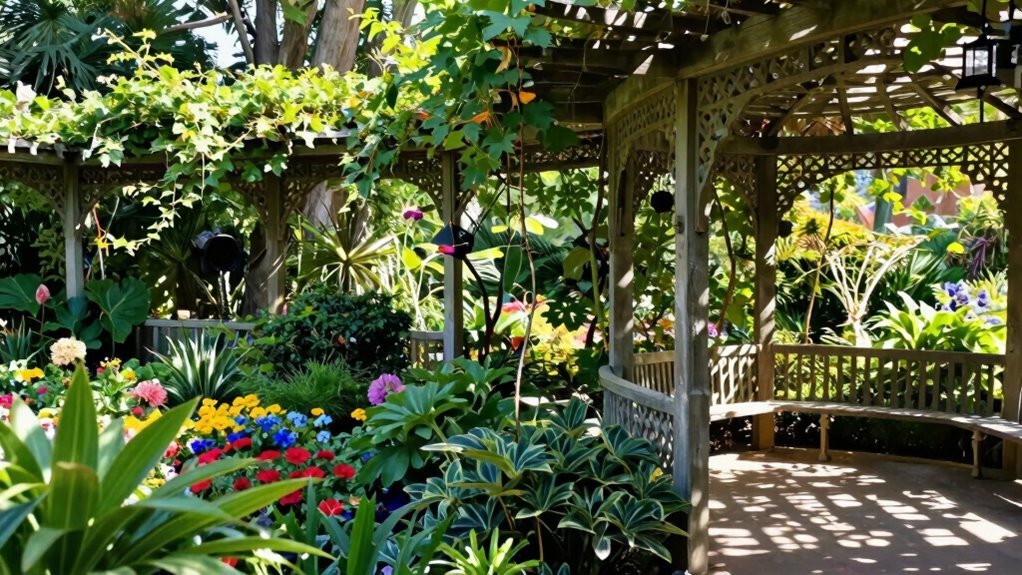
Creating a water-efficient, shade-optimized garden starts with strategic design that maximizes natural cooling and minimizes water use. Focus on selecting drought-tolerant plants that thrive in partial shade, reducing irrigation needs. Proper plant pruning encourages healthy growth and airflow, decreasing stress and water demand. Use soil amendments like compost to improve water retention and soil health, making irrigation more efficient. Position your pergolas and gazebos to cast ideal shade during peak heat hours, protecting plants from excessive stress. Incorporate mulch around plants to reduce evaporation. Additionally, group plants with similar water needs together to streamline watering and prevent waste. These design choices work together to create a sustainable, lush garden that requires less water while thriving under shaded conditions.
Avoid These Common Mistakes When Using Pergolas and Gazebos for Plants
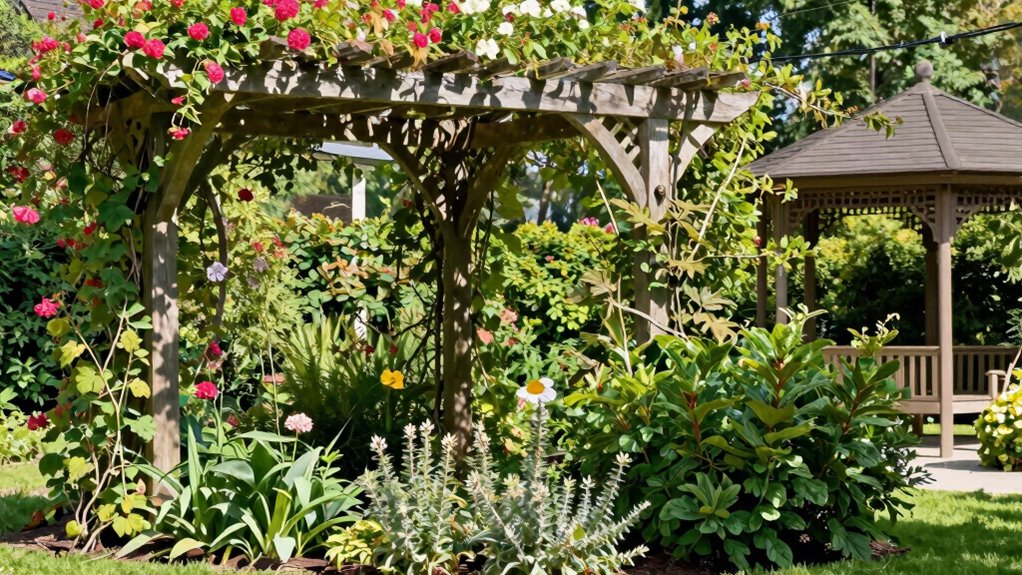
Even with the best intentions, many people make common mistakes when using pergolas and gazebos to support plants, which can hinder growth and reduce the structure’s effectiveness. One mistake is neglecting proper garden pruning; overgrown or poorly timed pruning can stress plants and limit airflow. Failing to manage pests is another issue; unchecked pests can weaken plants and cause disease, especially in shaded areas where airflow is reduced. Additionally, placing plants too close to the structure can lead to overcrowding, impeding growth and complicating pest management efforts. Remember to regularly prune for health and shape, and stay vigilant about pest control. Proper maintenance guarantees your plants thrive under pergolas and gazebos, maximizing shade benefits without compromising plant health.
Frequently Asked Questions
How Does Shade From Pergolas Affect Soil Temperature?
Shade from pergolas cools your soil by providing shade, which helps with soil cooling and temperature moderation. When you place a pergola over your plants, it reduces direct sunlight, preventing soil from overheating. This cooler soil environment supports healthier root systems, reduces water evaporation, and minimizes stress on your plants, especially during hot days. Overall, your pergola offers a simple way to create a more stable and comfortable growing environment.
Can Pergolas Help Prevent Plant Sunburn?
Yes, pergolas can help prevent plant sunburn by providing shade protection. When you position your plants under a pergola, it shields them from direct sunlight, reducing the risk of leaf scorch and damage. This shade helps maintain cooler temperatures around your plants, especially during hot, sunny days. By offering a comfortable environment, you give your plants a better chance to thrive without suffering from sunburn or stress caused by excessive heat.
Do Gazebos Impact Local Humidity Levels?
Yes, gazebos can impact local humidity levels by creating a shaded microclimate that retains moisture longer. When you install a gazebo, it can increase humidity in the immediate area, especially if surrounded by plants or water features. This change in the local microclimate might benefit some plants needing higher humidity but could also promote mold or fungi if not properly ventilated. Keep an eye on these microclimate shifts to maintain healthy plant growth.
How Quickly Do Plants Adapt to New Shade Structures?
You might think plants take ages to adapt, but they actually adjust surprisingly fast—sometimes in just days! When sunlight reduction from new shade structures occurs, plants undergo rapid shade adaptation. Leaves tweak their chlorophyll, and root systems shift quickly to optimize water use. Within a week, your plants often settle into their new shaded environment, reducing stress and water needs almost overnight. It’s faster than you’d ever imagine!
Are There Specific Plants That Benefit Most From Shade?
You’ll find that many plants benefit from shade, especially sun-sensitive species like ferns, hostas, and impatiens. These plants thrive when you add plant shade, reducing stress and water needs. Shade offers protection from harsh sunlight, helping delicate leaves stay healthy. If you have sun-sensitive species, including these in shaded areas guarantees they flourish, stay vibrant, and require less frequent watering.
Conclusion
By incorporating pergolas and gazebos into your garden, you can create a cozy microclimate that reduces plant stress and cuts water needs—think of it as your very own secret garden of Eden. Just remember, even in this modern age, a well-placed shade structure can make all the difference. So, plan wisely, avoid common pitfalls, and watch your plants flourish like a noble estate of old. Happy gardening!