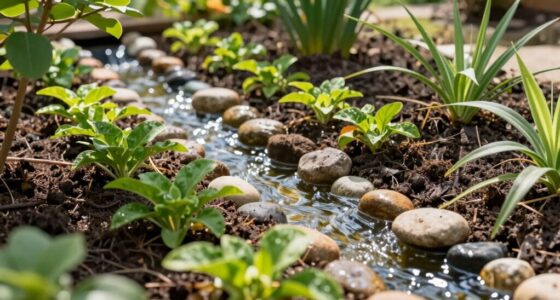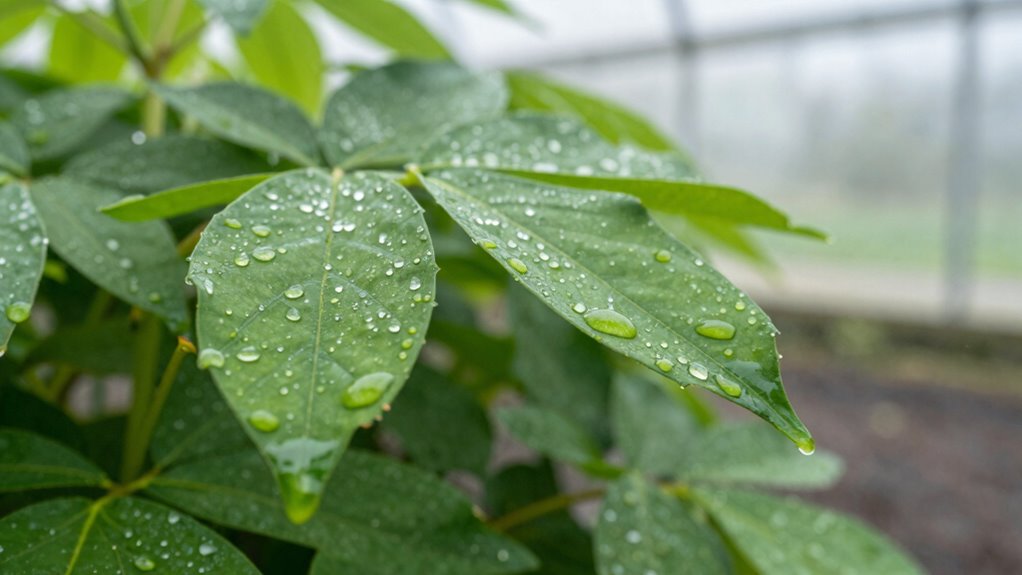

When condensation forms inside your greenhouse, moisture persists on surfaces and leaves, creating perfect breeding grounds for mold, mildew, and bacteria. This excess humidity hampers plant growth and weakens their defenses. Without proper ventilation or humidity control, these damp conditions become a hot spot for diseases to spread quickly. By managing airflow and moisture levels, you can reduce these risks. Keep going to discover effective strategies for preventing condensation from turning your greenhouse into a disease magnet.

Get garden gear delivered free with Prime
- Fast, free delivery on millions of items
- Prime Video, Amazon Music and more included
- Member-only deals all year
Key Takeaways
- Condensation creates persistent moisture on surfaces, providing ideal conditions for fungal and bacterial disease development.
- Excess humidity from condensation promotes surface water droplets that facilitate pathogen spread.
- Continuous moisture buildup weakens plant defenses, increasing susceptibility to diseases.
- Poor ventilation and inadequate humidity control lead to stagnant, humid environments that harbor pathogens.
- Condensation-driven high humidity zones act as breeding grounds for mold, mildew, and other plant diseases.
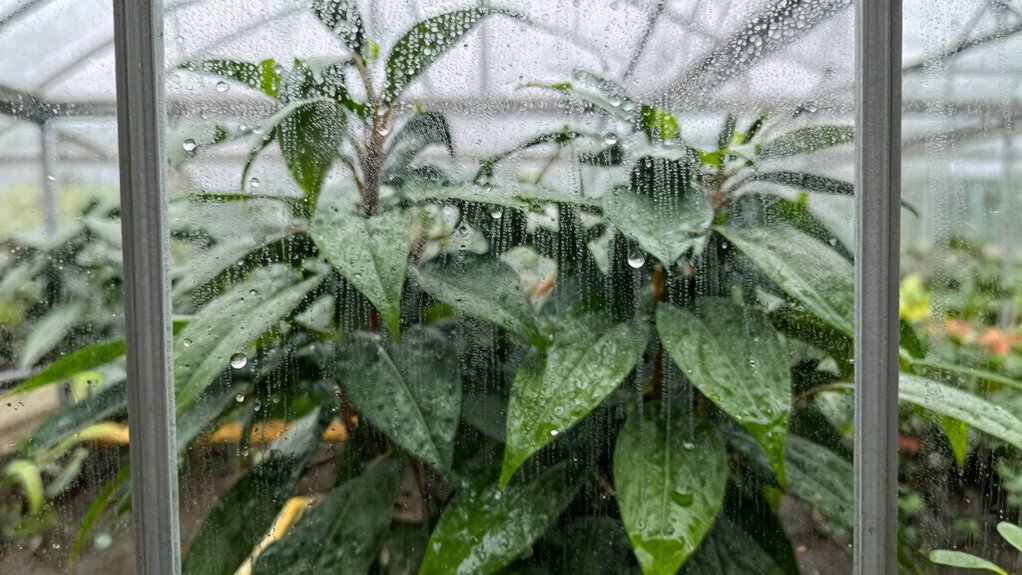
Have you ever noticed water droplets forming on the inside of your greenhouse? That’s condensation, and it’s often a sign that your environment’s humidity levels aren’t quite right. When humidity becomes too high, it creates the perfect conditions for mold, mildew, and bacterial diseases to thrive. Managing this moisture is crucial to keeping your plants healthy and preventing the spread of diseases that can devastate your crops. To do this effectively, you need a good grasp of humidity control and ventilation strategies.
Humidity control is indispensable because excess moisture in the air not only encourages disease but also hampers plant growth. If you let humidity stay elevated for too long, water droplets will continuously form on surfaces, leaves, and even plant stems. This constant moisture provides a breeding ground for pathogens. The key is to monitor your greenhouse’s humidity levels regularly and adjust accordingly. Using humidifiers or dehumidifiers can help maintain a balanced environment, but they must be used in conjunction with proper ventilation strategies. Proper airflow reduces stagnant, humid air and replaces it with drier, fresh air from outside, lowering the chances of condensation and disease buildup. Additionally, understanding ventilation effectiveness can help optimize air exchange and moisture removal. Ensuring proper air circulation**** is essential for preventing hotspots of humidity that promote disease development. Regularly inspecting and maintaining ventilation equipment also ensures it functions efficiently and effectively.
Ventilation strategies are your frontline defense against condensation. It’s not enough to just open windows; you need a systematic approach to ensure consistent airflow. Installing exhaust fans, roof vents, or sidewall vents helps circulate air and prevent moisture from settling on surfaces. Automated ventilation systems can be timed or triggered by humidity sensors, making it easier to keep conditions ideal without constant manual adjustments. When outside temperatures fluctuate or during the day when transpiration rates are high, proper ventilation pulls excess moisture out of the greenhouse environment. This constant exchange of air minimizes water droplets forming on plants and surfaces, reducing the risk of disease. Being aware of humidity fluctuations can help you better time your ventilation efforts and prevent moisture buildup.
As an affiliate, we earn on qualifying purchases.
Frequently Asked Questions
How Can I Prevent Condensation Without Affecting Plant Growth?
To prevent condensation without affecting plant growth, focus on humidity management by maintaining consistent temperature and air circulation. Use fans or vents to reduce excess moisture and guarantee proper airflow. Applying surface treatments, like anti-condensation coatings or moisture-absorbing materials, can also help. Regularly monitor humidity levels and adjust ventilation accordingly, creating an environment that minimizes condensation while supporting healthy plant development.
Does Condensation Affect All Greenhouse Types Equally?
Condensation doesn’t affect all greenhouse types equally. Factors like humidity control and surface treatments play a significant role. In high-humidity environments, condensation is more likely to cause disease issues. Using surface treatments can help reduce moisture buildup, while proper humidity control minimizes condensation formation. In controlled environments like hydroponic systems, effects are less severe, but in open or less regulated greenhouses, condensation’s impact can be more problematic.
Are There Specific Plants More Vulnerable to Diseases From Condensation?
You might think all plants are equally vulnerable, but some are more susceptible to diseases caused by condensation. For instance, leafy greens and delicate flowers tend to have higher plant susceptibility, making them more prone to fungal infections like powdery mildew or mold. Their dense foliage traps moisture, increasing disease vulnerability. To protect your plants, monitor humidity levels closely and guarantee good airflow, especially for these more vulnerable species.
Can Ventilation Alone Control Condensation Effectively?
Ventilation alone can effectively control condensation if you focus on proper humidity control and consistent air circulation. By increasing airflow, you reduce moisture buildup, preventing excess humidity that leads to condensation. Use fans or vents strategically to keep the air moving, especially during damp conditions. While ventilation is essential, combining it with humidity monitoring guarantees your greenhouse stays dry, minimizing disease risks and creating a healthier environment for your plants.
What Are Quick Fixes for Existing Condensation Problems?
Think of your greenhouse as a sponge soaking up moisture; quick fixes can help squeeze out excess water. Use humidifiers to control humidity levels and prevent excess moisture. Improve heating techniques by increasing airflow and warmth, which helps dry out the air. Ventilate more frequently, open windows, or add fans to circulate air. These steps act like a quick patch, reducing condensation and protecting your plants from disease.
automatic greenhouse ventilation system
As an affiliate, we earn on qualifying purchases.
As an affiliate, we earn on qualifying purchases.
Conclusion
Think of your greenhouse as a delicate glass house—you might be proud of its clarity, but even the tiniest drop of condensation can invite unwelcome guests. I once watched a fellow gardener wake up to a smudged mirror, only to realize it was mold creeping across her glass. Just like that mirror, your greenhouse’s moist surfaces become a magnet for disease. Keeping condensation in check keeps your plants healthy and your greenhouse a thriving, disease-free sanctuary.
As an affiliate, we earn on qualifying purchases.
As an affiliate, we earn on qualifying purchases.
Columbus Day / Indigenous Peoples' Day Picks
long weekend sales
As an affiliate, we earn on qualifying purchases.