
When you try to help your plant, you might accidentally cause stress by overwatering, underwatering, or using too much fertilizer. These actions can damage roots or create nutrient imbalances, leading to leaf burn or crispy edges. Improper watering routines and poor soil conditions can worsen the problem. If you keep exploring, you’ll discover more about how to fix these issues and give your plant the right care it needs to recover.

Get garden gear delivered free with Prime
- Fast, free delivery on millions of items
- Prime Video, Amazon Music and more included
- Member-only deals all year
Key Takeaways
- Overwatering during watering correction can drown roots, causing stress and leaf burn.
- Using excessive fertilizer or improper application leads to nutrient imbalance, damaging leaves.
- Sudden changes in watering or fertilizing disrupt the plant’s nutrient and water uptake.
- Poor soil drainage or quality may worsen root damage, resulting in leaf browning.
- Incorrect care adjustments can overstress the plant, triggering leaf burn symptoms.

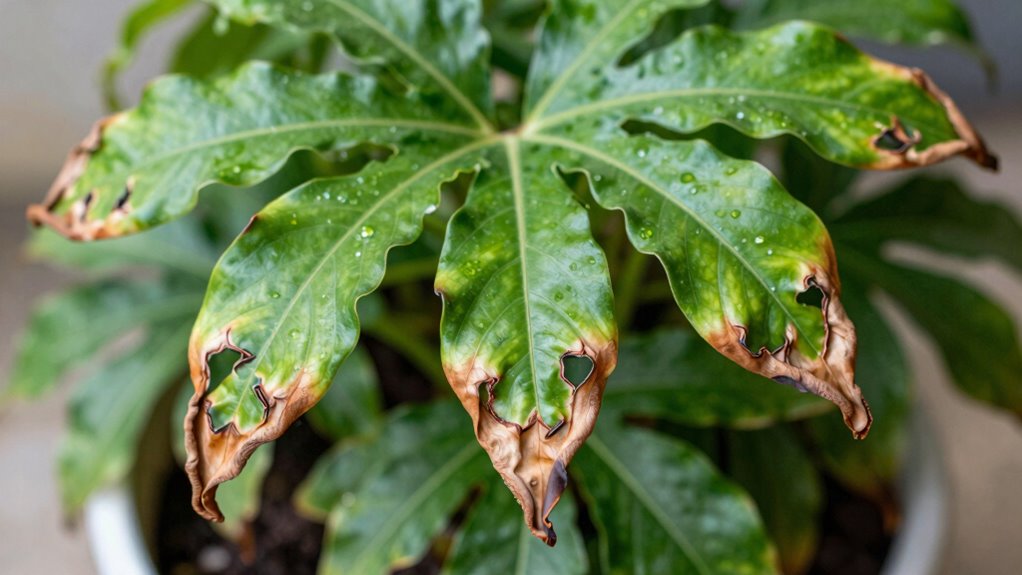
If you’ve recently helped your plant and noticed its leaves turning brown or crispy, you’re not alone. It’s a common reaction after trying to improve your plant’s health, but it can be confusing and frustrating. Often, the cause isn’t really the plant’s fault; instead, it stems from how you’ve been helping it—whether through watering practices or nutrient adjustments. Leaf burn appears because of watering stress or nutrient imbalance, both of which can happen when you’re trying to do the right thing but unintentionally cause harm.
When you water your plant too much or too little, you create watering stress. Overwatering drowns the roots, depriving them of oxygen and making them vulnerable to rot. When the roots are unhealthy or damaged, they can’t absorb water and nutrients effectively. Conversely, underwatering causes dehydration, making leaves dry out and crisp up. Both extremes stress the plant, and that stress often manifests as leaf burn. The edges turn brown or crispy because the plant isn’t getting the hydration it needs, or it’s struggling to process water properly due to root damage. It’s a sign that your watering routine needs adjustment.
Nutrient imbalance is another common culprit. When you add fertilizers or supplements without understanding your plant’s specific needs, you risk overloading it with certain minerals. Too much nitrogen, for example, can cause leaf tips to turn brown, while an excess of salts from fertilizers can lead to salt buildup in the soil. This buildup creates a toxic environment for roots, impairing their ability to absorb water and nutrients. As a result, the plant may show symptoms like leaf scorch or crispy leaf edges, which are clear signs of nutrient imbalance. Even if your intention was to boost growth, the wrong fertilizer or an overapplication can backfire. Additionally, the soil quality can influence how nutrients are absorbed and how the plant responds to care, making it essential to maintain proper soil conditions. Proper soil structure and drainage are crucial to prevent nutrient buildup and ensure healthy root development. Regularly testing your soil can help you maintain the right balance of nutrients and prevent nutrient deficiencies.
Helping your plant isn’t just about giving it more water or nutrients; it’s about providing what it truly needs at the right time. If you’ve noticed leaf burn after your recent efforts, it’s likely that your actions caused watering stress or nutrient imbalance. To remedy this, start by evaluating your watering habits—make sure you’re watering only when the top inch of soil feels dry, and ensure proper drainage. Then, check your fertilization routine: use balanced, plant-specific fertilizers and follow recommended doses. Regularly monitor your plant’s response, and adjust your care accordingly. With patience and careful attention, you’ll help your plant recover without causing further stress or leaf damage. Additionally, understanding the importance of proper soil conditions can further support your plant’s health and prevent future issues.
Frequently Asked Questions
Can Overwatering Cause Leaf Burn in Plants?
Yes, overwatering can cause leaf burn in plants. When you water too much, poor soil drainage leads to waterlogged roots, which can suffocate them and cause stress. This stress results in nutrient imbalance, making leaves turn brown or scorched-looking. To prevent this, make sure your plant’s soil drains well and avoid excessive watering. Monitoring soil moisture helps keep your plant healthy and prevents leaf burn caused by overwatering.
Does Sunlight Intensity Affect Leaf Burn After Fertilizing?
Sunlight intensity definitely affects leaf burn after fertilizing. When plants experience sunlight stress, their leaves become more sensitive to fertilizer, increasing the risk of burn. If you apply fertilizer and then expose the plant to intense sunlight, the combined effect can cause leaf damage. To prevent this, avoid fertilizing during peak sunlight hours, and gradually acclimate your plant to sunlight to reduce fertilizer sensitivity and minimize leaf burn.
Are Certain Plant Species More Prone to Leaf Burn?
Yes, certain plant species are more prone to leaf burn due to their inherent leaf susceptibility. For example, plants with delicate, thin leaves or specific nutrient sensitivities tend to develop leaf burn more easily when exposed to excess fertilizer or direct sunlight. You should research your plant’s species to understand its vulnerability and adjust your care routine accordingly, avoiding over-fertilization and harsh sunlight to prevent leaf damage.
How Long Does It Take for Leaf Burn to Appear After Treatment?
Leaf burn can show up within a few days to a week after treatment, especially if nutrient deficiency or pesticide damage occurred. You might notice browning or scorched edges quickly, revealing how sensitive your plant is to over-fertilizing or harsh chemicals. Keep a close eye during this period, as early intervention can prevent further damage. Understanding these signs helps you protect your plant’s health more effectively.
Can Pruning Help Prevent Future Leaf Burn Issues?
Yes, pruning can help prevent future leaf burn issues. Using proper pruning techniques, like removing damaged or dead leaves, encourages healthy growth and improves airflow. Deadheading benefits your plant by preventing overstimulation and reducing stress, which can lead to leaf burn. Regular pruning maintains the plant’s overall health, minimizes the risk of leaf damage, and promotes vibrant, healthy foliage, keeping your plant resilient against environmental stressors.
Conclusion
Next time you notice leaf burn after helping your plant, remember it’s often due to overcare or sudden changes. Remarkably, studies show that over 60% of plant owners accidentally cause stress by overwatering or adjusting light too quickly. So, take it slow—your plant’s leaves will thank you. Patience and gentle care lead to healthier growth, preventing those unwanted brown tips. With a little patience, you’ll soon enjoy lush, vibrant foliage once again.
Fall Picks
fall essentials
As an affiliate, we earn on qualifying purchases.