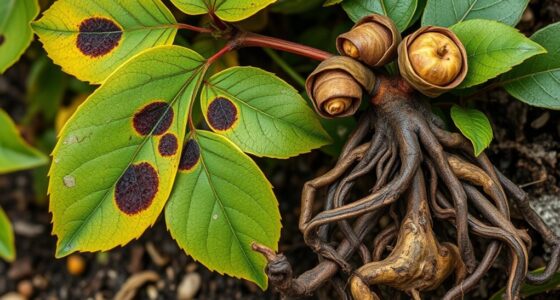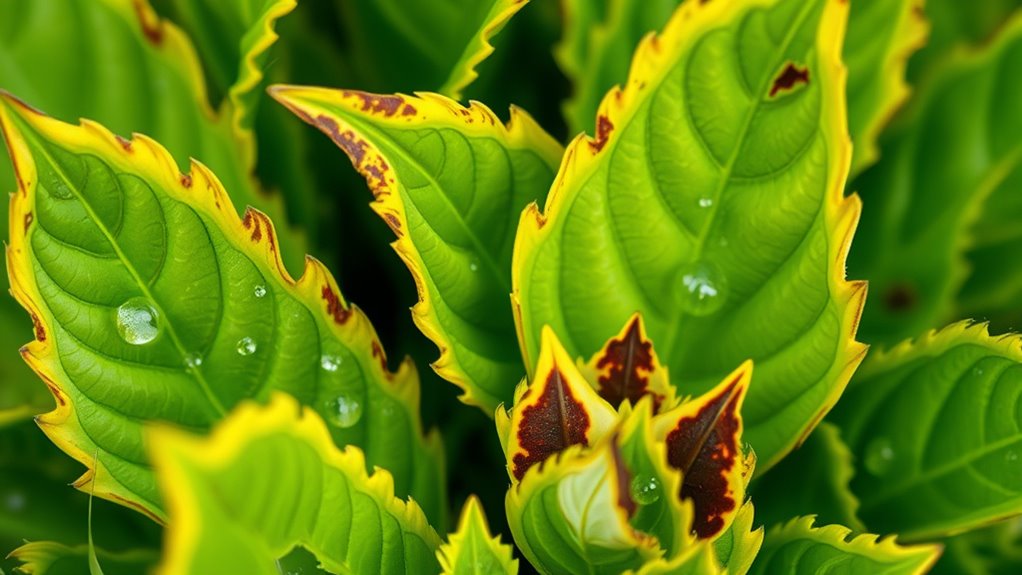

Overfertilizing your plants can cause nutrient burn, which damages roots and leaves from excessive salts and imbalanced nutrients. When you apply too much fertilizer, salts build up in the soil, leading to root stress and leaf tip browning. This stress can slow growth and weaken your plants. To avoid this, always test your soil and follow recommended application rates. Keep exploring to discover how proper fertilization techniques can keep your plants healthy.
Key Takeaways
- Excess fertilizer salts damage roots and leaf tissues, causing browning and leaf scorch.
- Overapplication leads to salt buildup in soil, increasing toxicity risks for plants.
- Soil testing helps determine nutrient levels, preventing overfeeding and nutrient imbalance.
- Proper fertilizer ratios and gradual application minimize nutrient toxicity and plant stress.
- Watering thoroughly after fertilizing helps flush out excess salts and reduces nutrient burn.

Overfertilizing your plants can lead to nutrient burn, a condition that damages roots and leaves, ultimately stunting growth. When you give your plants too much fertilizer, the excess salts build up in the soil, creating an environment where roots struggle to absorb water and nutrients properly. This stress manifests as browning leaf tips, wilting, and poor overall health. To prevent this, it’s essential to understand the importance of soil testing, which helps determine the exact nutrient levels and deficiencies in your garden. Soil testing gives you a clear picture of what your plants need, so you can adjust your fertilization schedule accordingly. When you know the nutrient ratios present in your soil, you can select fertilizers that complement those ratios, avoiding over-application of certain elements that could lead to nutrient imbalance and burn. Proper soil testing is a crucial step in developing an effective fertilization strategy and maintaining plant health.
Fertilizer ratios are fundamental because they dictate the proportion of nitrogen, phosphorus, and potassium—often called NPK—that your plants receive. Using fertilizers with an appropriate ratio helps help your plants get balanced nutrition. For example, a typical vegetable garden might require a different NPK ratio compared to flowering plants. If you blindly follow fertilizer instructions without considering your soil’s current state, you risk applying too much of one nutrient, resulting in nutrient toxicity. This toxicity can cause the symptoms associated with nutrient burn, such as leaf scorch, root damage, and slowed growth. To avoid this, always check your soil test results before fertilizing, so you can choose a product with the right nutrient balance.
It’s also essential to follow the recommended application rates and frequencies. Overzealous fertilizing, even with a balanced fertilizer, can still cause problems. Remember, more isn’t always better. When you understand your soil’s needs, you can fine-tune your fertilizing routine to supply just what your plants require, reducing the risk of overfeeding. Additionally, applying fertilizers gradually and in smaller amounts allows the plants to absorb nutrients more efficiently, minimizing excess buildup. Always water your plants thoroughly after fertilizing to help flush out any excess salts that might cause nutrient burn.
Frequently Asked Questions
How Can I Prevent Nutrient Burn in Outdoor Plants?
To prevent nutrient burn in outdoor plants, start with soil testing to understand nutrient levels. Use proper watering techniques, like deep, infrequent watering, to avoid overfeeding and leaching excess nutrients. Apply fertilizers at recommended rates, and consider slow-release options. Regularly monitor your plants for signs of stress, and adjust fertilization accordingly. This approach keeps your plants healthy and prevents nutrient burn effectively.
What Are the Signs of Nutrient Deficiency After Overfertilizing?
Your plants might be crying out for help with symptoms like yellowing leaves, leaf curling, and stunted growth—these are signs of nutrient deficiency after overfertilizing. To do symptom identification and deficiency diagnosis, check for uneven coloring or weak stems. If you notice these signs, act quickly to adjust feeding routines. Recognizing these clues early can save your plants from catastrophe and help restore their health.
Does Nutrient Burn Affect All Plant Types Equally?
Nutrient burn doesn’t affect all plant species equally because their fertilization sensitivity varies. Some plants, like succulents, are more prone to damage from excess nutrients, while others tolerate overfertilizing better. You should pay attention to your specific plant species’ needs and adjust fertilization accordingly, as overfeeding can cause leaf burn, root issues, and overall stress, especially in sensitive plants. Always follow recommended fertilization guidelines for ideal health.
Can Overfertilizing Harm the Soil Long-Term?
Overfertilizing can harm your soil like a bad habit wears out your shoes, leading to long-term issues. It causes soil degradation, making nutrients less available and harming beneficial microbes. Fertilizer toxicity can build up, blocking plant roots and reducing growth. To keep your soil healthy, avoid excessive fertilization, and use balanced, slow-release fertilizers to prevent long-term damage and maintain soil resilience.
Is It Safe to Use Organic Fertilizers to Correct Nutrient Imbalance?
Yes, using organic fertilizers to correct nutrient imbalance is generally safe. Organic safety means you’re less likely to cause nutrient burn or soil damage. Just guarantee you apply the right amount to maintain fertilizer balance, avoiding excess that could harm plants or the environment. Always follow recommended guidelines, and consider soil testing to tailor your organic fertilization—this way, you promote healthy growth without risking overfertilization.
Conclusion
Ultimately, avoiding overfertilizing prevents painful nutrient burn and promotes healthy, hearty plants. By balancing your blend, you’ll banish the bother of burning and foster flourishing foliage. Remember, moderation is the key to maintaining marvelous, mighty growth. Keep a keen eye on your plants, and don’t forget: too much fertilizer turns triumph into trouble. With careful, conscientious care, you’ll cultivate a thriving, vibrant garden that blooms beautifully without the bane of nutrient burn.