Physiological leaf curl in peaches is usually a normal response to environmental stressors like excessive heat, drought, or nutrient imbalances, rather than pests or diseases. You might notice leaves curling as the tree adapts to conserve water and protect itself. Proper watering, mulching, and balanced fertilization can help minimize stress. If you want to understand more about managing this natural process and keeping your peach trees healthy, there’s useful advice to discover.
Key Takeaways
- Physiological leaf curl in peaches is a normal response to environmental stressors like heat and drought, not caused by pests or diseases.
- High temperatures trigger leaf curling to reduce water loss and protect the plant from heat stress.
- Nutritional deficiencies, especially calcium or magnesium, can contribute to leaf curling and should be tested and corrected.
- Proper watering, mulching, and shading help mitigate environmental stresses that cause leaf curl.
- Leaf curl generally indicates a natural adaptive process rather than a health threat when environmental conditions are managed.
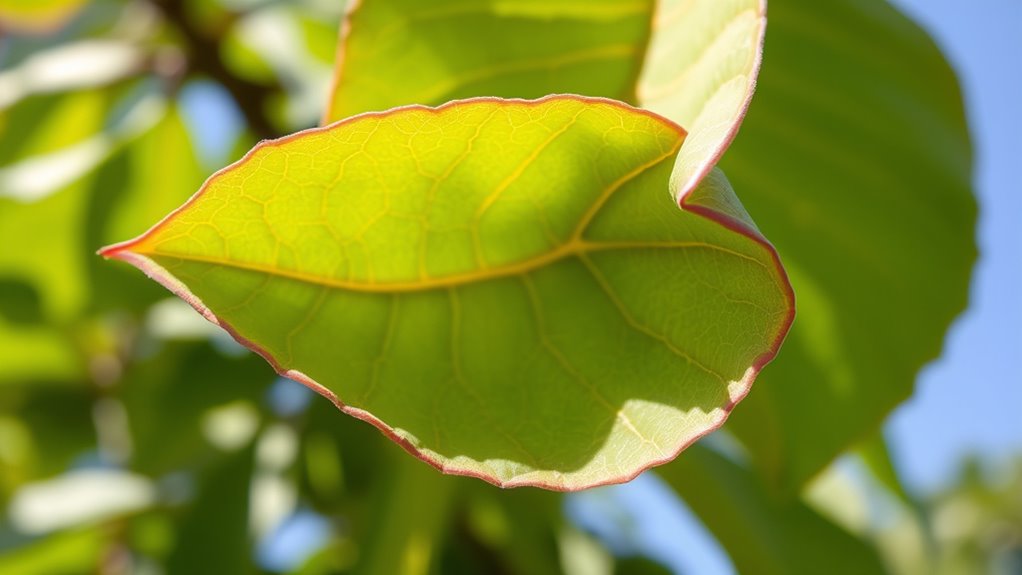
Physiological leaf curl in peaches is a common, non-disease condition that causes the edges of the leaves to curl upward or downward. This curling isn’t caused by pests or pathogens but is instead a natural response to environmental or physiological factors. Understanding the leaf curl causes helps you distinguish it from more serious issues like diseases, so you can avoid unnecessary treatments. The primary leaf curl causes include environmental stressors such as heat and drought, nutritional deficiencies, or natural growth processes. For instance, high temperatures can lead to leaf curling as the plant attempts to reduce water loss. Drought conditions also contribute, as the tree conserves moisture by curling its leaves. Nutritional imbalances, especially deficiencies in nutrients like calcium or magnesium, can cause leaves to curl or develop abnormal edges. Additionally, some peach varieties naturally exhibit leaf curling as part of their growth or leaf development stages, which is entirely normal and not a cause for concern.
When managing physiological leaf curl in peaches, your goal should be to minimize environmental stress and promote healthy growth conditions. First, ensure your trees are well-watered, especially during hot or dry spells. Deep, consistent watering helps prevent drought stress, reducing the likelihood of leaf curl caused by water deficiency. Mulching around the base of the tree can also help maintain soil moisture levels and regulate temperature, further alleviating stress. Fertilization plays a vital role: providing a balanced supply of nutrients—particularly calcium, magnesium, and other micronutrients—can prevent deficiencies that contribute to leaf curl. Conduct a soil test if needed and amend the soil accordingly to maintain ideal nutrient levels. Avoid over-fertilizing, which can cause other problems, but ensure the tree has enough nutrients to support healthy leaf development.
You should also pay attention to environmental conditions. Providing some shade during the hottest part of the day can help reduce heat stress, while windbreaks or protective coverings can shield trees from harsh winds that might cause physical stress. Proper pruning improves airflow and reduces humidity around the canopy, lowering the chances of stress-related leaf curling. Regular monitoring of your trees allows you to catch early signs of stress and address them promptly. Keep in mind that physiological leaf curl is typically harmless and part of the plant’s adaptation to its environment. By managing water, nutrients, and environmental factors effectively, you can keep your peach trees healthy and productive, with minimal leaf curling issues.
Frequently Asked Questions
What Environmental Factors Trigger Physiological Leaf Curl in Peaches?
Environmental stress and water deficiency often trigger physiological leaf curl in peaches. When you experience drought conditions or irregular watering, the tree responds by curling its leaves to reduce water loss. Sudden temperature changes or excessive heat can also cause stress, leading to leaf curl. By maintaining consistent watering and protecting your trees from extreme weather, you can help prevent this physiological response and support healthy peach growth.
Can Leaf Curl Affect Peach Fruit Quality or Yield?
Think of leaf curl as a quiet whisper in your orchard’s story, subtly hinting at changes in leaf development and fruit maturation. It can affect peach quality by reducing photosynthesis, leading to less energy for fruit development, and potentially lowering yields. While it doesn’t directly harm the fruit, the stress it causes might cause fruits to ripen unevenly, impacting both appearance and taste, and ultimately, your harvest’s success.
How Can Growers Prevent Physiological Leaf Curl in Orchards?
To prevent physiological leaf curl, you should optimize irrigation management to avoid water stress, ensuring trees receive consistent moisture. Additionally, focus on nutrient balancing by providing adequate calcium and other essential nutrients, which strengthen leaf tissues. Regularly monitor soil moisture and nutrient levels, and adjust your watering and fertilization practices accordingly. These steps help maintain healthy foliage and reduce the likelihood of leaf curl, promoting better overall tree health and fruit production.
Is Physiological Leaf Curl Harmful to Peach Trees Long-Term?
Physiological leaf curl isn’t typically harmful long-term because it’s mainly influenced by genetic traits affecting leaf morphology, not disease or pests. You might notice temporary changes, but the overall health of your peach tree usually remains unaffected. Keep in mind, this condition is often a natural variation, so it’s unlikely to cause lasting damage if the tree’s environment stays stable. Monitoring and proper care help guarantee your trees stay healthy.
Are There Any Resistant Peach Varieties to Leaf Curl?
You’ll find that some peach varieties have resistant traits, making them less susceptible to leaf curl. These resistant varieties carry specific genetic traits that help them withstand environmental stress and physiological issues. By selecting and planting these resistant types, you can reduce the likelihood of leaf curl problems. Keep in mind, though, that no variety is completely immune, so proper care remains essential for healthy, productive trees.
Conclusion
So, here’s the irony: what seems like a pesky flaw—physiological leaf curl—actually isn’t caused by pests or disease. Instead, it’s your peach trees’ way of adapting to environmental stresses. You might spend hours trying to fight it, but sometimes, nature just has its own plan. Embrace the curl, and you’ll find that your trees can handle a lot more than you think—sometimes, the problem isn’t really a problem at all.