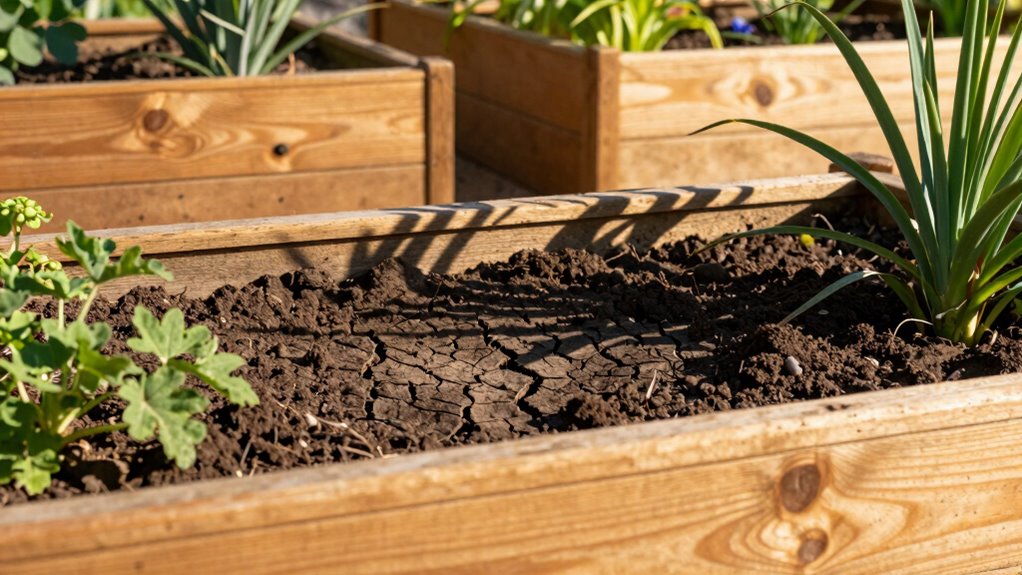

Raised beds heat up and dry out faster because they sit above ground, exposing soil to more sunlight and wind. This can cause your soil to warm quickly and moisture to evaporate faster, making plants more vulnerable to drought and stress. You’ll need to water deeply and often, add organic matter, and use mulch to help retain moisture. Want to understand how these changes affect your plants and how to manage them better? Keep exploring to find out more.

Get garden gear delivered free — and shop member deals
- Fast, free delivery on millions of items
- Access to Prime Big Deal Days deals on October 6–7
- Prime Video, Amazon Music and more included
Key Takeaways
- Raised beds warm quickly due to increased sun exposure and airflow, accelerating soil temperature changes.
- Faster soil drying necessitates more frequent watering to prevent plant stress and drought damage.
- Organic mulches and compost improve moisture retention, mitigating rapid drying in raised beds.
- Well-managed soil with organic matter helps maintain consistent moisture levels despite faster evaporation.
- Monitoring soil moisture and adjusting watering practices are essential for healthy plant growth in raised beds.

Have you ever noticed that plants in raised beds tend to heat up and dry out faster than those in traditional garden beds? This isn’t just a coincidence; it’s a result of how raised beds interact with their environment. Because they sit above ground level, they’re more exposed to direct sunlight and wind, which can cause the soil to warm quickly and lose moisture faster. As the soil dries out, your plants experience increased stress, making them more vulnerable to pests, diseases, and even stunted growth. That’s why maintaining adequate soil moisture becomes essential in raised bed gardening.
Raised beds heat up and dry out faster, so consistent moisture is key for healthy plants.
When the soil in raised beds heats up, it accelerates water evaporation, creating a cycle where moisture levels drop rapidly. If you don’t keep an eye on soil moisture, your plants might suffer from drought stress long before you notice any wilting or yellowing leaves. This stress hampers nutrient uptake and weakens the plants’ overall health. You might find yourself watering more frequently, especially during hot, sunny days, but that’s only part of the solution. It’s essential to understand that watering deeply and consistently helps maintain stable soil moisture levels, which in turn reduces plant stress and promotes healthier growth.
Another factor contributing to faster drying is the soil composition. Many raised beds use lighter, well-draining soils to prevent waterlogging, but these soils can also drain moisture quickly. Incorporating organic matter like compost can improve water retention, helping to create a more stable environment for your plants. Mulching is also a key strategy—it acts as a barrier that reduces surface evaporation, keeps the soil cooler, and preserves moisture. By covering the soil, you prevent it from heating up excessively and losing essential moisture, which eases plant stress and provides a more consistent growing environment. Additionally, understanding the importance of soil moisture management helps gardeners optimize watering practices and improve plant resilience in raised beds. Proper soil health practices further contribute to maintaining a resilient garden environment.
Being aware of soil moisture levels and adjusting your watering schedule accordingly can significantly enhance plant health and reduce stress caused by rapid drying. Implementing watering techniques that suit the specific needs of your soil and plants can make a significant difference in how well your garden withstands heat and dryness. Recognizing the role of soil temperature can also help you better manage your raised beds during hot periods, ensuring your plants stay healthy and vigorous. In the end, understanding how soil moisture impacts plant stress is key to maintaining a productive, healthy garden in these elevated beds.
raised bed garden soil moisture meter
As an affiliate, we earn on qualifying purchases.
As an affiliate, we earn on qualifying purchases.
Frequently Asked Questions
How Can I Prevent Raised Beds From Overheating?
To prevent raised beds from overheating, you should use mulch strategies like organic mulch to insulate the soil and retain moisture. Additionally, implement shade solutions such as planting taller plants nearby or using shade cloths during the hottest parts of the day. These methods help keep temperatures down, protect your plants from heat stress, and promote healthy growth in your raised beds.
Do Raised Beds Require More Frequent Watering?
Raised beds do require more frequent watering because their soil dries out faster—sometimes up to twice as often as traditional garden beds. You should monitor soil moisture regularly, especially during hot, sunny days, to prevent plants from becoming stressed. Consistent watering helps maintain healthy root growth and guarantees your plants thrive. Keep an eye on moisture levels, and adjust your watering frequency accordingly to keep your garden lush.
Can Soil Amendments Help Retain Moisture in Raised Beds?
Yes, soil amendments can help retain moisture in raised beds. By improving soil composition with organic matter like compost or peat moss, you increase the soil’s capacity to hold water. These amendments enhance moisture retention, reducing how often you need to water. You’ll find that a richer, organic matter-infused soil keeps your plants happier, especially in raised beds that tend to dry out faster due to their exposure and drainage.
What Plants Tolerate Faster Drying in Raised Beds?
Did you know some plants can tolerate faster drying in raised beds? You should choose plants with high drought tolerance, like succulents, lavender, and Mediterranean herbs. These plants adapt well to quick soil moisture loss because they naturally thrive in dry conditions. To help them, focus on soil moisture retention strategies, such as mulching or soil amendments, ensuring your drought-tolerant plants stay healthy despite the faster drying environment.
How Does Raised Bed Material Affect Heat Retention?
The material of your raised bed markedly impacts heat retention. For example, wood offers good insulation, helping the soil stay warmer longer, while metal heats up quickly but also cools fast. Your soil composition also plays a role; adding organic matter boosts insulation and moisture retention. Choosing the right material and improving soil composition can help regulate temperature, ensuring your plants thrive even in warmer, drier conditions.
garden mulch for moisture retention
As an affiliate, we earn on qualifying purchases.
As an affiliate, we earn on qualifying purchases.
Conclusion
Remember, every garden has its quirks. Raised beds heat and dry faster, so stay on top of watering and shading. This way, you’ll prevent plants from stress and maximize growth. As the saying goes, “A stitch in time saves nine.” By taking quick action, you can turn a potential challenge into a thriving, healthy garden. Keep an eye on those beds, and you’ll enjoy a bountiful harvest all season long.
As an affiliate, we earn on qualifying purchases.
watering system for raised garden beds
As an affiliate, we earn on qualifying purchases.
As an affiliate, we earn on qualifying purchases.
Fall Picks
fall essentials
As an affiliate, we earn on qualifying purchases.