
To avoid waterlogging and root rot in containers, make certain your pots have drainage holes and use well-draining soil mixed with coarse materials like perlite or sand. Avoid overwatering; only water when the top inch of soil feels dry. Monitor moisture levels regularly and adjust your watering schedule accordingly. If roots show signs of rot or water pools around plants, improve drainage or repot. Keep these tips in mind, and you’ll protect your plants from these common issues.
Key Takeaways
- Ensure containers have drainage holes to prevent water accumulation around roots.
- Use well-draining soil mixes with coarse materials to promote water flow and aeration.
- Avoid overwatering; water only when the top inch of soil is dry to prevent sogginess.
- Regularly inspect soil moisture and drainage, and repot if water pools or remains soggy.
- Choose appropriate container size and avoid solid, non-draining containers to minimize waterlogging risk.
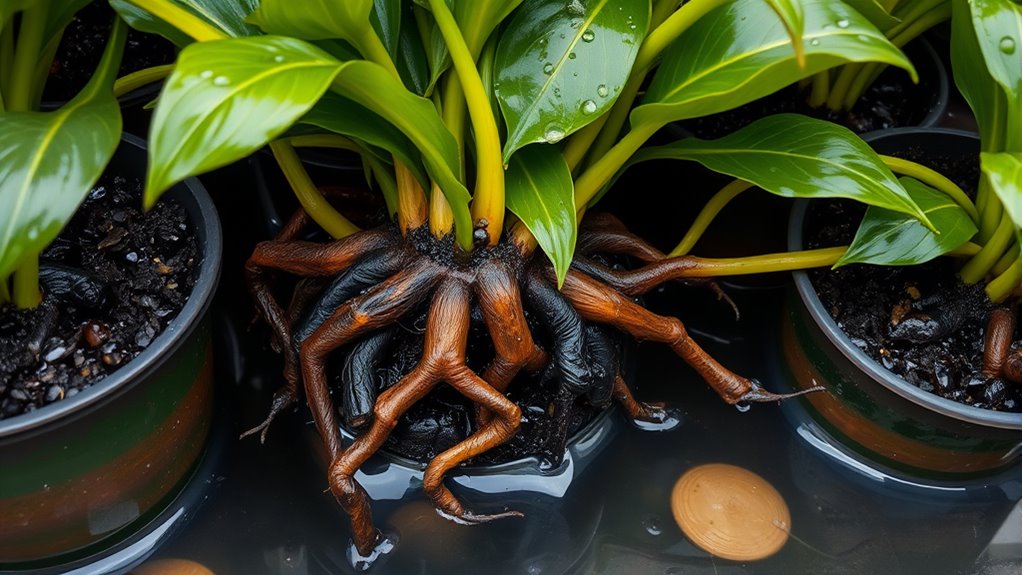
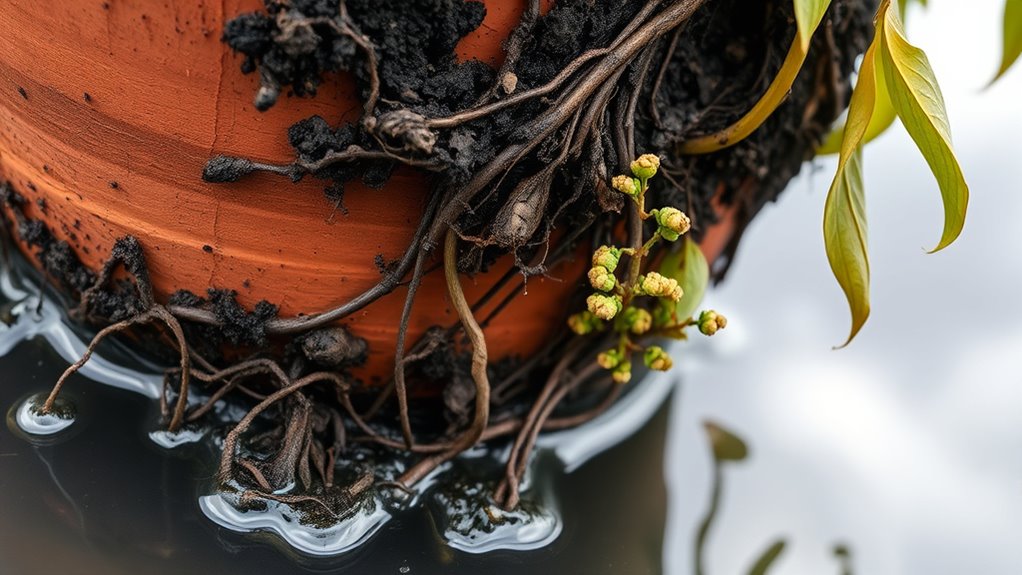
Waterlogging and root rot are common problems for container plants, especially when excess water remains in the soil for too long. To prevent this, paying attention to soil drainage and choosing the right container are essential steps. Good soil drainage ensures that excess water doesn’t sit around the roots, which can suffocate plants and promote rot. When selecting containers, consider those with drainage holes, as they allow surplus water to escape easily. Without proper drainage, even the best soil can become waterlogged, creating a perfect environment for root diseases.
Proper drainage and container choice are key to preventing waterlogged soil and root rot.
Your goal should be to select containers that promote healthy root growth. Plastic, ceramic, and clay pots all work well if they have adequate drainage holes. Avoid containers that are solid or lack drainage, as they trap water and increase the risk of root rot. When choosing a container, also think about size. A container that’s too small can cause water buildup quickly, while one that’s too large might retain excess moisture in the soil longer than necessary. Finding the right balance helps maintain proper moisture levels.
Next, focus on the soil itself. Use a well-draining potting mix designed for container gardening. These mixes often contain coarse materials like perlite, vermiculite, or sand, which improve drainage and aeration. Never use garden soil alone, as it tends to compact and retain water in containers, creating an environment conducive to root rot. When you fill your container, ensure the soil isn’t packed too tightly; loose soil allows for better airflow and water movement.
Regularly check your plants and containers for signs of poor drainage. If water pools on the surface after watering, or if the soil stays soggy for days, it’s a sign that drainage is inadequate. In such cases, consider repotting your plants into containers with better drainage features or improving the existing setup. You can also amend the soil with additional coarse materials or add a layer of gravel at the bottom of the container to enhance water flow.
Finally, watering practices matter just as much as container choice and soil quality. Water only when the top inch of soil feels dry, and avoid overwatering. Consistent monitoring and adjusting your watering schedule based on weather conditions and soil moisture levels will help keep roots healthy. By focusing on proper soil drainage and thoughtful container selection, you can effectively prevent waterlogging and root rot, ensuring your container plants thrive. Additionally, understanding the impact of soil composition can help you choose the best mix for your plants’ health.
Frequently Asked Questions
How Can I Prevent Waterlogging in My Container Plants?
To prevent waterlogging in your container plants, focus on proper drainage management and watering techniques. Make certain your containers have drainage holes and use well-draining soil to allow excess water to escape. Water your plants only when the top inch of soil feels dry, and avoid overwatering. Regularly check for signs of standing water, and adjust your watering schedule accordingly. These steps keep roots healthy and prevent waterlogging issues.
What Are the Signs of Root Rot in Container Plants?
You’ll notice root rot signs in your container plants when their soil drainage is poor, leading to soggy soil. Look for plant symptoms like yellowing leaves, wilting despite watering, and stunted growth. You might also see black, mushy roots when you gently remove the plant from its container. Regularly check soil moisture and improve drainage to prevent root rot and keep your plants healthy.
Which Plants Are Most Susceptible to Root Rot?
You might notice some plants suffer more from root rot because of poor soil drainage or unsuitable plant selection. Tender, moisture-loving plants like ferns, begonias, and impatiens are most vulnerable, especially in poorly drained containers. While these plants thrive in damp conditions, excess water can quickly turn deadly. To protect your plants, choose species suited to your container’s drainage capacity and avoid overwatering, giving them a healthier, more resilient environment.
How Often Should I Water My Container Plants?
You should water your container plants when the top inch of soil feels dry to the touch. Typically, this means watering about once or twice a week, but it varies based on your plant’s needs, container size, and environment. Maintain proper watering frequency to make certain your plants stay well-hydrated without overwatering. Consistent monitoring helps prevent issues like root rot and keeps your plants healthy and thriving.
Can Overwatering Cause Other Issues Besides Root Rot?
Overwatering can cause issues beyond root rot, like poor soil aeration and fungal growth. When you water too often, the soil becomes compacted, limiting oxygen for roots and encouraging disease. To prevent this, use proper drainage solutions and choose containers with drainage holes. Guarantee water flows freely, and let the soil dry out slightly between watering sessions. This approach keeps roots healthy and avoids additional problems caused by overwatering.
Conclusion
To prevent waterlogging and root rot, imagine your container as a safe harbor, where roots breathe freely like fish in clear water. Guarantee proper drainage, let the soil dry slightly between watering, and stay attentive to changes. Think of each watering as a gentle rain, not a flood. By creating a balanced environment, you’ll nurture healthy roots that reach deep and thrive, transforming your container into a vibrant, flourishing oasis rather than a stagnant, drowning trap.