
If your wet compost smells bad, excess moisture creates anaerobic conditions, letting bacteria produce foul odors like rotten eggs or sourness. On the other hand, dry compost stalls because there’s not enough water for microbes to thrive, stopping decomposition. To fix these issues, you need to aerate your pile and adjust moisture levels. Keep going to discover how proper management can keep your compost healthy and odor-free.

Get garden gear delivered free with Prime
- Fast, free delivery on millions of items
- Prime Video, Amazon Music and more included
- Member-only deals all year
Key Takeaways
- Excess moisture fosters anaerobic bacteria, producing foul odors like rotten eggs and sourness.
- Poor aeration prevents oxygen flow, leading to anaerobic conditions and unpleasant smells.
- Insufficient moisture hinders microbial activity, causing compost to stall and stop breaking down effectively.
- Regular turning and adding dry materials help balance moisture and oxygen, reducing odors and boosting decomposition.
- Maintaining optimal temperature and moisture levels ensures aerobic microbes thrive, preventing odor issues and stagnation.
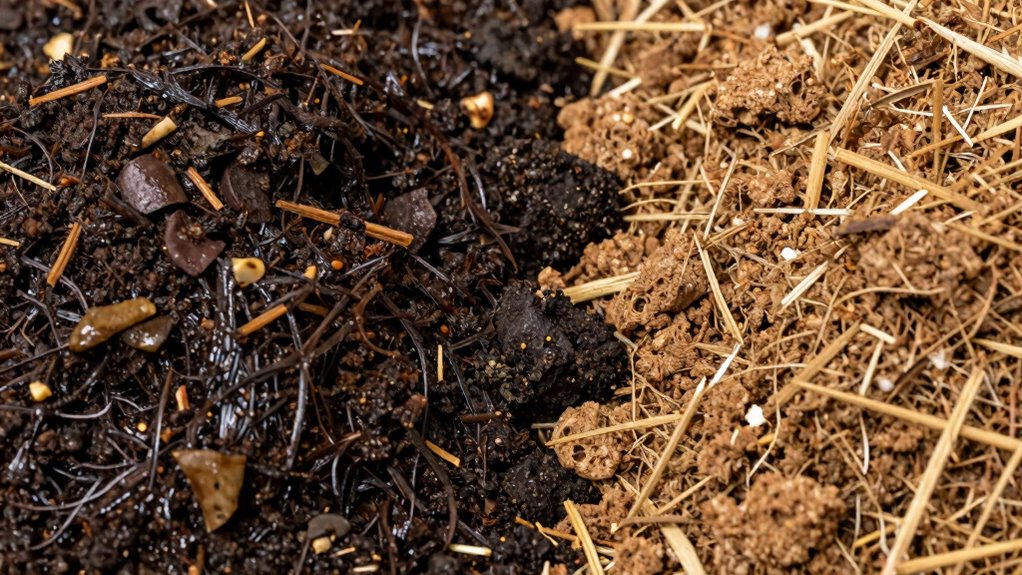
When it comes to composting, understanding the difference between wet and dry compost is essential for creating healthy, effective compost. Wet compost often smells wrong because excess moisture creates an environment where anaerobic bacteria thrive. These bacteria break down organic matter without oxygen, producing foul odors like rotten eggs or sourness. To fix this, you need to improve aeration techniques. Turning the pile regularly introduces oxygen, helping aerobic bacteria dominate and reducing unpleasant smells. Proper aeration keeps the compost well-ventilated, preventing the buildup of moisture and gases that cause odor issues. Additionally, managing temperature is crucial; a warm compost pile (around 130-160°F) indicates active decomposition. If your compost is wet and not heating up, it’s likely too moist or compacted. In this case, add dry materials like shredded leaves or straw to absorb excess moisture and loosen the pile. This not only helps with aeration but also supplies carbon, balancing the nitrogen-rich greens that make it soggy. Moisture management is fundamental to maintaining a healthy compost environment.
On the flip side, dry compost tends to stall because it doesn’t retain enough moisture for microorganisms to do their work. Without adequate moisture, bacteria and fungi struggle to break down organic matter efficiently. To revive dry compost, you should introduce water gradually, keeping the pile consistently moist—similar to a damp sponge—without soaking it. This encourages microbial activity and helps speed up decomposition. Proper temperature control is also vital here; maintaining warmth in the pile activates microbes, but if it’s too dry, microbial activity diminishes. Regularly checking temperature and moisture levels allows you to make adjustments before the process stalls completely. If your compost isn’t heating up, it might need a mix of wetter material and some nitrogen-rich greens to jump-start microbial activity. Turning the pile during this process distributes moisture evenly and introduces oxygen, which is essential for rapid composting. Additionally, understanding composting environments and how they influence microbial activity can help you optimize your process. Choosing appropriate composting materials can also impact the moisture retention and overall health of the compost. To further enhance microbial health, selecting the right balance of greens and browns can make a significant difference in maintaining the right balance. Proper moisture levels and aeration create an ideal microbial environment for decomposition. Ultimately, balancing moisture through proper aeration techniques and temperature control is key to avoiding foul odors and stalled compost. Wet compost that smells bad signals that oxygen isn’t reaching all parts of the pile, while dry compost that stalls means microbial activity has slowed due to insufficient moisture. By monitoring these factors and adjusting your approach—adding dry or wet materials, turning regularly, and maintaining optimal temperature—you create a thriving environment for composting. This balanced approach ensures your compost breaks down efficiently, smells fresh, and is ready to enrich your garden in no time.
As an affiliate, we earn on qualifying purchases.
Frequently Asked Questions
Can Adding Too Much Water Cause Compost to Smell Bad?
Yes, adding too much water can cause compost to smell bad. Excess moisture lowers the oxygen levels, hindering proper compost aeration. When your compost is too wet, it becomes anaerobic, producing foul odors like ammonia or sulfur. To fix this, turn the compost to increase airflow and add dry materials like leaves or straw to balance moisture levels. Proper moisture and aeration are key to healthy, odor-free compost.
How Do I Fix a Compost That’s Too Dry?
To fix a compost that’s too dry, you should increase its moisture levels by adding water gradually and mixing well. Use aeration techniques like turning the pile regularly, which helps distribute moisture evenly and introduces oxygen. This combination encourages microbial activity and speeds up decomposition. Keep monitoring moisture levels to maintain a damp, sponge-like consistency, ensuring your compost stays active and healthy without becoming too wet or dry.
Is It Okay to Mix Wet and Dry Compost Together?
Yes, mixing wet and dry compost is okay, as it helps maintain the right moisture balance. When combining, use compost layering—alternating wet, green materials with dry, brown ones—to promote proper decomposition. This method prevents odors and stalls, ensuring your compost heats up and breaks down efficiently. Just be sure not to add too much wet material at once, which can cause compaction and slow down the process.
What Are Signs My Compost Has an Imbalance?
You’ll notice an imbalance in your compost if the pH becomes too acidic or alkaline, which can hinder microbial activity. Signs include a foul smell, sluggish decomposition, or the compost feeling slimy or overly dry. If microbial activity decreases, composting slows down or stalls altogether. Maintaining a balanced pH and ensuring proper moisture levels helps support active microbes, keeping your compost healthy and odor-free.
How Long Does It Take for Dry Compost to Fully Decompose?
Think of your dry compost as a slow-burning ember; it can take anywhere from three months to a year to fully decompose. Your moisture balance is the fuel that keeps the process alive—too dry, and decomposition stalls like a dormant volcano. To speed things up, keep it moist but not soggy, and turn it regularly. With patience and proper care, your compost will transform into rich, dark humus.
As an affiliate, we earn on qualifying purchases.
Conclusion
So, now you see how moisture swings can make or break your compost. But don’t get too comfortable—balance is key, and even the slightest misstep might turn your promising pile into a smelly mess or a stalled heap. There’s more beneath the surface, waiting to be uncovered. Keep experimenting, stay attentive, and your compost will reward your patience with rich, nourishing soil. The secret to success? It’s just beyond what you think you know.
As an affiliate, we earn on qualifying purchases.
compost bin with moisture control
As an affiliate, we earn on qualifying purchases.
As an affiliate, we earn on qualifying purchases.
Fall yard work Picks
leaf blowers
As an affiliate, we earn on qualifying purchases.