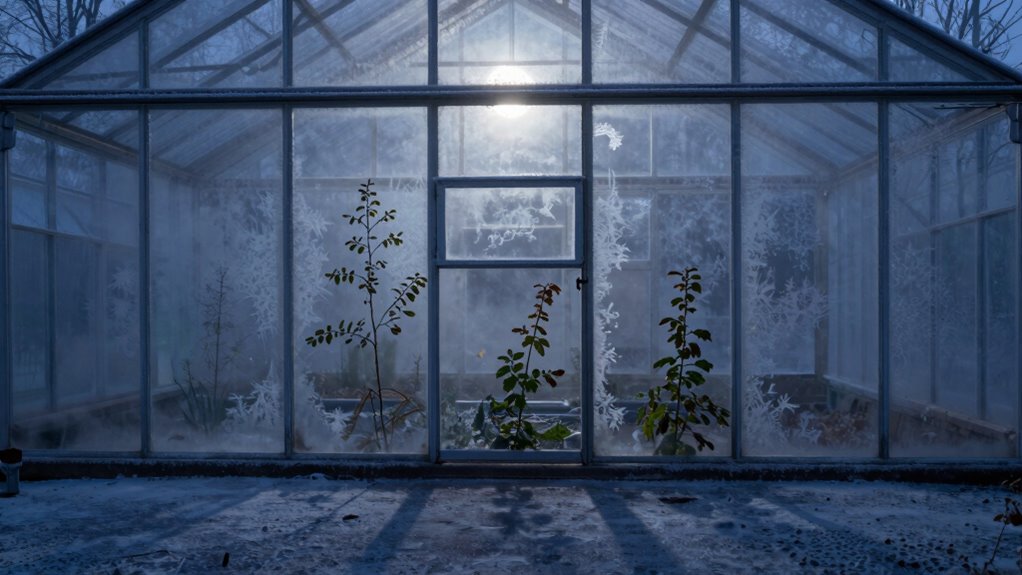

When your winter greenhouse lacks enough night heat, temperatures can drop sharply, putting your plants at risk. Cold air creeps in through seams and vents, draining heat and causing stress or damage. Without proper insulation or supplemental heating, plants may struggle to survive the cold, risking crop failure. Maintaining stable, warm conditions is essential, and if you keep exploring, you’ll discover effective ways to better protect your greenhouse during winter nights.
Key Takeaways
- Insufficient night heat causes drastic temperature drops, risking cold damage to plants.
- Cold air infiltration through vents and seams accelerates heat loss.
- Lack of proper insulation worsens overnight heat depletion in the greenhouse.
- Cold stress hampers plant growth and increases the risk of crop failure.
- Maintaining stable, warm temperatures at night is essential for plant health and productivity.
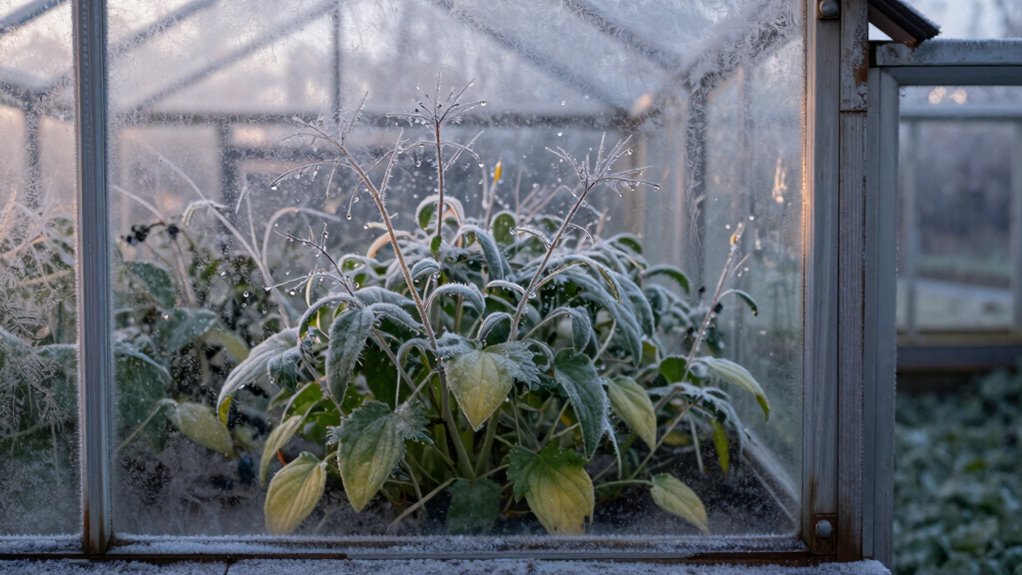
Have you ever wondered why your greenhouse struggles to maintain warmth during the winter? One of the main issues stems from inadequate night heat, which causes temperatures to drop drastically after sunset. This temperature plunge can disrupt plant growth and even lead to crop failure if not addressed. When your greenhouse isn’t sufficiently heated at night, the cold air can seep through the structure’s seams and vents, draining heat rapidly. You might notice your plants looking stressed or showing signs of cold damage, especially if temperatures fall below their tolerance levels. To combat this, you need to find ways to boost night heat, whether through supplemental heaters, thermal blankets, or better insulation. Additionally, insulation methods can significantly reduce heat loss and help maintain a more stable environment overnight. Implementing thermal mass such as water barrels can also help absorb heat during the day and release it gradually at night, providing a natural heat buffer. Proper ventilation control is also crucial to prevent excess humidity that can exacerbate cold stress and promote mold growth. Adequate climate management is essential for creating an optimal winter environment for your plants. But it’s not just about keeping the heat in; you also have to consider the moisture levels in your soil. Soil moisture plays a critical role in your greenhouse’s overall health, especially during winter. Dry soil can hinder root development and reduce plant resilience against cold stress. Furthermore, maintaining proper soil moisture balance helps prevent issues like drought stress or waterlogging, which can weaken plants during cold periods. Conversely, overly moist soil can promote mold, root rot, and pest infestations. It’s essential to maintain a balance—monitor your soil moisture regularly and water only when necessary. Well-drained soil helps prevent excess moisture from accumulating, which is particularly important when temperatures are low and pests are more likely to find cozy hiding spots. Proper soil management ensures your plants stay healthy and can withstand the cold nights better.
Speaking of pests, winter can be a tricky time for pest control in your greenhouse. Cold temperatures may slow down pest activity, but they don’t eliminate the problem entirely. In fact, pests like aphids, whiteflies, and fungus gnats often find refuge in the warm, moist corners of your greenhouse. When night temperatures drop, pests tend to hide in protected areas, making them harder to detect and eradicate. If you neglect pest control now, infestations can quickly become severe when conditions improve. Regular inspections, combined with targeted treatments, are vital to keep pests at bay. Also, managing soil moisture helps prevent some pests that thrive in damp environments from taking hold. By maintaining a comprehensive approach—addressing heat, moisture, and pests—you can create a resilient environment that supports healthy plant growth throughout the winter months.

BioGreen Electric Greenhouse Heater & Fan with Digital Thermostat PALMA | 1500 Watts, 5100 BTU/hr | 5800 ft³/h Air Circulation -58 to 210.2°F | Stainless Steel | Spraywater Proof
TWO SEPARATELY ADJUSTABLE HEATING ELEMENTS: 750 watts or 1500 watts power. The heater is ideal for rooms up…
As an affiliate, we earn on qualifying purchases.
As an affiliate, we earn on qualifying purchases.
Frequently Asked Questions
How Does Insufficient Night Heat Affect Plant Growth?
Insufficient night heat hampers your plants’ growth by preventing proper plant dormancy, which is essential for healthy development. Without enough heat retention, plants may stay stressed, weaken, or become more susceptible to diseases. Low nighttime temperatures can also slow metabolic processes, stunting growth. To guarantee your plants thrive, provide adequate night heat, promoting ideal heat retention and allowing them to rest properly during dormancy periods.
What Are Common Signs of Winter Greenhouse Heat Deficiency?
You’ll notice signs like slowed plant growth, wilting, or leaf discoloration, indicating winter greenhouse heat deficiency. To prevent this, guarantee your heating system maintenance is up-to-date, and consider insulation improvements to retain warmth. If temperatures drop unexpectedly, these signs appear quickly, so regular checks and proper insulation help keep your plants healthy through cold nights. Addressing these issues early maintains consistent warmth and promotes robust plant development.
Can Passive Heating Methods Overcome Low Night Temperatures?
Can passive heating methods truly beat the cold nights? Absolutely. By harnessing passive solar design and incorporating thermal mass, you can store daytime heat and release it at night, reducing temperature drops. Large water barrels or stone walls absorb heat during the day and radiate it back when it’s cold outside. While not foolproof, these methods markedly boost your greenhouse’s resilience against low night temperatures.
What Temperature Range Is Ideal for Winter Greenhouse Crops?
You should aim for a temperature range of 55-75°F to optimize photosynthesis efficiency and prevent plant dormancy. Staying within this range promotes healthy growth and reduces stress during winter. If temperatures drop too low at night, consider passive heating techniques, like thermal mass or insulation, to maintain consistent warmth. Keeping your greenhouse within this range guarantees your crops stay active, healthy, and productive throughout the winter months.
How Do You Measure and Monitor Greenhouse Night Temperatures?
You can measure and monitor greenhouse night temperatures easily with a digital thermometer or a data logger, ensuring accurate readings. Don’t forget to check soil moisture and humidity levels at night, as they affect temperature stability. Place sensors at plant canopy height for precise data. Regularly review these readings to adjust heating systems proactively, preventing cold stress. This way, you maintain ideal conditions for your winter crops.

Green Plant Covers Freeze Protection, 10 x 50 ft – 1.5 oz/yd² Frost Cloths for Outdoor Plants, Tree Covers Freeze Protection, Winter Garden Blanket, Sun Cover for Plants for Greenhouse, Vegetables
Light and durable frost cloth: Frost cloth plant freeze protectionmade of 100% polypropylene environment-friendly and cold proof non-woven…
As an affiliate, we earn on qualifying purchases.
As an affiliate, we earn on qualifying purchases.
Conclusion
So, next winter, will you let the cold night air win, or will you take action to boost your greenhouse’s night heat? Remember, starting with too little heat sets off a chain reaction that’s hard to reverse. By ensuring your greenhouse stays warm enough, you keep your plants thriving and your garden productive. Isn’t it worth a small effort now to avoid a cold, struggling greenhouse later? The choice is yours—warmth or winter’s chill.

Reflective Bubble Insulation Sheet, Double Side Aluminum Foil Bubble Shield, Aluminum Foil Thermal Insulation Radiant Barrier for Windows, RV, Roof, Garage Door (23.6IN X 10FT)
Premium Material: The double-sided insulation roll is made of high-quality reflective aluminum film and polyethylene air bubble cushion,…
As an affiliate, we earn on qualifying purchases.
As an affiliate, we earn on qualifying purchases.
thermal mass water barrels
As an affiliate, we earn on qualifying purchases.
As an affiliate, we earn on qualifying purchases.