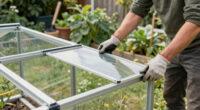
To effectively clean your greenhouse, start by sweeping or vacuuming the floors to remove debris and prevent pests. Then, wipe down benches with disinfectant, removing plants and tools first. Clean door frames, handles, and glass panels regularly to block pest entry. Finally, disinfect tools after use and store them properly. A systematic approach to each zone keeps pests away and promotes healthy plants; exploring further will give you even more helpful tips.

Get garden gear delivered free with Prime
- Fast, free delivery on millions of items
- Prime Video, Amazon Music and more included
- Member-only deals all year
Key Takeaways
- Regularly sweep or vacuum floors to remove debris and prevent pest harboring.
- Clean and disinfect benches after removing plants and tools to reduce mold and pests.
- Wipe down door handles, frames, and glass panels to prevent pest entry and maintain light quality.
- Disinfect tools after each use and store them properly to prevent disease spread.
- Follow a systematic cleaning schedule for all zones to create a pest-resistant, healthy greenhouse environment.
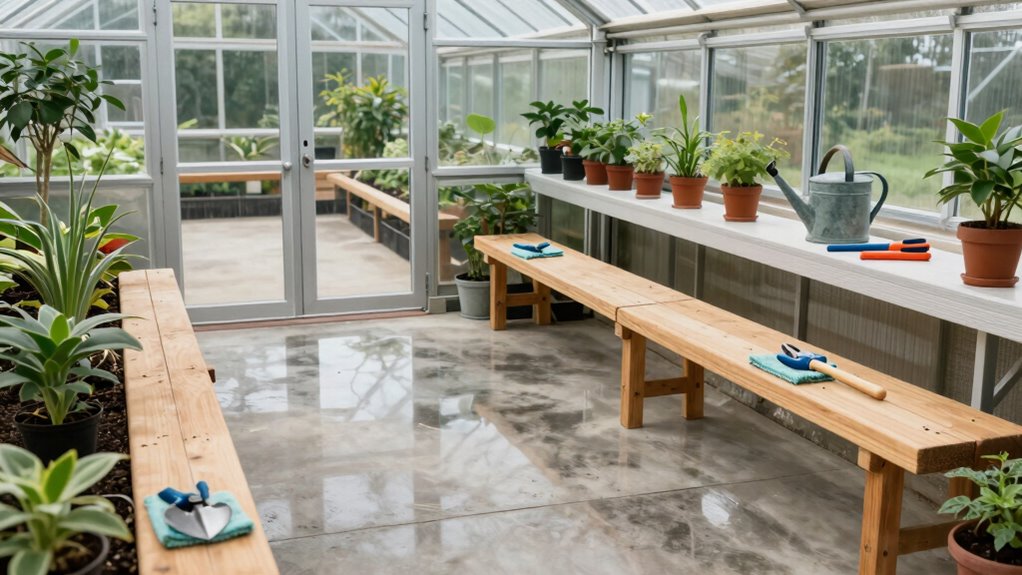
Are you overwhelmed by the thought of cleaning your greenhouse? It’s common to feel this way, especially when you consider all the zones that need attention. But breaking down the cleanup into specific areas makes it manageable. Start with the floors. They’re the foundation of your greenhouse and often the first place pests hide or debris accumulates. Sweeping or vacuuming regularly removes fallen leaves, dirt, and plant debris that can harbor pests or disease. A clean floor helps prevent pest prevention issues and promotes better plant health overall. After sweeping, consider washing the floors with a mild disinfectant to eliminate lingering pathogens. This step is essential for reducing disease spread and keeping your growing environment healthy.
Start with clean floors to prevent pests and promote healthier plants. Regular sweeping and disinfecting are key.
Next, focus on the benches. These are where your plants spend most of their time, so maintaining their cleanliness is indispensable. Remove all plants, tools, and pots, then scrub the benches thoroughly with a brush and disinfectant. This prevents pests like fungus gnats and aphids from establishing themselves. Regularly wiping down benches also reduces the risk of mold and bacteria, which can compromise plant health. When cleaning, inspect for any signs of pest activity or disease, and address problems immediately. Keeping your benches tidy and disinfected creates a healthier environment for your plants and makes pest prevention much easier. Additionally, incorporating proper sanitation practices can significantly reduce the likelihood of pest infestations and disease transmission, especially when combined with routine inspections. Maintaining clean tools is also crucial, as they are common vectors for pests and pathogens. Regularly monitoring for pests can help catch issues early before they become severe. Proper sanitation and integrated pest management are key components in maintaining a pest-free greenhouse.
Don’t forget the doors. They’re entry points for pests and dirt, so cleaning and inspecting them are key. Wipe down door frames and handles frequently to remove dust, dirt, and potential pest eggs. Check the seals and hinges for cracks or damage, as pests can exploit these spaces. Clean the glass or plastic panels to ensure maximum light entry, which supports plant health. Well-maintained doors also help prevent pests from sneaking inside and reduce airflow issues that can lead to humidity problems, fostering a healthier growing environment.
Finally, pay attention to your tools. Dirty tools can transfer pests and diseases from one plant to another. After each use, scrub and disinfect pruning shears, trowels, and watering cans. Store tools in a clean, dry place to prevent harboring pests or pathogens. Regular maintenance of your tools not only extends their lifespan but also keeps your entire greenhouse pest-free and promotes excellent plant health. By systematically cleaning and inspecting each zone—floors, benches, doors, and tools—you create a cleaner, pest-resistant environment. This approach makes greenhouse management less intimidating and guarantees your plants remain healthy and productive.
greenhouse floor sweeping vacuum
As an affiliate, we earn on qualifying purchases.
As an affiliate, we earn on qualifying purchases.
Frequently Asked Questions
How Often Should I Perform a Full Greenhouse Cleanup?
You should perform a full greenhouse cleanup at least once every 3 to 4 months. Regular greenhouse maintenance helps prevent pest control issues and keeps your environment healthy for plants. During this cleaning, focus on floors, benches, doors, and tools to remove debris and wipe down surfaces. Consistent cleaning minimizes pests and diseases, ensuring ideal growth conditions. Don’t forget to inspect for signs of pests or damage during each session.
What Eco-Friendly Cleaning Products Are Safest for Greenhouse Surfaces?
You should use biodegradable cleaning solutions and natural disinfectant options for greenhouse surfaces. These eco-friendly products are safe for plants and the environment, reducing chemical exposure. Look for plant-safe disinfectants made from natural ingredients like vinegar, essential oils, or citric acid. They effectively clean and disinfect without harming your greenhouse ecosystem, ensuring a healthy environment for your plants and minimizing your ecological footprint.
How Can I Prevent Future Mold Buildup After Cleaning?
To prevent future mold buildup, you should focus on mold prevention and residue removal after each cleaning. Make certain surfaces stay dry by improving ventilation and wiping down excess moisture. Use eco-friendly disinfectants that eliminate mold spores effectively. Regularly inspect and clean your greenhouse zones, paying attention to hidden corners. Maintaining a dry environment and consistently removing residues will markedly reduce mold growth over time.
Are There Specific Tools Recommended for Cleaning Greenhouse Glass Doors?
You should use a squeegee and a soft microfiber cloth for glass cleaning, as they effectively remove dirt and streaks without scratching the glass. A window scrubber with a long handle can help reach high or wide doors easily. After cleaning, maintain your tools by rinsing and drying them thoroughly to prevent mold and corrosion. Regular tool maintenance guarantees your cleaning tools stay effective and last longer, keeping your greenhouse spotless.
How Do I Disinfect Tools to Prevent Plant Disease Transmission?
To prevent plant disease transmission, you should perform tool sterilization after each use. Use a disinfectant like a bleach solution (1 part bleach to 9 parts water) or commercial disinfectants designed for horticultural tools. Submerge or wipe down your tools thoroughly, paying attention to blades and hinges. Proper tool sterilization is essential for disease prevention, ensuring that harmful pathogens don’t spread between plants and maintaining a healthy greenhouse environment.
disinfectant for greenhouse benches
As an affiliate, we earn on qualifying purchases.
As an affiliate, we earn on qualifying purchases.
Conclusion
So there you have it—your greenhouse’s grand makeover, zone by zone. Because nothing screams “thriving plants” like scrubbing floors, wiping down benches, and banishing dirt from doors and tools. Sure, it’s a tedious chore, but hey, at least you’re not trying to grow a jungle in a pigsty. With a little elbow grease, your greenhouse will be the envy of all those poor, neglected spaces out there—just don’t forget to breathe.
greenhouse door handle cleaning tools
As an affiliate, we earn on qualifying purchases.
As an affiliate, we earn on qualifying purchases.
As an affiliate, we earn on qualifying purchases.
Fall yard work Picks
leaf blowers
As an affiliate, we earn on qualifying purchases.