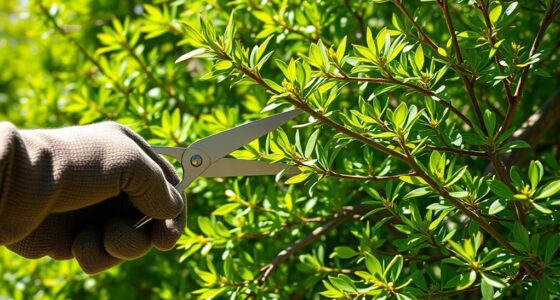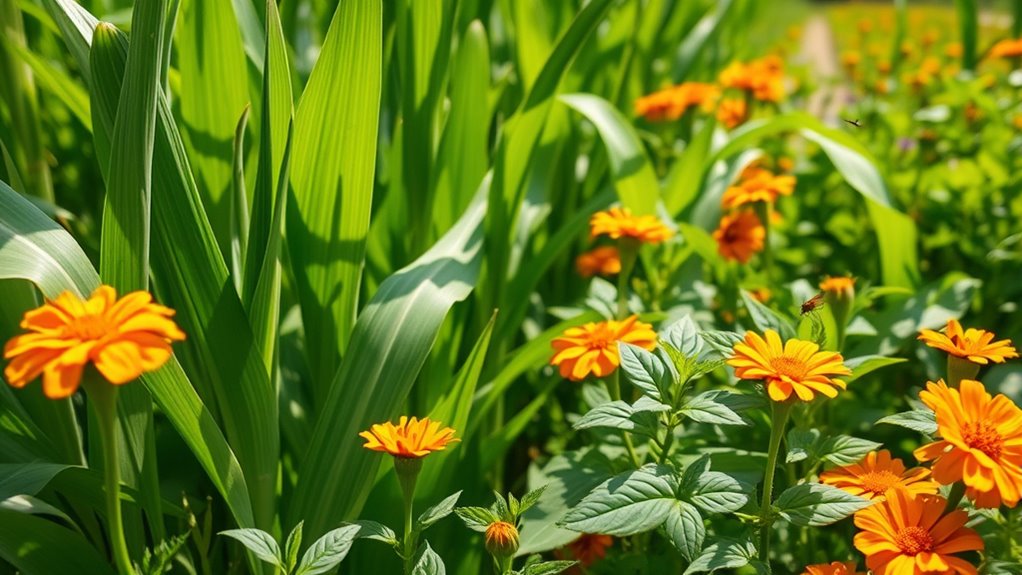

Intercropping helps you naturally disrupt pest populations by creating a diverse and unpredictable environment that confuses insects, making it harder for pests to locate your crops. By mixing plants like tall corn with ground cover or fragrant herbs, you can reduce pest attraction and promote beneficial insects that keep pests in check. Incorporating different plant types encourages a healthier, resilient garden. If you’re curious about designing your own pest-busting intercropping plan, there’s more advice to explore.

Get garden gear delivered free with Prime
- Fast, free delivery on millions of items
- Prime Video, Amazon Music and more included
- Member-only deals all year
Key Takeaways
- Intercropping creates diverse plant environments that confuse pests and reduce their ability to locate host crops.
- Planting pest-repellent species alongside vulnerable crops naturally deters pests without chemicals.
- Diverse crop arrangements attract beneficial insects like ladybugs and parasitic wasps that control pest populations.
- Using layered plantings, such as tall crops with ground-cover plants, disrupts pest movement and access.
- Incorporating plants with strong scents or bitter tastes helps repel pests and enhances overall pest management.
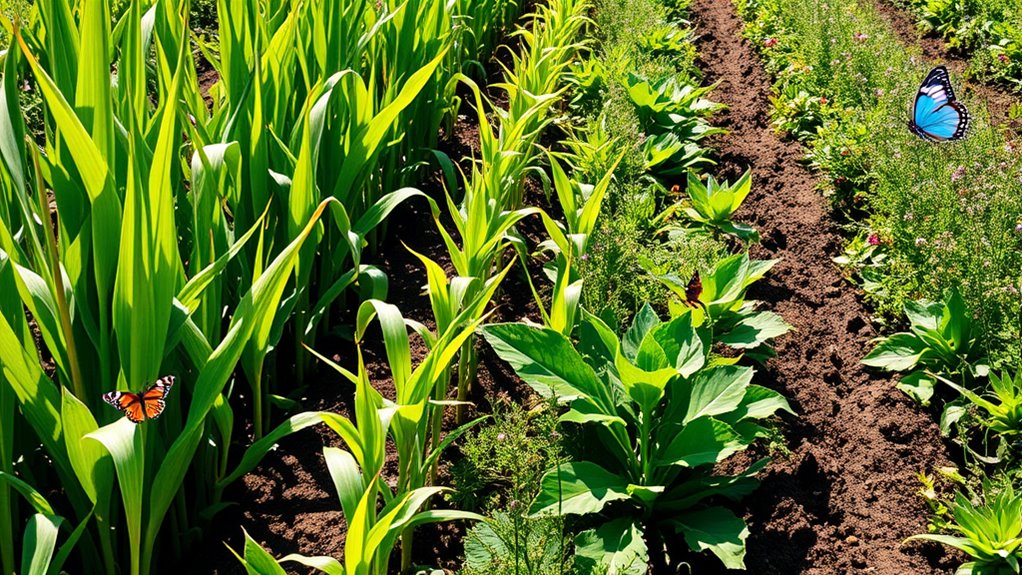
Intercropping, the practice of planting different crops together, offers an effective natural strategy to disrupt pest populations. By combining various plants in your garden or farm, you can create a less inviting environment for pests to thrive. One of the most practical approaches within intercropping is companion planting, which involves pairing specific crops that benefit each other. When you incorporate companion planting into your garden design, you not only promote healthier plant growth but also reduce the likelihood of pest infestations. This method works because certain plants can repel pests, attract beneficial insects, or confuse pests looking for their preferred hosts. For example, planting marigolds alongside vegetables can deter nematodes and aphids, while basil can repel mosquitoes and flies. These strategic pairings make your garden more resilient without relying heavily on chemical pesticides.
Intercropping with companion plants naturally reduces pests and promotes healthier, more resilient gardens.
Crop diversity is another essential element in effective intercropping. When you plant a variety of crops, you break the uniformity that pests often exploit. Instead of a monoculture, which pests can easily target and spread through, a diverse planting scheme confuses pests and makes it harder for them to locate their preferred hosts. This diversity also attracts a broader range of beneficial insects, such as ladybugs and parasitic wasps, which naturally keep pest populations in check. You’ll find that crop diversity not only disrupts pest cycles but also improves soil health and increases overall productivity. By rotating crops and mixing different species, you create a dynamic environment that’s less susceptible to pest outbreaks and more supportive of natural pest control. Additionally, crop diversity enhances ecosystem stability, making your garden more resilient to environmental stressors.
You can enhance your pest management strategy by carefully selecting crops that complement each other. For example, planting tall crops like corn alongside shorter, ground-covering plants like beans or squash creates a layered canopy that confuses pests and shields vulnerable plants. Additionally, incorporating plants with strong scents or bitter tastes can act as natural repellents, further discouraging pests from settling in. As you plan your intercropping layout, think about the specific pests common in your area and choose companion plants accordingly. This targeted approach not only reduces pest pressure but also fosters a balanced ecosystem where beneficial insects, pollinators, and your crops coexist harmoniously.
Ultimately, intercropping with a focus on companion planting and crop diversity empowers you to manage pests naturally and sustainably. You’ll find that this method minimizes the need for chemical interventions, promotes healthier plants, and often results in higher yields. By paying attention to plant interactions and diversity, you create a more resilient garden that can withstand pest challenges while supporting a thriving, balanced ecosystem.
intercropping pest control plants
As an affiliate, we earn on qualifying purchases.
As an affiliate, we earn on qualifying purchases.
Frequently Asked Questions
What Are the Best Crop Combinations for Pest Disruption?
You should pair crop combinations like tomatoes with basil or carrots with onions, as they serve as effective companion planting and pest repellent crops. These combinations naturally deter pests, reducing the need for chemicals. By mixing these plants, you create a pest-disrupting environment that benefits your garden’s health. Focus on such strategic pairings to keep pests at bay and improve crop yields effortlessly.
How Does Intercropping Affect Overall Crop Yields?
You’ll find that intercropping boosts your crop yields by boosting crop diversity and building pest resistance. When you mix different plants, you create a diverse, dynamic environment that minimizes pest attacks and maximizes productivity. This balanced blend prevents pests from spreading easily, allowing your crops to flourish freely. Overall, intercropping enhances your harvests by making your farm more resilient, resourceful, and ready to produce plentiful, fruitful results.
Can Intercropping Replace Chemical Pest Controls Entirely?
Intercropping can’t entirely replace chemical pest controls, but it can substantially reduce their use. By supporting natural predators and increasing crop diversity benefits, you create an environment less favorable for pests. This promotes a balanced ecosystem where pests are naturally kept in check. While it’s not a complete substitute, combining intercropping with other integrated pest management strategies can minimize reliance on chemicals and promote sustainable farming.
What Are Common Challenges in Implementing Intercropping Systems?
Implementing intercropping systems can feel like steering through a maze, with pest adaptation and crop compatibility acting as tricky turns. You might struggle to find the right plant combinations that work harmoniously, and pests can adapt quickly, turning your efforts into a game of cat and mouse. Additionally, managing diverse crops requires extra planning and labor, making it challenging to maintain balance and effectiveness without specialized knowledge and resources.
How Does Intercropping Influence Soil Health Long-Term?
Intercropping positively influences your soil health long-term by enhancing the soil microbiome and improving nutrient cycling. As you diversify crops, beneficial microbes flourish, helping break down organic matter and fix nutrients more efficiently. This process boosts soil fertility and structure, reducing the need for chemical inputs. Over time, your soil becomes more resilient, healthier, and better able to sustain productive crops, creating a sustainable farming system.
As an affiliate, we earn on qualifying purchases.
Conclusion
By planting different crops together, you can effectively disrupt pest populations and protect your garden naturally. Studies show that intercropping can reduce pest damage by up to 50%, proving its power as an eco-friendly strategy. Not only does this method decrease your reliance on chemical pesticides, but it also promotes healthier, more resilient plants. So, next time you plan your garden, consider intercropping—you’ll be surprised at how well it works to keep pests at bay!
beneficial insect attractant plants
As an affiliate, we earn on qualifying purchases.
As an affiliate, we earn on qualifying purchases.
As an affiliate, we earn on qualifying purchases.
Fall yard work Picks
leaf blowers
As an affiliate, we earn on qualifying purchases.