Landscape fabric can help control weeds when installed correctly, blocking sunlight and preventing weed growth. However, if it’s poorly installed or left unchecked, it can trap moisture, cause soil compaction, and create gaps for weeds to grow through. Over time, fabric can deteriorate and become a haven for pests or weeds, especially if not maintained. To guarantee it works for you, understanding its proper use and limitations is key; explore further to learn more.
Key Takeaways
- Landscape fabric effectively suppresses weeds when properly installed on prepared, weed-free soil and securely secured with overlapping edges.
- It can worsen weed problems if it shifts, tears, or develops gaps, allowing weeds to grow through or around the fabric.
- Over time, fabric deterioration and debris buildup can create conditions for weeds to establish and thrive.
- Using fabric alone without soil health improvement may lead to soil compaction and reduced beneficial organism activity.
- Combining organic mulches, healthy soil practices, and natural plant barriers offers a more sustainable weed management approach than relying solely on fabric.
What Is Landscape Fabric and How Does It Work?

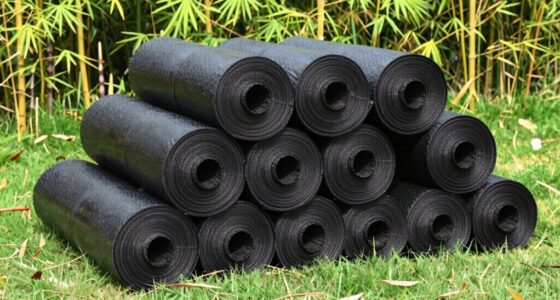
Have you ever wondered how landscape fabric helps keep weeds at bay and your garden looking tidy? It’s a type of weed barrier made from woven or non-woven fabric designed to block sunlight and prevent weeds from sprouting. The fabric’s durability guarantees it withstands weather, foot traffic, and soil pressure without tearing or breaking down quickly. Its porous structure allows water, air, and nutrients to pass through, promoting healthy plant growth while suppressing weeds. Unlike mulch, landscape fabric creates a stable barrier that stays in place longer, reducing the need for frequent reapplication. When installed correctly, it offers a reliable and long-lasting weed control method, making gardening more manageable and your garden more attractive. Proper installation and understanding of fabric properties can significantly extend its effectiveness and lifespan. Additionally, selecting energy-efficient materials can enhance the fabric’s durability and environmental benefits, ensuring sustainable gardening practices.
Why Do Gardeners Use Landscape Fabric? Benefits and Purposes

Gardeners use landscape fabric to keep weeds from taking over your garden beds, saving you time and effort. It also helps retain soil moisture, so your plants stay healthier and require less watering. These benefits make landscape fabric a practical tool for maintaining a tidy and thriving garden. Additionally, selecting the right material choice can influence how effectively the fabric suppresses weeds and impacts soil health.
Weed Suppression Techniques
Landscape fabric is a popular choice for suppressing weeds because it creates a barrier that prevents sunlight from reaching weed seeds, effectively stopping their growth. This helps reduce the need for constant manual weeding and minimizes the use of herbicides. Proper installation is key to success; make sure the fabric is tightly stretched and secured to prevent weeds from sneaking through gaps. Using landscape fabric also supports composting methods by keeping organic material in place, which accelerates decomposition and improves soil health. Additionally, it acts as a pest control strategy by blocking pests from burrowing in or reaching plants. While it’s effective, remember that improper use can lead to weed growth underneath or make weed management more difficult later on. Free Floating techniques can also be employed to enhance weed suppression and soil stability around the fabric.
Soil Moisture Retention
One of the main reasons landscape fabric is used in gardening is its ability to retain soil moisture. By reducing evaporation, it helps keep plants hydrated and reduces watering frequency. Here are some benefits:
- Maintains consistent soil moisture levels, promoting healthy root growth.
- Improves soil aeration by preventing compaction, which benefits plant roots.
- Limits nutrient leaching, ensuring essential nutrients stay in the soil longer.
- Minimizes weed growth, conserving moisture and reducing competition for water.
- When combined with AI tools, gardeners can better analyze soil conditions and optimize fabric placement for improved results, making soil analysis more efficient and accurate.
However, if not installed properly, landscape fabric can hinder soil aeration over time or cause water runoff, which might lead to poor moisture distribution. Proper use and maintenance are key to maximizing moisture retention without adverse effects.
When Is Landscape Fabric Effective for Weed Control?

Landscape material is most effective for weed control when installed properly on prepared soil and combined with other maintenance practices. It works best in areas where you use organic mulching or other natural barriers, which can enhance weed suppression. Proper installation means removing weeds beforehand, laying the fabric tightly, and securing edges. This careful setup prevents weeds from poking through gaps. Additionally, combining landscape fabric with organic mulching helps improve soil health and weed prevention. Keep in mind, fabric alone isn’t foolproof, but when used strategically, it can considerably reduce weeds. It’s particularly effective around trees, shrubs, or flower beds where you want a low-maintenance, weed-free zone. Proper use maximizes benefits and minimizes the risk of weeds overtaking your garden. Using weed barrier techniques in combination with landscape fabric further enhances its effectiveness in weed control. When applied correctly, landscape fabric can serve as a long-term weed suppression solution that reduces the need for chemical herbicides.
How to Tell if Landscape Fabric Is Causing More Weeds

While landscape fabric can substantially reduce weeds when installed correctly, it’s important to watch for signs that it might be doing more harm than good. If you notice an increase in weeds, consider these indicators:
- Weeds growing through or around the fabric, especially near edges or seams.
- Excessive soil erosion or compaction, which can trap weeds and pests.
- Persistent pest problems, as fabric can hide pests or create habitats.
- Use of mulch alternatives like wood chips or gravel that aren’t effectively blocking weed seeds or supporting pest management.
- Improper installation or maintenance, which can undermine the fabric’s effectiveness and lead to unintended weed growth. Proper fabric selection and ongoing upkeep are crucial to ensure your landscaping goals are met without unintended consequences. Additionally, understanding soil health can help you determine whether the fabric is contributing to better or worse growing conditions for weeds. Monitoring weed emergence patterns can also indicate if the fabric is functioning as intended or needs adjustment.
These signs suggest the fabric may be encouraging weed growth instead of suppressing it, making it necessary to reassess your landscaping approach. Proper monitoring ensures you’re not inadvertently worsening your weed problem.
How Improper Installation Can Reduce Landscape Fabric’s Effectiveness

If you don’t properly overlap landscape fabric or leave gaps, weeds can slip through and take over. Poor soil preparation or skipping securement methods can cause the fabric to shift or tear, reducing its effectiveness. Paying attention to these installation techniques ensures the fabric stays in place and functions as intended. Additionally, understanding deaf Vibes can help you recognize the importance of consistent and proper application, much like effective speech therapy techniques, to achieve long-lasting results. Recognizing the existential themes in landscape management can also deepen your understanding of the long-term benefits of proper installation practices. Proper piercing care and hygiene practices are essential to prevent infections that could compromise your landscape’s health, just as they do in body piercings. Moreover, selecting landscape fabric with the right material quality can significantly improve durability and weed suppression over time.
Improper Overlap and Gaps
Proper overlap and seamless coverage are crucial for maximizing the effectiveness of landscape fabric. If you leave gaps or don’t overlap properly, weeds can sneak through, undermining your garden bed design and plant selection efforts. To avoid this, keep these tips in mind:
- Overlap edges by at least 6 inches to prevent weeds from penetrating.
- Smooth out wrinkles and folds for even coverage.
- Guarantee fabric extends beyond the planting area to contain weeds.
- Use landscape staples to secure fabric tightly, avoiding gaps during installation.
- Regularly inspect and adjust the fabric to maintain an effective barrier against weeds. Effective weed prevention is achieved through careful installation and ongoing maintenance. Proper installation practices, such as ensuring consistent tension and coverage, help prevent weed infiltration and enhance overall garden health. Additionally, understanding the importance of proper installation techniques can significantly improve the fabric’s performance over time. Neglecting these details can create weak points, allowing weeds to grow and compromising your garden’s appearance and health. Consistent tension and coverage are key to ensuring the fabric performs as intended, reducing the likelihood of weeds penetrating the barrier. Moreover, taking the time to learn and apply these installation best practices can save you effort and frustration in the long run. Proper installation ensures your landscape fabric works as intended, supporting your plant choices and garden design.
Incorrect Soil Preparation Techniques
Incorrect soil preparation can considerably reduce the effectiveness of landscape fabric, even if you install it perfectly. If you skip adding proper soil amendments, the soil may remain too dense or poorly drained, preventing plants from establishing roots effectively. Poor soil conditions can also cause weeds to push through the fabric or make it less durable. Additionally, using improper planting techniques—such as planting too deep or too shallow—can compromise the fabric’s weed-blocking properties. Before laying the fabric, ensure the soil is well-prepared with the right amendments to improve aeration, drainage, and fertility. Taking these steps helps the fabric perform as intended, providing a stable, weed-resistant barrier that supports healthy plant growth.
Inadequate Securing Methods
Even the best landscape fabric can fail if you don’t secure it properly during installation. Poor securing methods lead to shifting, uncovering soil, and allowing weeds to grow through gaps. Common installation mistakes include not overlapping edges, skipping stakes or weights, and ignoring edge sealing. To avoid these issues:
- Use enough staples or landscape pins to hold the fabric firmly in place.
- Overlap seams by at least 6 inches to prevent weeds from slipping through.
- Secure edges thoroughly, especially around plant beds and borders.
- Check and re-secure after heavy rain or wind to maintain effectiveness.
Proper securing methods ensure the fabric stays flat and in place, reducing weed growth and prolonging its lifespan. Skipping these steps compromises the fabric’s ability to do its job.
Long-Term Limitations of Landscape Fabric: What to Expect Over Time

Over time, landscape fabric can develop issues that reduce its effectiveness and longevity. Decomposition effects cause the material to break down, leading to tears and holes. Additionally, roots can intrude through small openings, worsening weed problems instead of preventing them. As the fabric degrades, weeds may find pathways to grow, making maintenance harder. Roots may also cause the fabric to lift or shift, exposing soil and creating uneven surfaces. To visualize these long-term limitations, consider this: Hartsburg News has reported on various landscaping challenges that highlight similar issues. Utilizing effective landscape fabric techniques can help mitigate some of these problems early on.
| Issue | Impact |
|---|---|
| Decomposition | Material breaks down, reducing barrier effectiveness |
| Root Intrusion | Roots penetrate fabric, encouraging weed growth |
| Shifting/Folding | Fabric moves, exposing soil and weeds |
| Soil Accumulation | Debris collects, promoting weed germination |
Expect these issues to challenge your landscape over time, diminishing the fabric’s initial benefits. Recognizing these long-term limitations can help you plan for ongoing maintenance or alternative solutions.
Alternatives to Landscape Fabric for Weed Prevention

If you’re looking for effective ways to prevent weeds without relying on landscape fabric, several alternatives can serve you well. First, choose the right plant selection; native or dense ground-cover plants outcompete weeds naturally. Second, organic mulching, like wood chips or straw, suppresses weeds while enriching the soil. Third, layering newspaper or cardboard beneath mulch creates a barrier that blocks weeds without synthetic fabric. Fourth, maintaining healthy, dense plantings reduces open spaces where weeds can take hold. These strategies promote a sustainable garden environment, reduce chemical use, and improve soil health. Combining organic mulching with smart plant selection offers a natural, long-lasting weed prevention method that works better over time than landscape fabric.
How to Choose and Install Landscape Fabric Correctly

Choosing the right landscape fabric starts with understanding your garden’s specific needs. To prevent plant root interference, select a fabric with appropriate permeability—allowing water through while blocking weeds. Avoid using organic mulches directly on fabric, as they can trap moisture and promote weed growth. Proper installation is key: lay the fabric flat, remove weeds beforehand, and secure edges with landscape staples. Overlap seams by at least 6 inches to prevent weeds from slipping through. Ensure fabric extends beyond planting areas to inhibit weed encroachment. Here’s a quick guide:
| Need | Fabric Type | Mulch Recommendation |
|---|---|---|
| Preventing weeds | Permeable, durable fabric | Use organic mulch around plants but not directly on fabric |
| Plant root interference | Heavy-duty, UV-resistant fabric | Organic mulches can help but avoid excessive layering |
| Moisture control | Water-permeable fabric | Keep mulch loose for airflow |
This approach guarantees effective weed suppression and healthy plant growth.
What to Do if Landscape Fabric Is Causing Problems or Failing

Sometimes landscape fabric doesn’t perform as expected, leading to persistent weeds, poor drainage, or plant stress. When this happens, you need to take action to restore your landscape’s health.
- Remove the fabric carefully to prevent disturbing soil health.
- Improve soil by adding organic matter like compost, which supports beneficial organisms.
- Use organic methods such as mulching or hand weeding to control weeds without chemicals.
- Reseed or replant with native plants that thrive in your soil conditions.
Avoid relying solely on fabric again; instead, focus on organic methods that enhance soil health and reduce future weed problems. This approach creates a sustainable, healthy landscape free from the issues caused by faulty fabric.
Frequently Asked Questions
Does Landscape Fabric Affect Soil Health and Plant Roots?
Landscape fabric can impact soil health and plant roots by limiting soil aeration and root penetration. You might notice less air reaching the soil under fabric, which can hinder healthy root growth. While it helps control weeds, it can also restrict roots from expanding properly. To avoid problems, make sure you select breathable fabric and install it correctly, allowing enough space for roots to grow and soil to stay aerated.
Can Landscape Fabric Be Reused After Removal?
Think of landscape fabric as a worn-out map—you might want to reuse it, but its reusability potential dims after removal. You can attempt to salvage it, but removal challenges often tear or degrade the fabric, making reuse difficult. If the fabric remains intact, you might reuse it, but usually, it’s better to contemplate it a one-time guide. Carefully inspect for damage before reusing to avoid future weed battles.
How Does Landscape Fabric Impact Water Drainage and Runoff?
Landscape fabric can restrict water flow, leading to poor drainage and increased runoff control issues. When installed improperly or if it becomes clogged with debris, it can cause water to pool or flow unevenly. This may result in erosion or waterlogging around your plants. To minimize these problems, guarantee the fabric is permeable and installed correctly, allowing water to pass through while still controlling weeds effectively.
Are There Eco-Friendly Landscape Fabric Options Available?
Are eco-friendly landscape fabric options worth considering? Absolutely! You can find biodegradable alternatives made from natural materials like jute, coir, or recycled fabrics that break down over time. These eco-friendly options help reduce plastic waste and are safe for your garden. By choosing biodegradable landscape fabric, you support sustainability while effectively controlling weeds and maintaining healthy soil, making it a smart, environmentally conscious choice for your landscaping needs.
What Are Signs That Landscape Fabric Needs Replacement?
You’ll notice landscape fabric needs replacing when weed suppression fails, and weeds start poking through. If you see roots invading the fabric or it becomes torn, it indicates deterioration. Also, if the fabric becomes visibly degraded or starts to lift, it’s time for a replacement. Regularly check for these signs to maintain effective weed control and prevent root intrusion, ensuring your garden stays healthy and weed-free.
Conclusion
Think of landscape fabric as a double-edged sword—powerful when used right, but sharp when misused. With proper installation and care, it can be your garden’s shield, keeping weeds at bay like a loyal guardian. But if neglected or wrongly placed, it can turn into a tangled mess, inviting more weeds than it keeps out. Stay vigilant, learn its secrets, and let your garden flourish in harmony, not chaos.