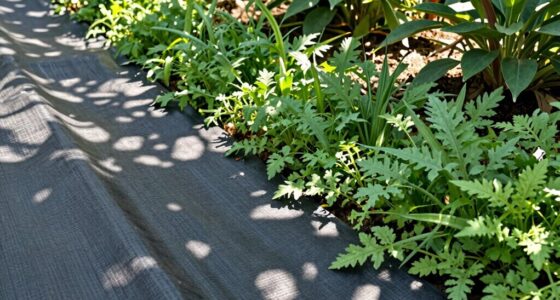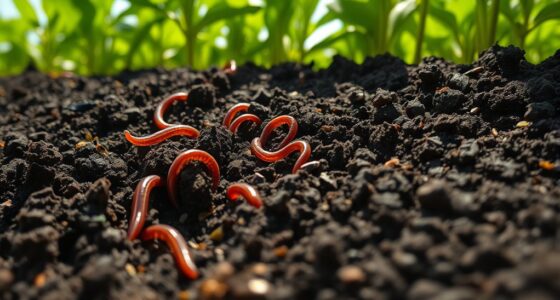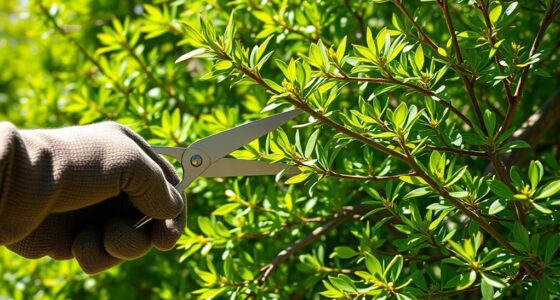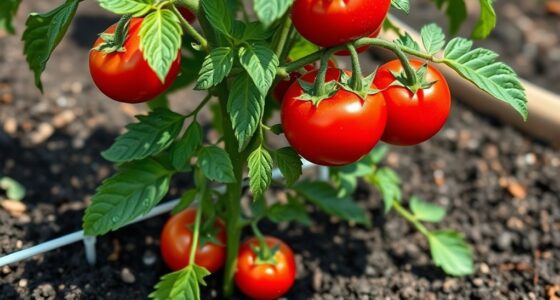
Managing leaf litter wisely helps you support pollinators like bees and butterflies while controlling pests and mold. Keep some leaves around native plants and in designated mulch areas to promote beneficial insects and soil health. Remove thick, damp piles and keep debris away from standing water to prevent pests and mold. Balance is key—by maintaining proper leaf litter habits, you’ll foster a healthy ecosystem. For more tips, discover how to fine-tune your approach effectively.

Get garden gear delivered free with Prime
- Fast, free delivery on millions of items
- Prime Video, Amazon Music and more included
- Member-only deals all year
Key Takeaways
- Leave some leaf litter in designated areas to support beneficial insects and pollinators.
- Remove or thin thick, damp leaf piles to prevent pest breeding and mold growth.
- Use composting or mulch beds for leaves away from standing water and high-traffic zones.
- Regularly inspect and manage moisture levels to reduce pest habitats and mold development.
- Avoid raking all leaves into trash; recycle them naturally to balance pollinator benefits and pest control.
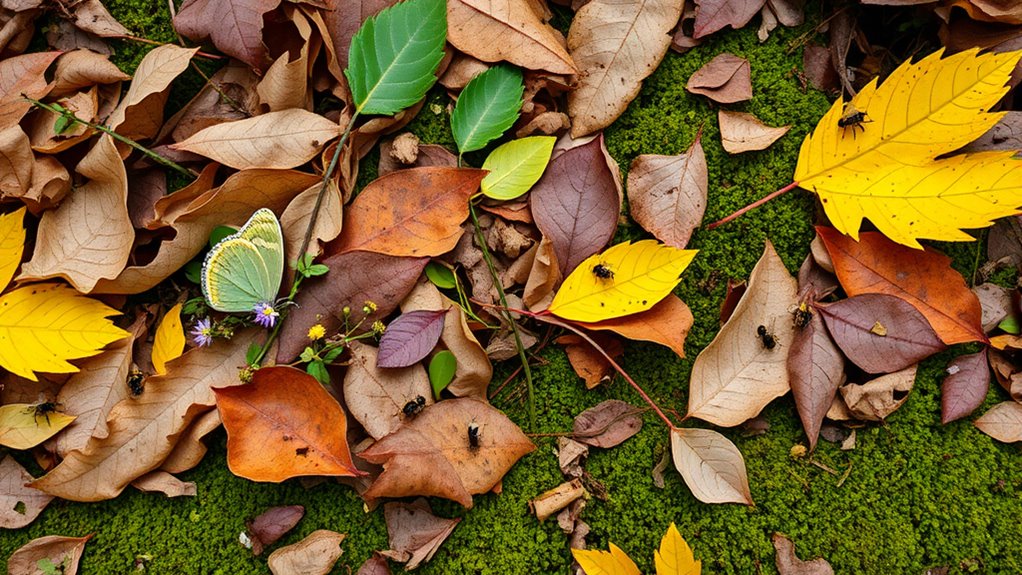
Managing leaf litter effectively is essential for maintaining a healthy yard and preventing potential issues like mold and pests. When you clear leaves, you’re not just tidying up; you’re shaping the environment for your garden’s ecosystem. One way to do this is by promoting native plantings around your yard. Native plants naturally attract pollinators like bees and butterflies, which rely on the leaf litter as part of their habitat. Leaving some leaf debris in designated areas can create a safe refuge for these beneficial insects, supporting pollination and overall plant health. It’s a balancing act—removing enough to prevent pest breeding grounds but leaving enough to nurture pollinator populations.
You might worry about pests hiding in leaf litter, but proper management can minimize this risk while still supporting pollinators. Instead of indiscriminately raking or blowing leaves into the trash, consider composting or creating leaf mulch beds in less trafficked parts of your yard. This way, you provide a habitat for beneficial insects, fungi, and microorganisms that help break down organic matter naturally. Avoid overuse of pesticides in your yard, especially those containing broad-spectrum chemicals, as they can harm pollinators and other beneficial insects that live in or visit leaf litter areas. Instead, focus on integrated pest management strategies that target pests specifically and sparingly, preserving the natural balance.
Regularly inspecting your yard allows you to identify problem areas where pests might be breeding or where mold might develop due to excessive moisture. Manage leaf litter by removing piles that are too thick or damp, which can become breeding grounds for pests like mosquitoes or mold spores. Keep leaf debris away from standing water and avoid creating dense layers that trap moisture. When you do remove leaves, consider spreading them in areas where native plantings are thriving or use them as mulch around your garden beds. This promotes soil health and provides shelter for pollinators without encouraging pest populations. Incorporating proper yard management techniques can further help maintain a balanced ecosystem and reduce pest risks.
Frequently Asked Questions
How Does Leaf Litter Affect Soil Health in Pollinator Habitats?
Leaf litter boosts soil health in pollinator habitats by enhancing decomposition rates, which release essential nutrients for plants. It also improves soil aeration by creating air spaces as it breaks down, promoting healthy root growth. You should leave some leaf litter to support these natural processes, but manage it carefully to avoid pests. Striking a balance ensures your habitat stays nutritious for pollinators while maintaining soil vitality.
Can Leaf Litter Management Improve Biodiversity in Garden Ecosystems?
Did you know that properly managing leaf litter can boost biodiversity by up to 30%? You can improve your garden ecosystem by controlling decomposition rates and maintaining habitat diversity. Leaving some leaf litter provides shelter for beneficial insects and pollinators, while removing excess reduces pests. Striking a balance encourages a thriving, resilient environment where diverse species flourish, making your garden healthier and more vibrant.
What Are Eco-Friendly Methods to Control Pests in Leaf Litter?
You can control pests in leaf litter eco-friendly by encouraging natural predators like ladybugs and birds, which naturally keep pest populations in check. Additionally, try companion planting around your leaf litter to deter pests and attract beneficial insects. These methods promote a healthy garden ecosystem, reduce chemical use, and support biodiversity. Regularly monitor your leaf litter to identify pest issues early and maintain a balanced environment for both pollinators and beneficial insects.
How Often Should Leaf Litter Be Removed to Benefit Pollinators?
Imagine a gentle breeze stirring leaf litter, revealing tiny pollinators hidden beneath. You should remove leaf litter every 4-6 weeks during active seasons to support pollinator protection. Timing is key; too frequently disrupts their habitat, while too seldom invites pests. By maintaining this balance, you foster a healthy environment where pollinators thrive, ensuring your garden blossoms with vibrant life and natural harmony.
Are There Specific Plant Species That Thrive With Minimal Leaf Litter?
Certain native plants, like ferns and some wildflowers, thrive with minimal leaf litter because they prefer cleaner soil conditions and less leaf decay. You should observe how your garden reacts; if these plants flourish without much leaf cover, it’s best to keep litter minimal around them. Native plants adapted to your area often require less leaf decay, making them resilient and easier to maintain while supporting pollinators.
Conclusion
While some might worry that removing leaf litter harms beneficial insects, it actually helps protect pollinators from pests and diseases. By managing leaf litter thoughtfully, you create a healthier environment that supports pollinator activity and biodiversity. Remember, a balanced approach doesn’t mean eliminating all leaf litter—just ensuring it doesn’t become a pest haven. Your efforts can foster a thriving, pollinator-friendly garden while keeping pests in check, benefiting the entire ecosystem.
Fall yard work Picks
leaf blowers
As an affiliate, we earn on qualifying purchases.