Maintaining the right mowing height helps keep pests and diseases at bay by promoting a healthier, stronger lawn. When you cut too short, you expose roots and weaken the turf, making it more vulnerable to pests and fungal problems. Taller grass improves air circulation, supports photosynthesis, and creates a less inviting environment for pests. To see how adjusting your mowing height can truly benefit your lawn’s resilience, keep exploring the key tips and guidelines.
Key Takeaways
- Maintaining proper mowing height promotes turf health and resilience against pests and diseases.
- Mowing too short stresses grass, weakening its ability to resist pests and increasing vulnerability.
- Taller grass improves air circulation and creates a less hospitable environment for pests.
- Different grass types require specific mowing heights to optimize pest and disease resistance.
- Cutting grass too low exposes roots, increasing susceptibility to pests and reducing overall turf health.
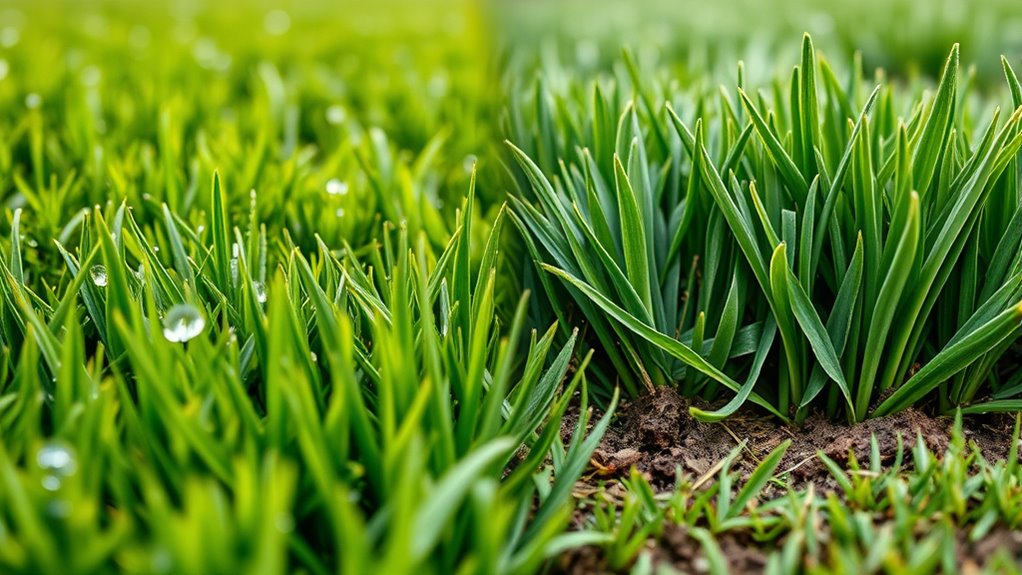
Maintaining the right mowing height is vital for controlling pest pressure in your lawn. When you mow at an appropriate height, you help promote a healthier, more resilient turf that can fend off pests and diseases more effectively. One of the key benefits of proper mowing is enhanced disease resistance. When grass is cut too short, it becomes stressed and less capable of fighting off fungal infections and other issues. Conversely, when you leave the grass slightly taller, it develops a stronger root system and better canopy, which shields it from environmental stresses and reduces its vulnerability to pests. Taller grass also improves air circulation through the turf, creating a less hospitable environment for pests that thrive in damp, dense conditions.
Another vital aspect of mowing height is its impact on grass color. When you mow too low, the grass can appear dull, pale, or uneven, which signals stress and poor health. Maintaining an ideal mowing height helps guarantee your lawn retains a rich, vibrant green hue. Taller grass blades allow for more efficient photosynthesis, leading to a deeper, more consistent grass color. This lush appearance not only boosts your lawn’s aesthetic appeal but also acts as a natural deterrent to pests. A healthy, well-colored lawn is less attractive to insects and other pests seeking weakened or stressed turf to feed on or lay eggs in.
You should aim for a mowing height that balances disease resistance and grass color, tailored to your specific grass type. For cool-season grasses like fescue or bluegrass, keeping the mower blades at around 3 to 4 inches promotes a thicker, healthier turf that’s better at resisting pests and diseases. Warm-season grasses such as Bermuda or zoysia thrive when cut slightly lower, around 1 to 2.5 inches, but still benefit from not being cut too short. Always remember that mowing too low, regardless of the grass type, exposes roots and crown tissues, making your lawn more susceptible to pests and diseases.
lawn mower height adjustment
As an affiliate, we earn on qualifying purchases.
As an affiliate, we earn on qualifying purchases.
Frequently Asked Questions
How Does Mowing Height Affect Lawn Drought Resistance?
You’ll find that raising your mowing height improves your lawn’s drought resistance. Longer grass blades shade the soil, reducing water evaporation and keeping the grass roots cooler. Keeping your grass taller helps it withstand drought conditions better, as it can access deeper soil moisture. So, by adjusting your mowing height, you give your lawn a better chance to survive dry spells and stay healthy despite grass drought.
What Are the Best Mowing Practices for Different Grass Types?
Think of your lawn as a living tapestry—each grass species has its own brushstroke. For cool-season grasses like Kentucky bluegrass, mow at 2.5-3 inches, trimming regularly to promote health. Warm-season grasses like Bermuda need shorter cuts, around 1-2 inches, to thrive. Use precise mowing techniques, such as sharp blades and variable heights, to guarantee your grass stays lush and resilient. Tailor your approach to each grass type for best results.
Can Adjusting Mowing Height Prevent Specific Pests Naturally?
Yes, adjusting your mowing height can help prevent specific pests naturally. By using proper pest control and mowing techniques, you can create a less inviting environment for pests like grubs or chinch bugs. Raising your mower height encourages strong, healthy grass that resists pest infestations. Regularly changing mowing patterns and maintaining ideal height disrupts pest life cycles, reducing the need for chemical treatments and promoting a healthier, pest-resistant lawn.
How Often Should I Change Mowing Patterns to Reduce Pest Buildup?
You should change your mowing patterns every 1 to 2 weeks to prevent pest buildup, as consistent mowing in the same direction can cause soil compaction, which invites pests. An interesting fact: lawns mowed uniformly without pattern variation are 30% more prone to pest problems. By alternating your mowing direction and adjusting your watering schedule, you improve soil health, reduce compaction, and create a less inviting environment for pests.
Does Mower Blade Sharpness Influence Pest Attraction?
Yes, mower blade sharpness influences pest attraction. Dull blades tear grass instead of cutting it cleanly, creating rough edges and stress that attract pests looking for weakened plants. Sharp blades cut smoothly, reducing plant stress and discouraging pests from settling. Regularly maintaining your mower with sharp blades helps keep your lawn healthy, lessens pest attraction, and promotes lush, pest-resistant grass growth.
best mower blades for pest-resistant lawn
As an affiliate, we earn on qualifying purchases.
As an affiliate, we earn on qualifying purchases.
Conclusion
By adjusting your mowing height, you can substantially reduce pest problems in your lawn. For example, keeping your grass at the ideal height can lower pest infestations by up to 30%. So, next time you mow, remember that a little height can go a long way in protecting your lawn’s health. It’s a simple change that makes a big difference—your grass will thank you, and you’ll enjoy a lush, pest-free yard all season long.
tall grass lawn care tools
As an affiliate, we earn on qualifying purchases.
As an affiliate, we earn on qualifying purchases.
lawn aerator for healthy turf
As an affiliate, we earn on qualifying purchases.
As an affiliate, we earn on qualifying purchases.