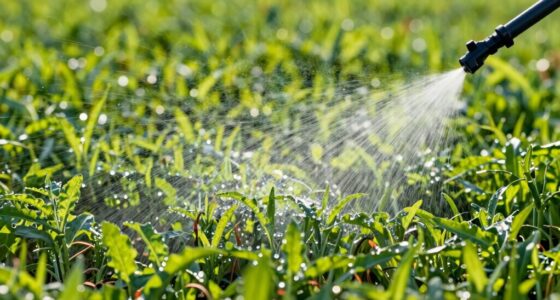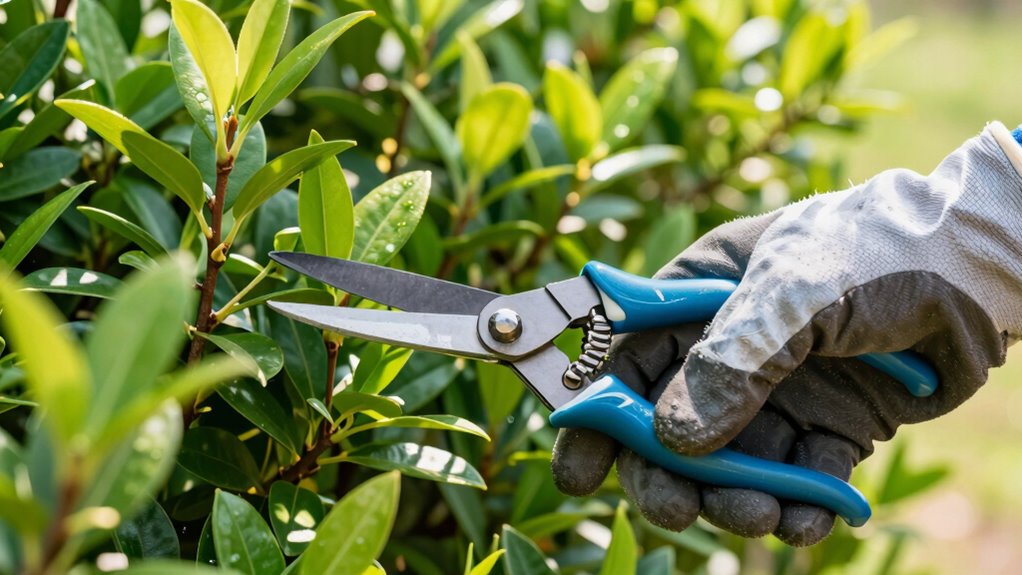
To improve airflow quickly, make a clean, strategic pruning cut just above a healthy leaf node or branch junction. This type of cut opens up the plant’s structure and removes inward-growing or crossing branches, which can block airflow. Using sharp, sterilized tools guarantees smooth cuts that heal faster and prevent disease. Effective pruning like this not only boosts airflow but also promotes healthy growth. If you keep exploring, you’ll discover more tips to keep your plants thriving.

Get garden gear delivered free with Prime
- Fast, free delivery on millions of items
- Prime Video, Amazon Music and more included
- Member-only deals all year
Key Takeaways
- Remove inward-growing or crossing branches to open up the plant’s interior.
- Make clean cuts just above healthy leaf nodes or branch junctions.
- Prune dense, crowded areas to increase airflow and reduce moisture buildup.
- Regularly trim dead or diseased branches to prevent airflow blockage.
- Use sharp, sterilized tools for precise cuts that promote quick healing and better ventilation.
Have you ever noticed how crowded and tangled your plants can become? Over time, dense foliage can trap moisture and block airflow, creating a perfect environment for pests and diseases to thrive. When plants are overcrowded, their root health can also suffer because they compete for limited nutrients and water. That’s why proper pruning is essential—not just for appearance, but for your plant’s overall health and vitality.
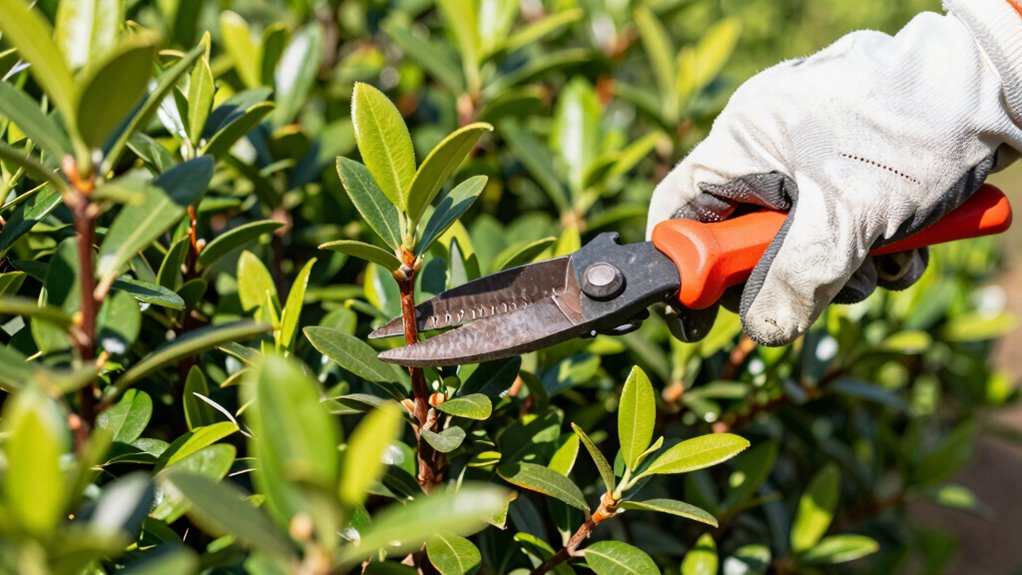
One of the most effective pruning techniques to improve airflow quickly is making a clean, strategic cut just above a healthy leaf node or branch junction. This type of cut encourages new growth and helps open up the plant’s structure, reducing congestion. By removing inward-growing or crossing branches, you allow better circulation of air through the canopy. This airflow helps dry out moisture after watering or rain, significantly lowering the chances of fungal infections and pest infestations. When pests like aphids or spider mites encounter a well-ventilated plant, they’re less likely to establish and multiply, making pest prevention much easier. Proper pruning can also prevent the buildup of moisture and debris, which are common attractants for pests.
The key to a successful pruning cut is ensuring it’s clean and precise. Use sharp, sterilized tools to make smooth cuts that heal quickly. Avoid tearing or crushing the plant tissue, as this can introduce diseases and hinder root health over time. When you prune with care, you’re supporting the plant’s ability to develop a strong, healthy root system that can better absorb nutrients and water, reinforcing its resilience against common issues. A healthy root system is the foundation of a thriving plant, and pruning helps promote this by removing dead or diseased roots and encouraging new, vigorous growth. Additionally, understanding the importance of proper pruning techniques can help you avoid accidental damage and ensure your efforts are effective. Proper pruning also involves understanding the growth habits of your plants, enabling you to make the most beneficial cuts.
In addition to improving airflow and pest prevention, pruning also enhances the plant’s overall shape and productivity. It directs energy toward the healthier parts, encouraging more blooms, fruit, or foliage where you want it most. Regular pruning creates an open structure that’s easier to inspect and maintain, making it simpler to spot early signs of trouble before they escalate. Understanding the importance of proper pruning techniques can significantly impact your plant’s health and longevity. By embracing this pruning cut technique, you’re actively supporting your plant’s health, reducing the risk of pests, and ensuring it stays vigorous and beautiful.
As an affiliate, we earn on qualifying purchases.
Frequently Asked Questions
How Often Should I Perform Pruning to Maintain Optimal Airflow?
You should perform pruning every 4 to 6 weeks during the growing season to maintain ideal airflow. Regular pruning frequency guarantees you remove dead or overcrowded branches, which promotes better air circulation. By consistently practicing airflow enhancement through timely pruning, you prevent disease and pests, keeping your plants healthy. Stick to this schedule, and you’ll see improved airflow, healthier growth, and a more vibrant, thriving garden.
Are There Specific Tools Recommended for Effective Pruning Cuts?
You’ll want reliable tools like pruning scissors for small branches, loppers for thicker ones, and pruning saws for larger cuts. Using sharp, clean tools guarantees smooth cuts that heal faster and reduce disease risk. Always disinfect your pruning scissors, loppers, and saws with disinfectant spray before and after pruning. This keeps your tools effective and prevents the spread of pathogens, ensuring healthy, airflow-optimized plants.
Does Pruning Affect the Overall Health of the Plant or Tree?
Pruning generally boosts your plant’s resilience by removing dead or diseased parts, encouraging healthy growth. When you prune correctly, you support root health because the plant can focus its energy on strong new growth rather than maintaining weak or damaged areas. Proper pruning minimizes stress, helping the plant recover faster and stay healthier overall. Just be sure to prune thoughtfully and avoid overdoing it, which can harm plant resilience.
Can Improper Pruning Lead to Increased Pest or Disease Issues?
Yes, improper pruning can invite pests and diseases. You might think you’re helping your plant, but wrong cuts create wounds that pests love to exploit and open pathways for disease. If you neglect pest prevention and disease control during pruning, you risk a silent invasion that weakens your plant’s health. Carefully prune with sharp tools, make clean cuts, and always follow proper techniques to keep pests and diseases at bay.
Is There a Best Time of Year to Prune for Airflow Improvement?
You should prune during the dormant season, typically late winter or early spring, to optimize airflow. Seasonal timing aligns with your plant’s growth cycle, making it easier to remove dead or overcrowded branches without stressing the plant. Pruning at this time encourages healthy growth and improves airflow, reducing pest and disease risks. Avoid pruning during active growth periods, as it can hinder development and increase vulnerabilities.
As an affiliate, we earn on qualifying purchases.
Conclusion
By making strategic pruning cuts, you’re opening up your plant like a refreshing breeze, allowing better airflow and healthier growth. Think of it as clearing a path through a dense forest—suddenly, everything feels lighter and more vibrant. Keep in mind, every cut you make is a step toward a stronger, more resilient plant. So, don’t be afraid to trim away the dead or crowded branches, and watch your garden thrive with renewed energy.
As an affiliate, we earn on qualifying purchases.
As an affiliate, we earn on qualifying purchases.
Fall yard work Picks
leaf blowers
As an affiliate, we earn on qualifying purchases.