Mulch helps you regulate moisture by reducing evaporation, keeping plants hydrated longer and lowering watering needs. It also acts as a barrier to prevent soil-borne diseases from splashing onto plants, reducing disease risk. Additionally, mulch suppresses weeds and creates a physical barrier that discourages pests, while proper management prevents pests from thriving in damp layers. If you want to discover more ways mulch benefits your garden, keep exploring how it transforms soil health and plant protection.

Get garden gear delivered free with Prime
- Fast, free delivery on millions of items
- Prime Video, Amazon Music and more included
- Member-only deals all year
Key Takeaways
- Mulch conserves soil moisture by reducing evaporation, maintaining consistent water levels for healthier plants.
- It suppresses weeds, decreasing competition and limiting weed-borne diseases and pests.
- Mulch acts as a barrier, preventing soil-borne pathogens from splashing onto plants, reducing disease risk.
- Proper mulch layers discourage pests by reducing habitat and hiding spots near plants.
- Organic mulch enriches soil, promoting beneficial microbes that help suppress diseases and pests naturally.
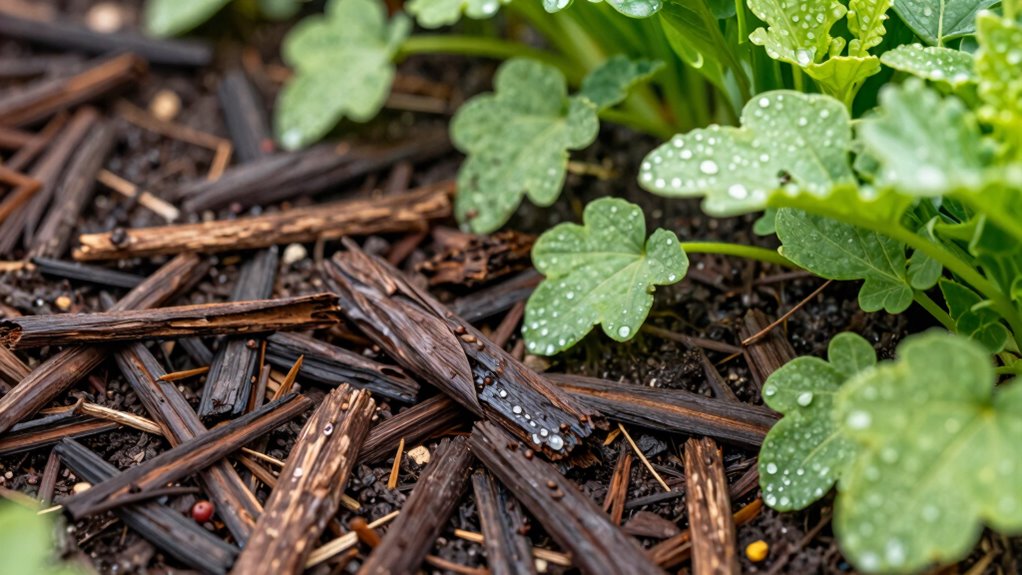
Mulch is a popular gardening tool because it offers numerous benefits for plants and soil health. One of the primary advantages is its ability to regulate soil temperature. When you spread mulch around your plants, it acts as a natural insulator, keeping the soil cooler during hot summer days and warmer during chilly nights. This temperature moderation helps roots stay stable, promoting healthier growth and reducing stress caused by extreme weather fluctuations. Additionally, maintaining consistent soil temperature can prevent the development of diseases that thrive in overly warm or cold conditions.
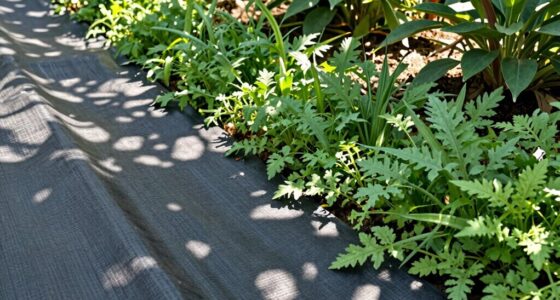
Another key benefit of mulch is its weed suppression capabilities. By covering the soil surface, mulch blocks sunlight from reaching weed seeds, effectively preventing them from germinating. This means you spend less time pulling weeds and more time enjoying your garden. Plus, with fewer weeds competing for nutrients and water, your desired plants can thrive better and grow more vigorously. Mulch creates a physical barrier that makes it difficult for weeds to establish, giving your plants a better chance to develop strong root systems and overall health.
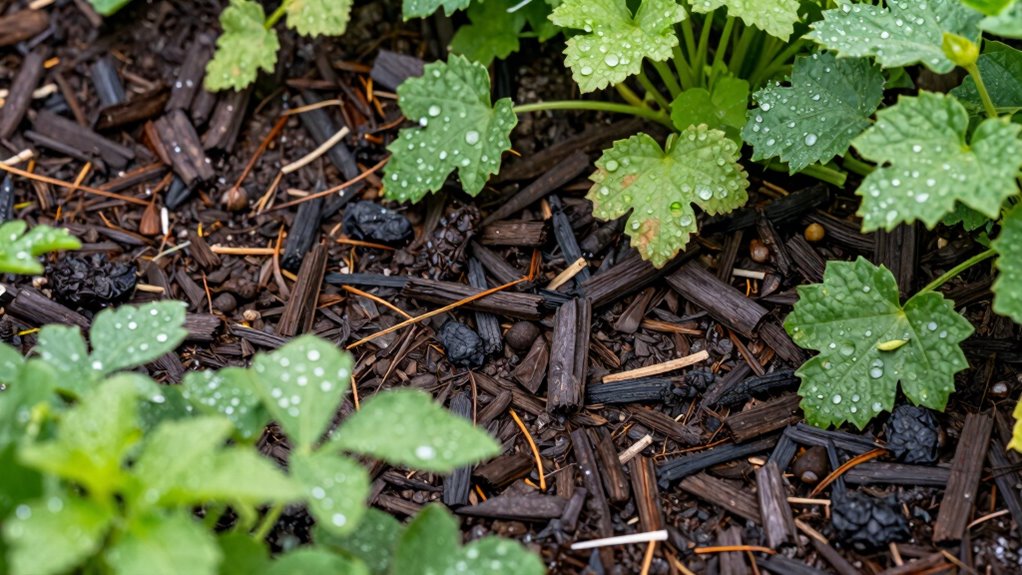
When it comes to moisture, mulch plays an essential role in conserving it. It reduces evaporation from the soil surface, helping your plants retain the water they need to flourish. This moisture retention is especially valuable during dry spells or in regions with inconsistent rainfall. With mulch, you won’t need to water as frequently, which not only saves you time but also prevents overwatering that can lead to root rot and other diseases. The consistent moisture level that mulch provides creates an environment where plants can absorb nutrients more efficiently, leading to healthier, more vigorous growth. Furthermore, mulch can influence soil health by gradually breaking down and enriching the soil with organic matter, fostering beneficial microbial activity. An understanding of soil microbiology can help gardeners optimize mulch use for better plant health. Proper mulch management can also help maintain a balanced soil ecosystem, which is crucial for sustainable gardening.
Mulch also influences the prevalence of diseases and pests. By acting as a barrier, mulch can prevent soil-borne pathogens from splashing onto plant leaves during watering or rain, reducing the incidence of certain diseases. However, it’s essential to choose the right type of mulch and maintain it properly; a thick, damp layer can sometimes harbor pests or fungi. Regular monitoring and mulch maintenance can help prevent these issues from escalating. Properly managed mulch keeps the garden cleaner and less hospitable to pests, making it easier to control infestations. Moreover, by suppressing weeds and maintaining soil moisture, mulch indirectly reduces the likelihood of pests that feed on weeds or thrive in dry, exposed soil.
garden mulch for moisture retention
As an affiliate, we earn on qualifying purchases.
As an affiliate, we earn on qualifying purchases.
Frequently Asked Questions
Does Mulch Attract Beneficial Insects or Pests?
Mulch can attract beneficial insects and deter pests at the same time. You’ll notice beneficial insects like ladybugs and pollinators drawn to mulch areas because of the habitat and food sources it provides. Plus, some mulches have pest deterrent properties that discourage harmful pests. By choosing the right mulch, you create a balanced environment that supports beneficial insects while reducing pest problems, promoting healthier plants overall.
How Often Should Mulch Be Replaced or Refreshed?
Think of mulch like a garden’s wardrobe—it needs regular updates to stay fresh. You should replace or refresh mulch every 1-3 years, depending on its longevity and appearance. Typically, a good replacement schedule involves adding a 2-3 inch layer annually or biannually, especially if it decomposes or weeds poke through. This routine keeps your garden healthy, moisture-balanced, and pest-resistant, much like updating your wardrobe keeps you comfortable and stylish.
Can Mulch Be Used Around All Types of Plants?
You can use mulch around most plants, but you should consider plant compatibility and mulch selection. Some plants prefer organic mulches, while others thrive with inorganic options. For example, acid-loving plants like blueberries benefit from pine bark mulch, whereas succulents prefer gravel. Always check your specific plant’s needs before choosing mulch, ensuring it enhances growth without causing issues like root rot or pest attraction.
Are There Specific Mulch Colors That Work Better?
You can choose from various mulch color options to suit your garden’s aesthetic and functional needs. Darker mulches, like black or dark brown, absorb heat and can help with weed suppression, while lighter colors, such as tan or red, add visual effects that brighten your landscape. Select mulch colors based on how they complement your plants and overall design, enhancing visual appeal while also influencing moisture retention and pest control.
How Does Mulch Impact Soil Temperature Year-Round?
Think of mulch as a cozy blanket for your soil, gently insulating it year-round. It moderates soil temperature, keeping it cooler in summer and warmer in winter. This natural soil insulation helps with temperature regulation, preventing extreme fluctuations that can stress plants. By maintaining stable soil temperatures, mulch promotes healthier roots and enhances plant growth, making your garden more resilient in all seasons.
As an affiliate, we earn on qualifying purchases.
Conclusion
Using mulch is like giving your garden a protective blanket—keeping moisture in, reducing disease risk, and deterring pests all at once. By wisely applying mulch, you create a healthier, more resilient landscape without extra effort. It’s a simple step that transforms your garden into a thriving oasis, much like a shield that guards your plants from harm. Embrace mulch and watch your garden flourish with less worry and more beauty.
As an affiliate, we earn on qualifying purchases.
As an affiliate, we earn on qualifying purchases.
Fall yard work Picks
leaf blowers
As an affiliate, we earn on qualifying purchases.