
When you use aged or composted wood chips, they help improve your soil by supporting beneficial fungi, enhancing nutrient cycling, and increasing organic matter. However, freshly chipped wood can temporarily steal nitrogen from your soil as microbes decompose the high-carbon material, potentially causing plants to yellow or grow poorly. To avoid this, you might need to add nitrogen-rich materials or wait a few months for the chips to settle. Keep exploring to learn how to manage these effects effectively.
Key Takeaways
- Wood chips improve soil by increasing organic matter and supporting beneficial fungi that aid nutrient cycling.
- Fresh wood chips are nitrogen sinks, temporarily depleting soil nitrogen as microbes decompose them.
- Aging or composting wood chips reduces nitrogen drawdown and accelerates beneficial fungal activity.
- Mixing chips with nitrogen-rich materials like manure balances the carbon-to-nitrogen ratio.
- Over time, decomposing wood chips release nutrients, enhancing soil fertility and long-term health.

Have you ever wondered how spreading wood chips on your garden affects the soil’s nitrogen levels? When you lay down wood chips, you initiate a complex process involving fungal interactions and carbon sequestration. These fungi, especially mycorrhizal types, form symbiotic relationships with plant roots, helping them access nutrients more efficiently. As fungi break down the woody material, they release enzymes that decompose the lignin and cellulose in the chips. This decomposition process is essential for carbon sequestration, trapping carbon in the soil and reducing greenhouse gases. In this way, wood chips act as a carbon sink, contributing to climate change mitigation while enriching your garden.
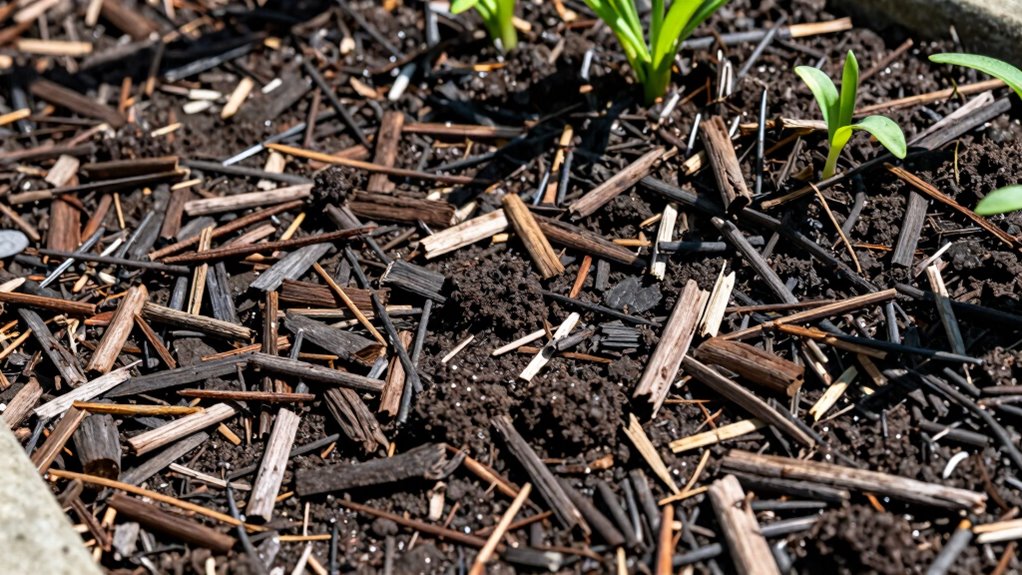
However, the effects on nitrogen are more nuanced. Fresh wood chips are rich in carbon but low in nitrogen, so when you apply them directly, microbes that decompose the wood demand nitrogen from the surrounding soil to sustain their activity. This process temporarily reduces the amount of available nitrogen for your plants, which can lead to deficiencies if not managed properly. You might notice poor plant growth or yellowing leaves, signaling nitrogen starvation. This is where understanding fungal interactions becomes essential. As fungi colonize the wood chips, they help break down the tough organic material, gradually releasing nutrients back into the soil. Over time, this leads to improved soil health and increased nitrogen availability, but only after the initial period of nitrogen drawdown. Additionally, fungal activity plays a key role in accelerating decomposition and nutrient cycling, making your soil more productive over the long term. Incorporating soil microbial health practices can further enhance these benefits by supporting beneficial fungi and bacteria that aid in nutrient recycling. Enhancing overall soil health can significantly improve the efficiency of nutrient transfer and soil resilience.
To make the most of wood chips without harming your plants, it’s wise to let the chips age for a few months before applying them as mulch. Composting the chips beforehand or mixing them with nitrogen-rich materials like grass clippings or manure can also help balance the carbon-to-nitrogen ratio. These practices support beneficial fungal interactions, which accelerate decomposition and nutrient cycling. As a result, your soil becomes richer and more resilient, with better structure and organic content. Over the long term, this improves carbon sequestration, helping store atmospheric carbon underground and combat climate change.

Back to the Roots 25.7qt (1 Cubic ft) Organic Premium Mulch
- Organic & Peat-Free: 100% organic, peat-free soil mix
- Ideal for Mulch Soil: Suitable for herbs, vegetables, fruits
- Enhanced Moisture Control: Yucca extract for moisture retention
As an affiliate, we earn on qualifying purchases.
As an affiliate, we earn on qualifying purchases.
Frequently Asked Questions
How Long Does It Take for Wood Chips to Decompose Fully?
It typically takes about 1 to 3 years for wood chips to fully decompose, depending on factors like climate, chip size, and microbial activity. During this decomposition timeline, organic matter buildup gradually enriches your soil, improving its structure and fertility. Keep in mind that fresh chips decompose slower and may temporarily tie up nitrogen, so monitoring your soil’s health during this process guarantees your garden benefits from the organic matter buildup without issues.
Can Certain Wood Types Harm My Soil or Plants?
Certain wood types can be downright disastrous, causing wood toxicity or drastically shifting soil acidity. If you use cedar or black walnut chips, you risk harming your plants, as these woods release compounds that can stunt growth or be toxic. These woods also tend to increase soil acidity, making it an inhospitable environment for many plants. Always research your wood type before mulching to protect your garden’s health!
How Often Should I Add Fresh Wood Chips to My Garden?
You should add fresh wood chips to your garden about once a year, preferably in spring or fall. Mulching benefits include weed suppression and moisture retention, which support healthy plants. Fresh chips also help prevent pests by creating a barrier against certain insects. However, avoid over-mulching, as it can lead to nitrogen depletion. Regularly replenish chips to maintain these benefits and keep your garden thriving.
Do Wood Chips Attract Pests or Rodents?
Wood chips can attract pests and rodents if not managed properly. Pest attraction occurs mainly if the chips are stored near your home or if there’s decaying organic matter. Fresh chips can create a rodent habitat, especially if they’re piled up or kept moist. To minimize issues, maintain proper composting, avoid over-mulching, and keep chips away from structures. Regular inspection helps prevent pests from settling into the wood chip layer.
What Are the Signs of Nitrogen Deficiency Caused by Wood Chips?
Imagine your plants struggling, their leaves pale and stunted, as if their energy has drained away. Signs of nitrogen deficiency caused by wood chips include yellowing leaves, slowed growth, and poor flowering. This nitrogen imbalance hampers soil enrichment, robbing plants of essential nutrients. You’ll notice the symptoms most on new plants or those in heavily mulched beds, where fresh wood chips consume nitrogen during decomposition.

Houseplant Mulch (8 Quarts), Small Bark Wood Chips for Indoor, Patio, Potting Media, and Much More!
- Beautiful soil covering: Enhances indoor potted plant aesthetics
As an affiliate, we earn on qualifying purchases.
As an affiliate, we earn on qualifying purchases.
Conclusion
As you layer wood chips onto your soil, picture a garden thriving beneath a protective blanket—nutrients slowly released, roots reaching deep. But if you ignore the balance, imagine the same bed starved, roots fighting for nitrogen while fresh chips steal what’s needed. Your hands hold the key: understanding when chips nurture or hinder. With mindful application, your soil flourishes, turning a simple mulch into a lush, vibrant haven instead of a barren patch.

Jobe's Organics Fast Acting Granular Fertilizer Compost Starter, Easy Plant Care Compost Accelerator, 4 lbs Bag
- Accelerates Composting: Speeds up outdoor composting process
- Nutrient-Rich Formula: Provides 4-4-2 NPK for plants
- Organic and Chemical-Free: No synthetic chemicals, USDA OMRI listed
As an affiliate, we earn on qualifying purchases.
As an affiliate, we earn on qualifying purchases.

Xtreme Gardening Mykos Mycorrhizae for Plants- Granular Mycorrhizal Fungi Root Inoculant, OMRI Listed Organic Biofertilizer for Stronger Roots & Nutrient Uptake (2.2 lbs)
- Powerful Root Support: Enhances root colonization and growth
- Improves Nutrient & Water Uptake: Expands root zone for better absorption
- Suitable for All Plants: Ideal for vegetables, herbs, flowers, and more
As an affiliate, we earn on qualifying purchases.
As an affiliate, we earn on qualifying purchases.