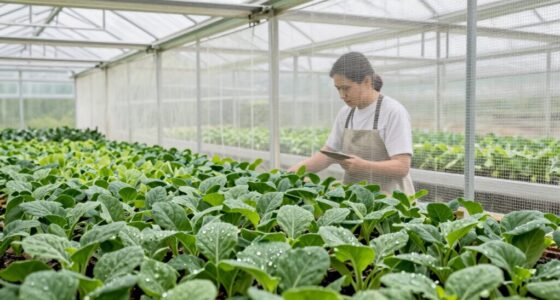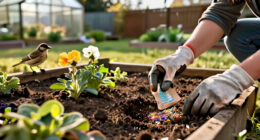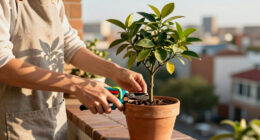
To improve sunlight and reduce disease, prune your plants by removing overcrowded and diseased branches. Focus on thinning out dense foliage to increase airflow and let more sunlight reach the inner parts. This helps prevent fungal infections and keeps pests at bay. Regularly maintaining your plants through targeted pruning supports healthier growth and a more attractive appearance. Keep going to find out more ways to boost your garden’s health and robustness.

Get garden gear delivered free with Prime
- Fast, free delivery on millions of items
- Prime Video, Amazon Music and more included
- Member-only deals all year
Key Takeaways
- Pruning opens up the canopy, allowing more sunlight to reach inner leaves and stems.
- Thinning dense foliage improves airflow, reducing humidity and the risk of fungal diseases.
- Removing overcrowded branches minimizes damp, shaded areas that promote disease development.
- Proper pruning eliminates diseased or damaged branches, preventing the spread of infections.
- Enhanced light and airflow from pruning promote healthier, more resilient plants.
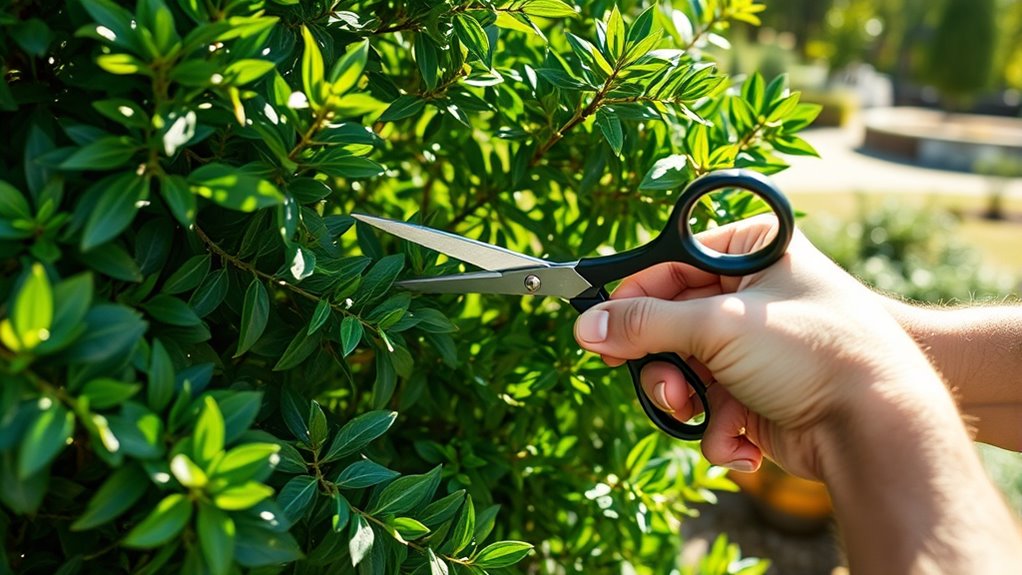
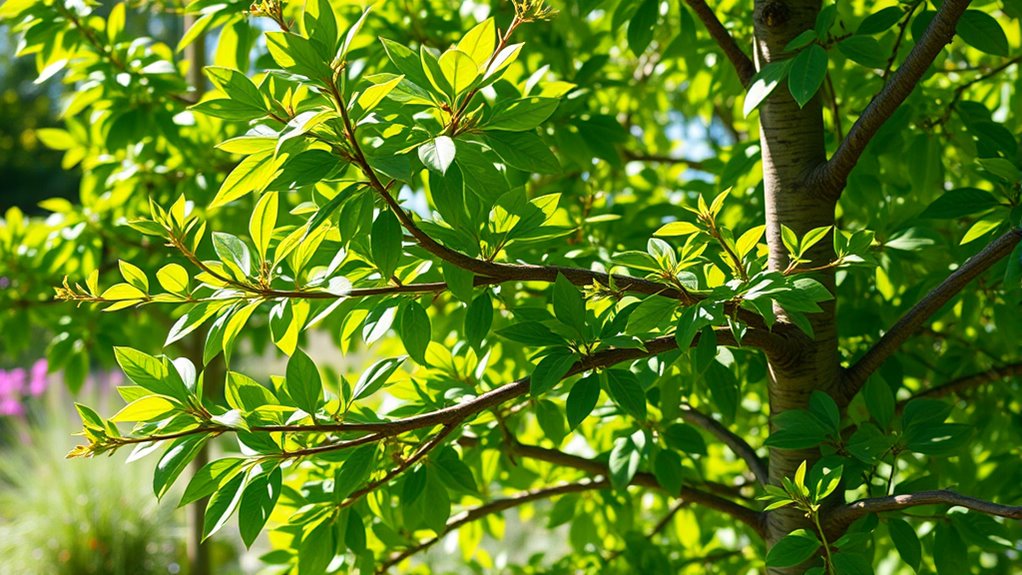
Pruning is a vital gardening practice that can markedly improve your plants’ health by increasing sunlight access and reducing disease risk. When you prune properly, you open up the plant’s canopy, allowing more light to reach the inner leaves and stems. This isn’t just about making your plant look better; it’s about creating an environment where it can thrive. By thinning the canopy, you reduce overcrowding, which helps prevent fungal infections and other diseases that flourish in damp, shaded areas. Less moisture buildup and better airflow mean your plant’s immune system can work more effectively, decreasing the likelihood of pest infestations and disease spread.
Canopy thinning is especially important for dense, bushy plants or fruit trees. When the canopy is too thick, sunlight struggles to penetrate, leaving some areas damp and shaded for too long. This creates a perfect breeding ground for pests and pathogens. By selectively removing some branches and leaves, you give your plant a more balanced structure, which enhances airflow and reduces humidity around the foliage. Not only does this make it harder for pests to hide and settle, but it also cuts down on the conditions that promote fungal growth. Think of canopy thinning as a way to give your plant a breath of fresh air, helping it stay healthy and vigorous.
From a pest control perspective, pruning is one of the most effective tools in your arsenal. Many pests prefer dark, crowded environments where they can hide and reproduce undisturbed. When you prune away excess growth, you eliminate these hiding spots, making it easier to monitor and manage pests. Additionally, removing diseased or infested branches prevents pests from spreading to healthy parts of the plant. Regular pruning acts as a form of preventative pest control, reducing the need for chemical treatments and promoting a healthier ecosystem in your garden. Incorporating proper pruning techniques can also improve air circulation, further supporting plant health and resilience.
As an affiliate, we earn on qualifying purchases.
Frequently Asked Questions
When Is the Best Time to Prune for Optimal Sunlight Exposure?
The best time to prune for ideal sunlight exposure is during late winter or early spring before new growth starts. Timing considerations are key because pruning then allows sunlight to penetrate the canopy effectively, promoting healthier growth and fruit production. You should avoid pruning in late summer or fall, as this can hinder sunlight maximization and increase disease risk. Proper timing ensures your plants receive maximum sunlight for robust development.
How Does Pruning Specifically Reduce Disease Spread Among Plants?
Pruning helps reduce disease spread by removing infected or dead plant parts, which limits pathogen control and prevents outbreaks. When you cut away diseased branches, you eliminate breeding grounds for fungi, bacteria, and viruses. Proper pruning techniques also improve airflow and reduce humidity around plants, making it harder for pathogens to thrive. Regular pruning is essential for disease prevention, keeping your plants healthier and more resistant to future infections.
Can Pruning Be Done Year-Round Without Harming the Plant?
You can do seasonal pruning year-round without harming the plant, but it’s best to follow proper pruning frequency. Regular pruning encourages healthy growth and prevents disease, but avoid excessive trimming, especially during active growth or dormancy periods. Timing matters—prune during specific seasons for different plants, typically in late winter or early spring. Always use clean tools, and don’t prune more than necessary to keep your plant healthy and vibrant.
What Tools Are Safest for Pruning to Prevent Disease Transmission?
Think of your tools as a surgeon’s scalpel—precision and cleanliness matter. The safest pruning tools are sharp, sterilized scissors or pruning shears, which you should sanitize with rubbing alcohol or bleach between cuts. Proper pruning techniques, like making clean cuts at the right angle, minimize disease risk. By sanitizing your tools regularly, you protect your plants from harmful pathogens, ensuring healthy growth and vibrant blooms.
Are There Specific Pruning Techniques for Different Plant Species?
Yes, you should use species-specific pruning techniques because different plants have unique growth habits and needs. For example, some trees require heading cuts, while others benefit from thinning. You’ll need to adjust your approach based on the plant species, applying the appropriate pruning technique variations to promote healthy growth and prevent damage. Always research each plant’s specific requirements to guarantee you’re pruning effectively and safely.
As an affiliate, we earn on qualifying purchases.
Conclusion
Think of your garden as a thriving community; pruning is your way of giving each plant a clear path to breathe and grow. By trimming wisely, you open up the canopy to let sunlight flood in, and you create barriers that keep diseases at bay. Your careful pruning acts like a gentle gardener’s hand, shaping a healthier, more vibrant garden. With each cut, you’re planting the seeds for a flourishing, disease-resistant paradise.
As an affiliate, we earn on qualifying purchases.
As an affiliate, we earn on qualifying purchases.
Fall Picks
fall essentials
As an affiliate, we earn on qualifying purchases.