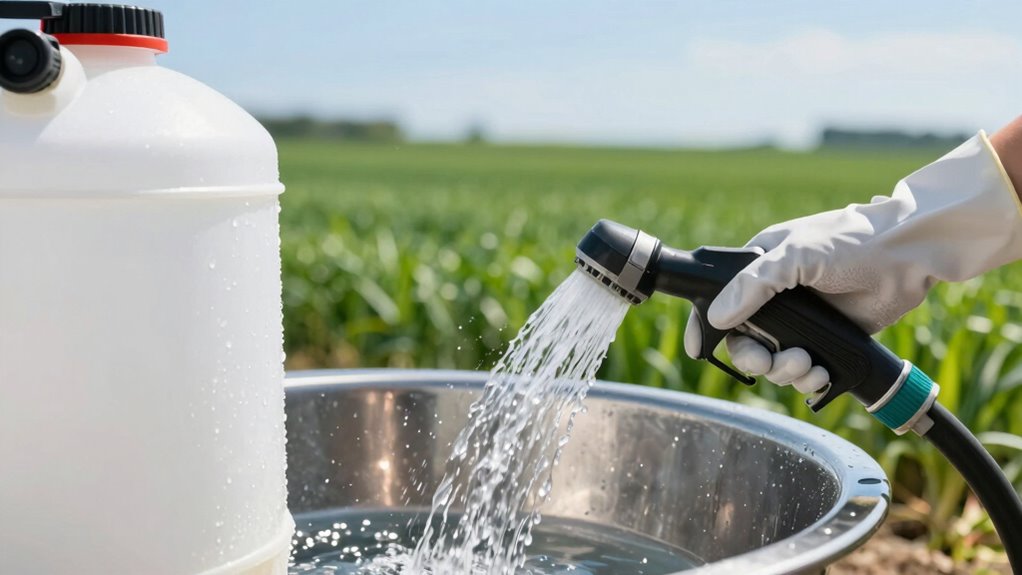

To rinse your sprayer and keep the next crop safe, start by emptying any remaining solution and filling the tank with warm, clean water. Add a cleaning agent, then circulate the solution through nozzles and hoses to remove residues thoroughly. Drain the solution completely, then rinse with fresh water at least once or twice. Proper rinsing prevents chemical buildup and contamination. Keep your equipment in top shape by following these steps—you’ll discover more essential tips ahead.
Open a free Amazon Business account
Business pricing, bulk buying and tax-exempt orders.
As an affiliate, we earn on qualifying purchases.
Key Takeaways
- Empty the tank completely and fill with clean, warm water, adding a suitable cleaning agent for thorough internal cleaning.
- Circulate the cleaning solution through nozzles and hoses, mimicking normal spraying to remove residues effectively.
- Drain all cleaning solution and rinse the tank multiple times with fresh water to eliminate chemical residues.
- Use proper tools to flush nozzles and hoses, ensuring all residues are removed and spray patterns remain consistent.
- Store the sprayer in a dry area and perform regular maintenance to prevent buildup and ensure safe operation for the next crop.
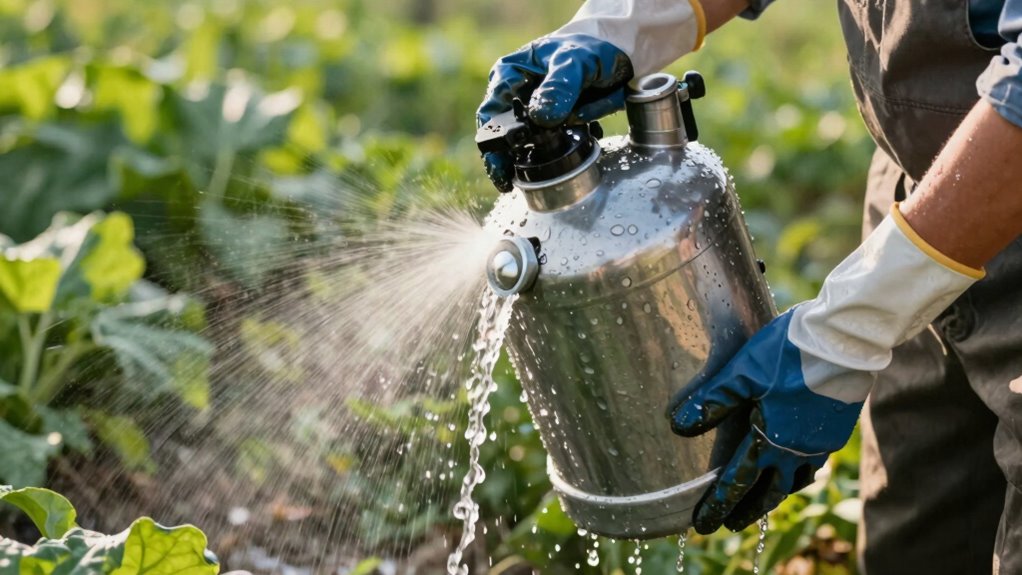
Rinsing your sprayer properly after each use is vital to keep it functioning effectively and prevent clogs or contamination. When you don’t thoroughly clean your equipment, chemical residues can build up inside the tank and nozzles, leading to blockages and uneven spray patterns. Proper rinsing also plays a key role in equipment maintenance, making sure that no leftover chemicals cause corrosion or damage over time. By dedicating a few minutes to cleaning after every use, you help extend the lifespan of your sprayer and maintain its peak performance. Regular cleaning helps prevent chemical buildup, which can impact the equipment’s longevity and efficiency.
Start by emptying any remaining solution from the tank. Fill it with clean water—preferably warm, if your sprayer allows—and add a small amount of cleaning agent or a specialized sprayer cleaner. This step helps break down and loosen chemical residues that may cling to the interior surfaces and nozzles. Agitate the solution gently to make certain it reaches all parts of the tank, especially corners and crevices where residues tend to collect. Then, spray the cleaning solution through the nozzles and hoses, mimicking normal spraying motions. This guarantees that any stubborn deposits are flushed out of the entire system. Proper cleaning techniques are essential for maintaining optimal spray patterns and preventing future clogs. Additionally, using the right tools can improve cleaning efficiency, ensuring that all residues are thoroughly removed and reducing the risk of future problems. Incorporating routine maintenance into your sprayer care can further reduce the risk of buildup and prolong equipment life.
Once you’ve circulated the cleaning solution, drain everything completely. Rinse the tank thoroughly with plain water to remove any remaining residues and cleaning agents. It’s important to repeat this rinsing process at least once or twice—using clean water each time—to make sure no chemical residues or cleaning agents are left behind. Residual chemicals can not only affect the next crop by contaminating new solutions but also accelerate equipment wear. Proper rinsing also helps prevent chemical residues from settling in hard-to-reach areas, which can cause damage over time. Hence, proper rinsing is an essential part of regular equipment maintenance, helping preserve the integrity of your sprayer. Proper storage after cleaning is equally important—store your sprayer in a dry, protected area to prevent rust and further damage.
As an affiliate, we earn on qualifying purchases.
Frequently Asked Questions
How Often Should I Rinse My Sprayer?
You should rinse your sprayer after every use to guarantee proper sprayer maintenance and prevent cross-contamination. Rinse frequency depends on what you’ve sprayed; for example, after applying pesticides or different chemicals, rinse thoroughly before switching products. Regular rinsing keeps your sprayer in good condition, avoids clogs, and ensures safe, effective application for each crop. Never skip rinsing to maintain ideal sprayer performance and crop safety.
Can I Reuse Rinse Water for Other Crops?
You can reuse rinse water, but be cautious. Think of it as passing along a handshake—what’s safe for one crop might carry pests or disease to the next. Reusing rinse water can impact soil health and pest resistance, especially if residues build up. To protect your crops, it’s best to use fresh water or thoroughly clean the sprayer. This keeps your soil healthy and pests resistant to your treatments.
What Cleaning Agents Are Safe for Sprayer Rinsing?
You should use cleaning agents that are chemically compatible with your sprayer and the residues you’re removing. Mild, non-corrosive detergents or specialized sprayer cleaners are safe options. Always consider the chemical compatibility to prevent damage. Rinse the sprayer thoroughly after each use, especially if switching between different crop treatments, and adjust your rinse frequency based on your crop’s safety needs. This guarantees your sprayer stays clean and ready for next use.
How Do I Prevent Cross-Contamination Between Treatments?
To prevent cross-contamination, you should prioritize diligent equipment maintenance, ensuring every part of your sprayer gets a proper rinse after each use. Carefully cleaning and inspecting for residuals reduces contamination risks and keeps your treatments effective. Always remember, a little extra attention during rinsing and maintenance acts like a safeguard, helping you avoid unintended crop damage and maintaining the integrity of your future harvests.
Is It Necessary to Dry the Sprayer After Rinsing?
Yes, it’s necessary to dry your sprayer after rinsing as part of proper sprayer maintenance. Drying prevents leftover moisture that could cause corrosion or mold, which might affect future treatments. After rinsing, wipe down or air-dry the sprayer thoroughly. Keep in mind that rinse frequency depends on the chemicals used; more aggressive or hazardous substances may require more frequent rinsing and drying to ensure the sprayer stays in good condition and your crops stay safe.
As an affiliate, we earn on qualifying purchases.
Conclusion
Now that you’ve rinsed your sprayer thoroughly, think of it as preparing a blank canvas for your next masterpiece. A clean sprayer guarantees your next crop isn’t tainted by lingering residues, allowing your garden’s symphony to flourish in perfect harmony. Just as a clear mind fosters creativity, a spotless sprayer nurtures healthy plants. With this simple ritual, you’re not just cleaning equipment—you’re laying the foundation for a thriving, vibrant harvest to come.
As an affiliate, we earn on qualifying purchases.
As an affiliate, we earn on qualifying purchases.
NFL season / tailgating Picks
team gear
As an affiliate, we earn on qualifying purchases.