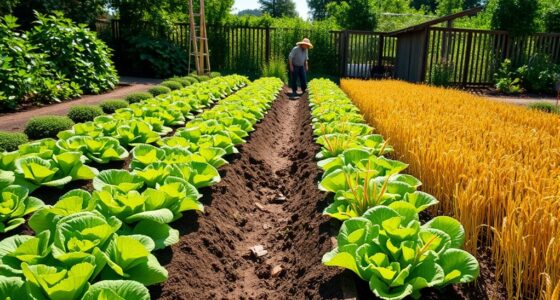
To guarantee sanitary harvesting of fruit and vegetables, you should always use clean tools and containers, wash your hands before and after handling produce, and wear gloves when needed, changing them regularly. Handle items gently to avoid bruising and contamination, and keep produce away from soil or contaminated surfaces. Regularly sanitize equipment and properly dispose of gloves to prevent cross-contamination. Following these practices can greatly improve food safety—continue to explore ways to keep your harvest safe and fresh.
Key Takeaways
- Use clean, sanitized tools and containers to prevent microbial transfer during harvesting.
- Wash hands thoroughly before harvesting and after touching contaminated surfaces or soil.
- Wear and regularly change gloves to minimize contamination risks.
- Handle fruits and vegetables gently to prevent bruising and microbial entry points.
- Clean and disinfect equipment and containers after each harvest to maintain safety standards.
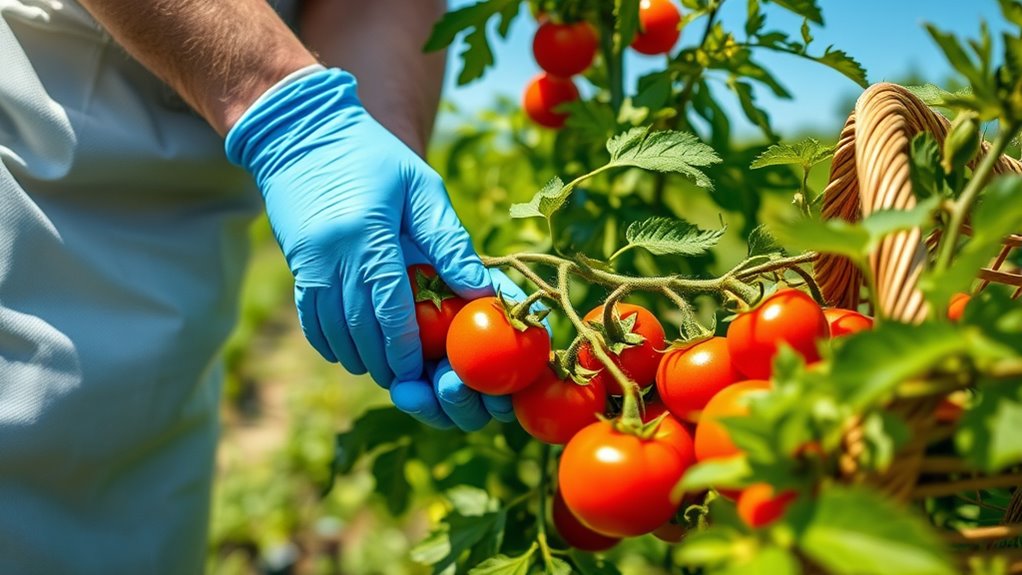
Have you ever wondered how fresh produce stays safe from contamination during harvest? It all begins with emphasizing harvesting safety and maintaining equipment sanitation. When you’re in the field, every step you take can influence the safety and quality of the fruits and vegetables you’re collecting. Proper harvesting safety involves more than just picking ripe produce; it requires a careful approach to prevent introducing dirt, bacteria, or other contaminants. That starts with guaranteeing your hands are clean, gloves are used when appropriate, and any tools or containers are sanitized before use. These small actions make a big difference in preventing cross-contamination from soil, water, or even handling by multiple workers.
Equipment sanitation plays a crucial role in keeping produce safe. Before harvesting begins, you need to thoroughly clean and disinfect all tools, buckets, and harvesting containers. This prevents bacteria, fungi, or pesticide residues from transferring onto the produce. For instance, pruning shears, knives, or harvesting baskets should be washed with soap and water and then sanitized with an approved disinfectant. It’s equally important to regularly inspect and maintain equipment to assure they’re in good condition, free from rust or debris that could harbor pathogens. When you handle multiple types of produce, especially those with different levels of perishability, sanitation becomes even more essential to avoid cross-contamination.
During harvest, you should always prioritize harvesting safety by avoiding contact with contaminated surfaces or soil. Use clean tools and verify your hands are washed frequently, especially after touching potentially contaminated surfaces or after breaks. If gloves are used, they should be changed regularly and disposed of properly to prevent spreading pathogens. When collecting produce, handle it gently to prevent bruising or damage, which can open pathways for microbial contamination. Also, avoid overfilling containers, which can cause crushing and spoilage, creating an environment conducive to microbial growth. Additionally, understanding the importance of equipment sanitation can help in reducing the spread of harmful microorganisms.
Post-harvest, equipment sanitation continues to be imperative. After harvesting, all tools and containers need to be cleaned again to remove any residual dirt or biological material. Keeping a regular schedule for cleaning and disinfecting equipment not only guarantees harvesting safety but also prolongs the lifespan of your tools. By following these practices diligently, you minimize risks and help make sure that the produce reaching consumers remains fresh, safe, and free from contaminants. Implementing strict sanitation protocols and emphasizing harvesting safety at every step demonstrates your commitment to food safety and quality, protecting both consumers and your reputation.
Frequently Asked Questions
How Can Workers Prevent Cross-Contamination During Harvesting?
To prevent cross-contamination during harvesting, you should prioritize worker hygiene by washing hands frequently and wearing clean gloves. Use sanitized tools and ensure that clothing is clean to avoid contamination transfer. Avoid touching multiple produce items without changing gloves or washing hands. By practicing contamination prevention measures consistently, you help keep fruits and vegetables safe from harmful bacteria and pathogens, safeguarding both your health and consumers.
What Are the Signs of Contamination on Harvested Produce?
You can spot contamination on harvested produce by looking for signs like pest infestation, such as holes or droppings, and mold growth, which appears as fuzzy or discolored patches. Also, check for unusual odors, slimy textures, or discoloration. If you notice any of these signs, avoid using the affected produce to prevent health risks and maintain food safety standards.
How Often Should Harvesting Tools Be Sanitized?
You might think your tools stay clean forever, but in reality, they need frequent tool sterilization. You should sanitize your harvesting tools at least after every use, especially when switching between different crops or fields. Follow proper sanitizing procedures, like using approved disinfectants, to prevent cross-contamination. Forgetting this step risks turning your pristine harvest into a contamination nightmare, proving even your tools need a little love and regular cleaning.
Are There Specific Clothing Requirements for Sanitary Harvesting?
Yes, there are specific clothing requirements for sanitary harvesting. You should wear protective gear like gloves, hairnets, and clean, disposable or sanitized clothing to maintain clothing hygiene. Confirm your clothing is free of dirt, contaminants, and loose fibers that could transfer to the produce. Changing into sanitized clothing before harvesting helps prevent contamination, and always wash your hands thoroughly to keep the produce safe and clean.
How Does Weather Affect Harvesting Sanitation Protocols?
Did you know weather variability can impact over 70% of harvest schedules? When weather changes unpredictably, it affects your harvesting sanitation protocols by forcing adjustments in harvest timing. Rain, humidity, or extreme heat can introduce contamination risks, making it vital to adapt your practices promptly. You need to monitor weather forecasts closely and plan harvests accordingly to maintain product safety and quality, ensuring you’re always prepared for changing conditions.
Conclusion
By following these sanitary harvesting practices, you’re like the vigilant guardians of Pandora’s box, ensuring only purity and safety escape into the world. Just as Prometheus brought fire to humanity, your careful handling ignites trust and health in every fruit and vegetable. Remember, your attention to cleanliness isn’t just routine—it’s a hero’s act, protecting consumers and preserving nature’s bounty. Stay diligent, and your efforts will continue to nourish and delight, much like the timeless myths that inspire us.