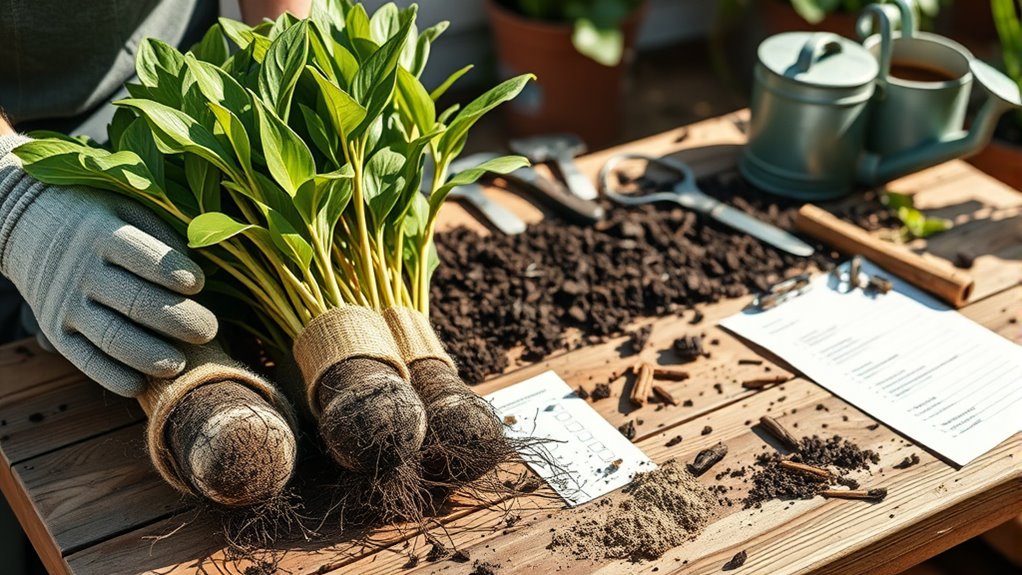

To successfully plant bare-root trees, start by preparing the site—clear weeds and debris, loosen soil, and add organic matter. Soak the roots before planting and dig a wide, deep hole to spread them without bending. Position the graft union just above soil, then fill and firm the soil around roots. Water deeply and regularly, ensuring the soil stays moist but not waterlogged. Mulch without touching the trunk. If you keep exploring, you’ll find more tips for healthy growth.

Get garden gear delivered free with Prime
- Fast, free delivery on millions of items
- Prime Video, Amazon Music and more included
- Member-only deals all year
Key Takeaways
- Prepare the site by clearing weeds, rocks, and incorporating organic matter to ensure well-draining soil with appropriate pH.
- Soak bare roots in water for several hours before planting to hydrate.
- Dig a wide, deep hole, position roots straight with the graft union just above soil, and backfill securely.
- Water thoroughly after planting and maintain consistent, deep moisture without overwatering.
- Apply mulch around the base, keeping it away from the trunk, to retain moisture and suppress weeds.
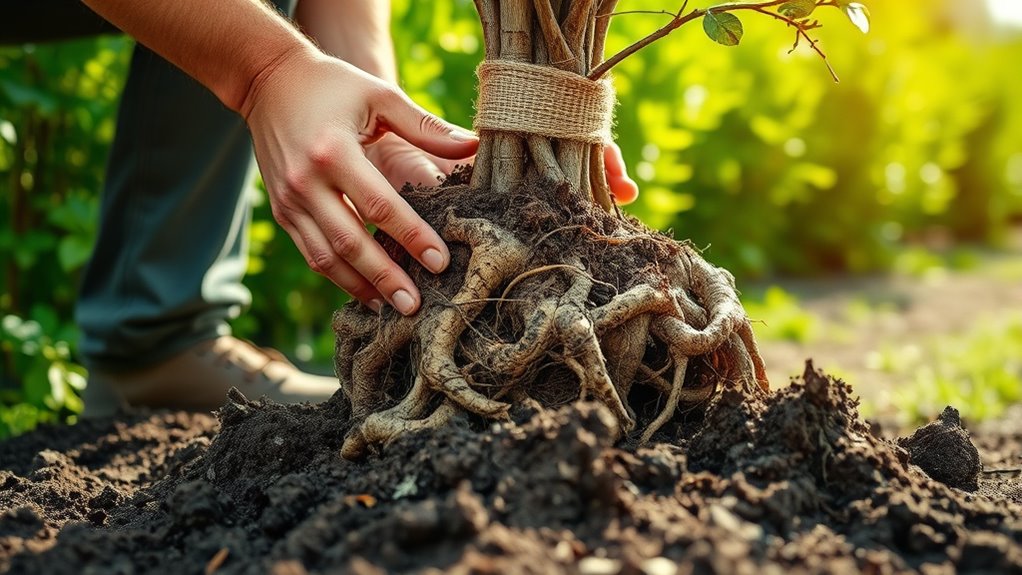
Bare-root trees are a popular choice for planting because they are easier to handle and typically cost less than balled-and-burlapped trees. When you’re preparing to plant, the first step is to focus on soil preparation. Good soil is essential for your tree’s health and establishment. Start by clearing the planting site of weeds, rocks, and debris. Loosen the soil with a shovel or garden fork, and work in organic matter like compost or well-rotted manure to improve drainage and fertility. Your goal is to create a loose, well-draining planting area that allows roots to spread easily. Keep in mind that a slightly acidic to neutral pH (around 6.0 to 7.0) is ideal for most trees, so consider testing your soil and amending it if necessary.
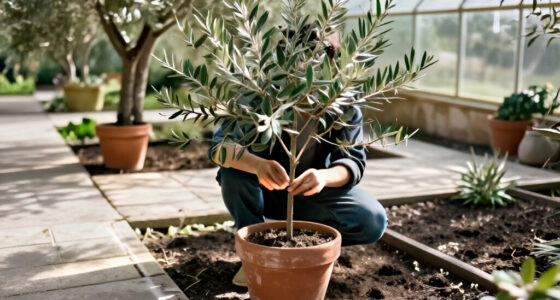
Once the soil is prepared, it’s time to handle the tree properly. Soak the bare roots in water for several hours or overnight before planting. This guarantees the roots are hydrated and less likely to dry out during the process. When you’re ready to plant, dig a hole that’s wide and deep enough to accommodate the roots without bending or crowding them. Spread the roots out gently, making sure they’re not circling or twisted. Position the tree so that the graft union (if present) is just above the soil line. Backfill with the prepared soil, firming it around the roots to eliminate air pockets.
Additionally, understanding the technology behind heat pumps can help you choose the most efficient model for your needs. Watering techniques are essential during and after planting. After placing the tree in the hole, give it a thorough soaking to settle the soil and guarantee good root-to-soil contact. This initial watering jump-starts the establishment process. Moving forward, you want to keep the soil consistently moist but not waterlogged. Deep, infrequent watering encourages roots to grow downward, which is healthier for the tree long-term. During the first year, you might water once or twice a week, depending on rainfall and soil type. When watering, aim to soak the entire root zone and avoid surface watering, which can encourage shallow roots. Mulching around the base of the tree helps retain soil moisture, regulate temperature, and suppress weeds.
As an affiliate, we earn on qualifying purchases.
Frequently Asked Questions
How Long Can Bare-Root Trees Stay in Storage Before Planting?
You can generally keep bare-root trees in storage for about 4 to 6 weeks before planting, but it’s best to plant them as soon as possible to maintain their dormancy. During storage, keep the roots cool and moist, ideally in a refrigerated environment or in a cool, shaded area. Prolonged storage can lead to root damage or loss of dormancy, so plan your planting timeline accordingly.
What Are Signs of Root Rot in Bare-Root Trees?
You’ll notice signs of rot in your bare-root trees if the roots appear dark, mushy, or have a foul odor, indicating root decay. Look for browning or blackening of the roots, which signals decay, and avoid planting if these signs are present. Healthy roots should be firm, light-colored, and smell fresh. Addressing root rot early prevents future problems and helps your tree establish successfully.
Can Bare-Root Trees Be Planted in Winter?
You can plant bare-root trees during winter, especially if it’s the dormant season. Imagine the quiet snow-covered landscape as you carefully insert the tree into the soil, giving it time to establish roots before spring. Winter planting helps reduce stress on the tree and allows it to settle in naturally. Just make certain the ground isn’t frozen too hard, and protect the roots if harsh weather is expected.
How Do I Prevent Transplant Shock in Bare-Root Trees?
To prevent transplant shock in bare-root trees, you should focus on proper watering techniques and root pruning. Water the tree thoroughly after planting to keep the roots moist, but avoid overwatering. Gently prune any damaged or overly long roots to encourage healthy growth. Additionally, keep the soil consistently moist and provide some shade if possible, helping the tree adjust gradually and reducing stress during the changeover.
What Are the Best Soil Conditions for Bare-Root Tree Planting?
Your soil needs to be perfect—like a five-star hotel for your tree! Make certain excellent soil drainage so water doesn’t pool around the roots, preventing rot. Aim for a pH balance between 6.0 and 7.0, which helps nutrients absorb efficiently. Loamy soil is ideal, combining sand, silt, and clay. This creates a supportive environment where your bare-root tree can thrive and grow strong from the start.
As an affiliate, we earn on qualifying purchases.
Conclusion
With careful planning and consistent commitment, your bare-root tree will blossom beautifully. By balancing the basics — such as proper planting, watering, and protection — you set a strong foundation for success. Remember, patience and perseverance nurture natural growth. So stay steadfast, tending to your tree with tender care and timely techniques. Soon, your patience will pay off as your bare-root beauty blossoms into a breathtaking, bountiful beacon of botanical brilliance.
As an affiliate, we earn on qualifying purchases.
As an affiliate, we earn on qualifying purchases.
Halloween Picks
halloween
As an affiliate, we earn on qualifying purchases.