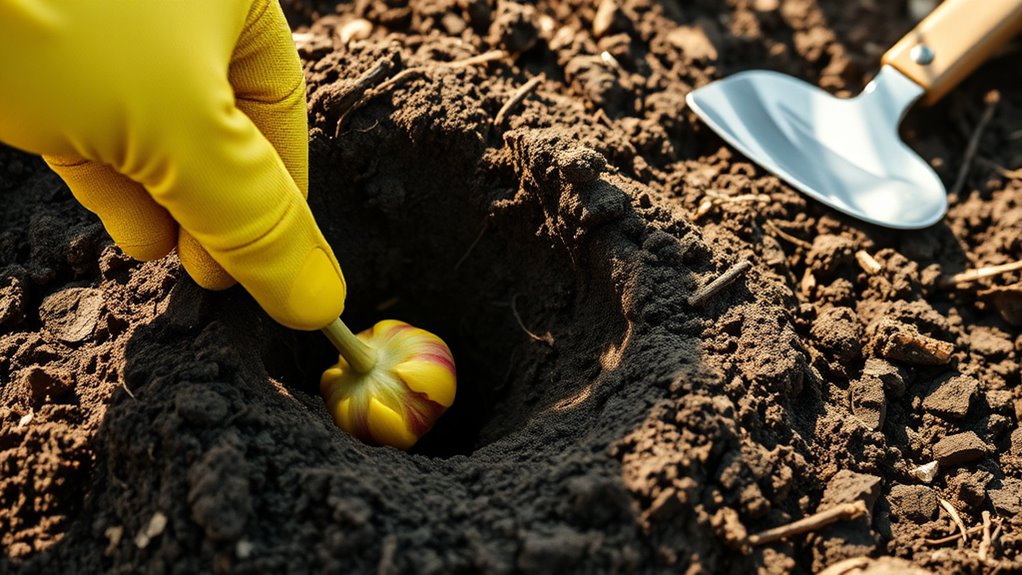

To plant bulbs and tubers, you should dig a hole that’s two to three times their height. For instance, if a bulb is two inches tall, plant it four to six inches deep. Double-check the specific planting instructions for each type to give them the best start. Proper depth promotes healthy growth and prevents issues. Keep going for more tips on how to plant your bulbs and tubers successfully.
Key Takeaways
- Plant bulbs 2-3 times their height deep; for example, a 2-inch bulb should be planted 4-6 inches deep.
- Check specific planting instructions for each bulb or tuber variety for best results.
- Ensure the hole is level and smooth, with the pointed end facing up when visible.
- Cover the bulb with soil and press gently to eliminate air pockets before watering.
- Maintain proper spacing based on mature size to promote healthy growth and airflow.
Planting bulbs and tubers is a simple way to add vibrant color and texture to your garden. To get the best results, proper soil preparation and understanding the correct planting depth are *crucial*. When you start, choose a well-draining site with fertile soil. Loosen the soil to about 12 inches deep, mixing in compost or organic matter to improve fertility and drainage. Good soil preparation ensures the bulbs and tubers have the nutrients they need and prevents water from pooling around them, which can cause rot.
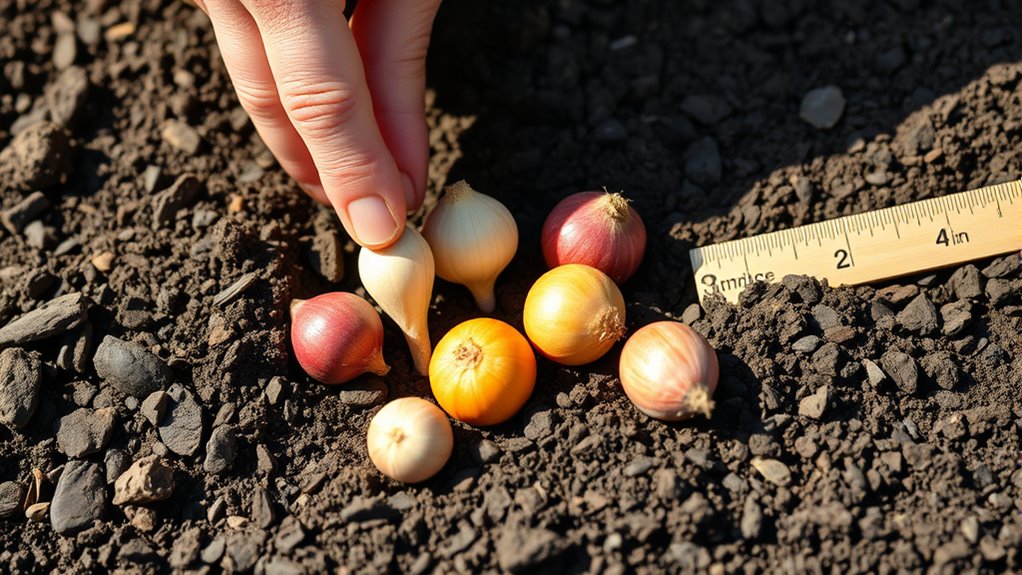
Once your soil is ready, pay close attention to planting depth, which varies depending on the type of bulb or tuber. As a general rule, you should plant bulbs at a depth that is about two to three times their height. For example, if a bulb measures 2 inches tall, plant it 4 to 6 inches deep. Tubers, on the other hand, often require a similar approach, but always check the specific planting instructions for each variety, since some might need to be slightly deeper or shallower. Correct planting depth is *vital* because planting too shallow can expose bulbs to temperature fluctuations and pests, while planting too deep can hinder sprouting.
Plant bulbs at two to three times their height for optimal growth and bloom.
You’ll want to dig a hole at the appropriate depth, ensuring the bottom is level and the sides are smooth. Place the bulb or tuber in the hole with the pointed end facing up, if it has a distinct tip. Cover it with soil gently, then press down lightly to eliminate air pockets. After planting, water the area thoroughly to help settle the soil and initiate root development. Consistent moisture is *essential* during the early stages of growth, so keep the soil evenly moist but not waterlogged.
When planting multiple bulbs or tubers, space them according to their mature size. Proper spacing allows for good air circulation and reduces disease risk. As you cover each one, double-check that they aren’t too shallow or too deep. Remember, the right planting depth makes a significant difference in how well your bulbs will grow and bloom. Over time, with proper soil preparation and correct planting depth, you’ll enjoy a vibrant, colorful display of flowers that brighten your garden season after season.

YAMRON 4-in-1 Soil Moisture Meter, Digital Plant Temperature/Soil Moisture Test & PH Meter/Sunlight Intensity, Backlight LCD Display for Gardening, Farming and Outdoor Plants
【4 in 1 function】This is a 4-in-1 multifunctional soil tester.Our soil tester fastly to measure soil moisture, pH,...
As an affiliate, we earn on qualifying purchases.
Frequently Asked Questions
Can I Plant Bulbs and Tubers Together?
Yes, you can plant bulbs and tubers together, but consider their companion planting needs and planting schedules. Some bulbs and tubers thrive well side by side, enhancing garden diversity, while others might compete for nutrients or space. Check each plant’s specific requirements to guarantee they grow healthily. Planning your planting schedule helps prevent overcrowding and ensures each gets enough sunlight, water, and nutrients for a vibrant, thriving garden.
How Do Soil Conditions Affect Planting Depth?
Think of soil as your plant’s secret recipe; its conditions dictate how deeply you should plant. If the soil pH is off, roots struggle to thrive, so you might need to adjust planting depth accordingly. Moisture levels are the watering chorus—too much causes rot, too little stunts growth. You’ll want to plant bulbs and tubers at a depth that balances these factors, giving your plants the best chance to flourish.
What Tools Are Best for Planting Bulbs?
For effective bulb planting, you should use the right planting tools like a trowel, bulb planter, or garden fork. These tools help you dig precise holes and make bulb planting easier. A bulb planter is especially useful for consistent depth, ensuring your bulbs are planted correctly. Keep your tools sharp and clean to prevent damage to bulbs and soil. With these tools, your planting process becomes quicker and more efficient.
How Do I Prevent Rot When Planting?
To prevent rot when planting bulbs, guarantee your soil drainage is excellent, so excess water doesn’t linger around the bulbs. You should also choose a well-draining spot and avoid overly wet soil. To further protect your plants, apply pest prevention measures to keep pests that can cause damage or introduce rot. Proper spacing and planting at the right depth also help air circulation, reducing the risk of rot and promoting healthy growth.
Should I Fertilize After Planting Bulbs?
Did you know that proper fertilizer application can boost bulb growth by up to 30%? After planting, you should fertilize your bulbs to ensure they get essential nutrients for healthy development. Use a balanced, slow-release fertilizer and apply it gently around the soil surface. This enhances soil nutrition, promoting robust blooms and preventing nutrient deficiencies. Remember, timely fertilization makes all the difference in your garden’s success.

XLUX Long Probe Deep Use Soil Moisture Meter Sensor, Water Monitor Indicator, Hygrometer for Outdoor Indoor Large Pot Plants, Flower, Gardening, Farming, 2 Pack
Accurate Soil Moisture Detection: The XLUX Soil Moisture Meter can tell you if the soil deep inside your...
As an affiliate, we earn on qualifying purchases.
Conclusion
Remember, planting bulbs and tubers at the right depth is key to a healthy, vibrant garden. Typically, plant bulbs twice as deep as their height, and tubers about 4-6 inches deep. Did you know that properly planted bulbs can increase flowering success by up to 50%? By following these simple guidelines, you’ll give your plants the best start. So, dig deep, plant well, and enjoy a stunning display come blooming season!

Hathdia Soil Moisture Meter,Long Probe Plant Hygrometer Moisture Sensor Plant Water Monitor for Potted Plants,Garden,Farm, Lawn(No Battery Needed)
Soil Moisture Meter: This single probe soil moisture meter is specially designed for testing the moisture level in...
As an affiliate, we earn on qualifying purchases.

4-in-1 Soil Moisture Meter Digital PH Meter/Soil Moisture/Plant Temperature/Sunlight Intensity, Backlight LCD Display, Soil Test Meter for Garden, Lawn, Plant Care, Farm and Indoor Outdoor Plants
【4-in-1 Multi-Function】This 4-in-1 soil tester can sense soil pH/moisture/temperature/light more accurately and quickly. You can know the soil...
As an affiliate, we earn on qualifying purchases.