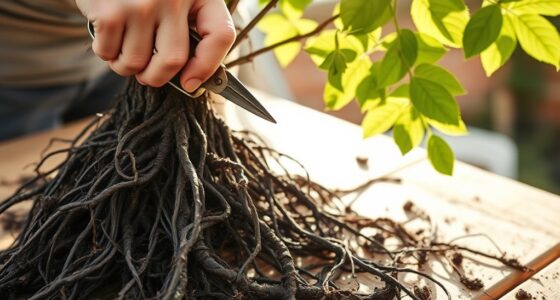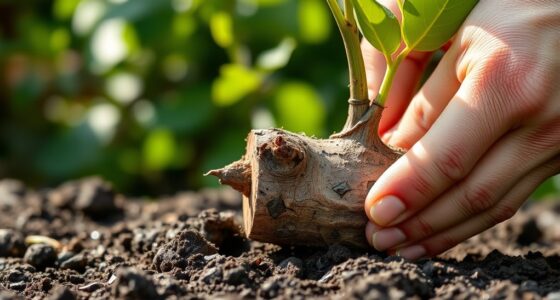
Your success isn’t just about using sharp, proper grafting tools—timing is key. Grafting too early or late reduces chances of success, no matter how good your tools are. The best time is late winter to early spring when trees are most receptive. Falling outside this window makes healing harder and grafts more likely to fail. If you want to find out how to identify the perfect moment, keep exploring; the secrets to better grafts are within reach.

Get garden gear delivered free — and shop member deals
- Fast, free delivery on millions of items
- Access to Prime Big Deal Days deals on October 6–7
- Prime Video, Amazon Music and more included
Key Takeaways
- Proper timing aligns with the tree’s growth cycle, which tools alone cannot compensate for.
- Grafting during the late winter to early spring window yields the highest success rates.
- Using sharp tools improves cuts but cannot overcome the disadvantages of poor timing.
- Grafting outside the optimal period leads to poor cambium contact and higher failure risk.
- Patience and observation of growth cues are essential, as timing impacts graft success more than tools.

Grafting is a delicate process that requires the right tools and precise timing to succeed. You can have the best grafting tools in your kit, but without paying attention to timing considerations, your efforts might still fall short. Tools like grafting knives, chisels, and budding rubbers are essential, but they only serve their purpose if you choose the right moment. The timing of your grafts is just as critical as the quality of your tools. If you attempt to graft too early or too late in the season, your chances of success drop markedly, regardless of how sharp your tools are.
Timing is as crucial as tools for successful grafting success.
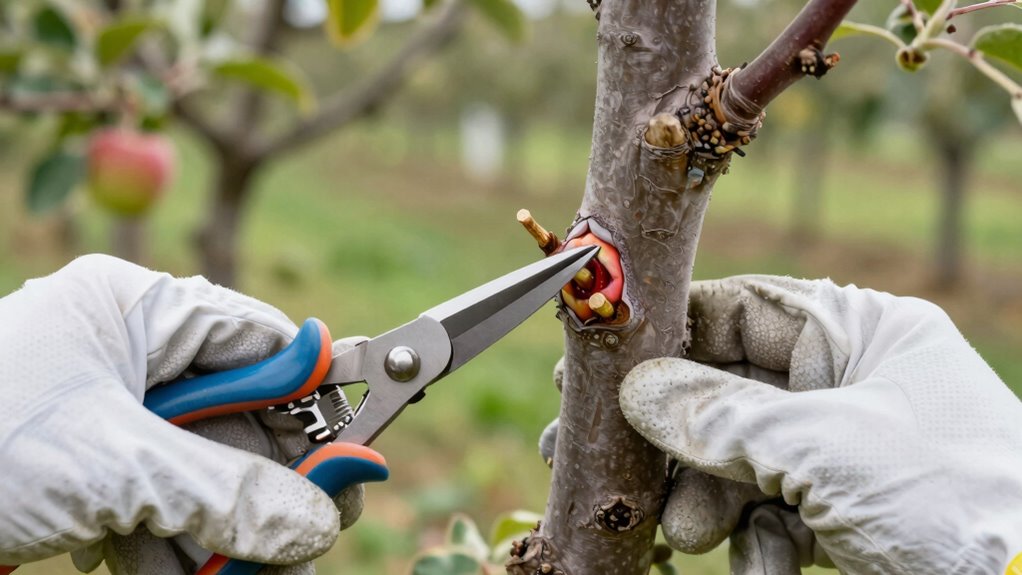
Understanding when to graft depends on the type of fruit tree and your local climate. For most temperate fruit trees, late winter to early spring is often ideal because the tree’s sap begins to flow, encouraging healing and growth. During this period, the bark is easier to work with, and the cambium layers—the crucial tissues responsible for connecting the rootstock and scion—are most receptive. Trying to graft outside this window increases the risk of failure. In summer or fall, the tree’s growth slows, and the bark toughens, making successful grafting much more difficult. If you’re in a warmer climate, the timing shifts slightly, but the principle remains: match your grafting schedule to the tree’s natural growth cycle for the best results. Monitoring the tree’s growth cues** can help you identify this optimal window more accurately. Recognizing these cues is part of understanding how plant physiology influences graft success. Additionally, paying attention to seasonal growth patterns can further refine your timing for better results. Being aware of environmental conditions** like temperature and humidity can also impact grafting success.
Tools alone don’t guarantee success if your timing is off. For example, a grafting knife can make clean cuts, but if you make those cuts when the tree isn’t ready, your grafts may not take. Conversely, even if you’re perfect with timing, using dull or inappropriate tools can cause damage, bleeding, or poor union. Your goal is to create smooth, precise cuts that fit together tightly, allowing the cambium layers to align perfectly. Properly timed grafts, combined with sharp, well-maintained tools, give your tree the best chance to heal quickly and grow strong.
Additionally, understanding the tree’s growth cues can help you determine the optimal grafting window and improve your success rate. Keep in mind that patience matters. Even with perfect timing and the right tools, some grafts may take longer to establish. Observing your trees and understanding their growth cues is key to improving success rates. Ultimately, while good grafting tools are a must, they don’t compensate for poor timing. Mastering the timing considerations ensures that all your careful preparations, from selecting the right tools to making precise cuts, come together to produce healthy, fruitful grafts.
As an affiliate, we earn on qualifying purchases.
Frequently Asked Questions
How Long Does It Take for a Graft to Start Producing Fruit?
It typically takes 1 to 3 years for a grafted fruit tree to start producing fruit. Grafting success depends largely on timing and proper technique, but patience is key. You’ll see fruit maturity gradually develop as the tree matures. Keep an eye on the new growth and guarantee proper care, and soon you’ll enjoy the fruits of your labor. With good care, your grafted tree will become productive over time.
Can Grafting Be Done in Winter or Only in Specific Seasons?
You can graft in winter, but seasonal considerations and grafting timing are key. During winter, trees are dormant, making it easier for cuts to heal and for the graft to take if you choose the right methods. However, in most cases, spring or early summer offers the best conditions for success because of active growth. So, understand your tree’s cycle and plan your grafting timing accordingly for ideal results.
What Are Signs of a Successful Graft After Planting?
You’ll know your graft succeeded if you see new growth, indicating successful rootstock compatibility. During the graft healing process, the union should remain tight, with no signs of swelling or dieback. Look for smooth, healthy bark around the graft site, and keep an eye out for swelling or callus formation, which signal the graft is taking. Consistent moisture and proper care enhance your chances of a thriving, long-lasting graft.
Are There Specific Fruit Varieties That Graft Better Than Others?
Like a vintage record, some fruit varieties just groove better with grafting. You’ll find that apple and pear grafts often succeed because of strong rootstock compatibility, while stone fruits like cherries and peaches can be more finicky. Your success depends on selecting compatible rootstocks and matching fruit varieties carefully. Focus on proven combinations, and you’ll increase your chances for a thriving graft, no matter the fruit you choose.
How Do Environmental Conditions Affect Graft Compatibility?
Environmental conditions play a vital role in graft compatibility. You should avoid grafting during periods of environmental stress like extreme heat, cold, or drought, as these conditions can weaken the graft union. Stable temperatures and adequate moisture promote better graft durability and healing. If you graft when conditions are favorable, your graft is more likely to succeed, ensuring a strong bond and healthy growth for your fruit trees.
As an affiliate, we earn on qualifying purchases.
Conclusion
Remember, even the fanciest grafting tools won’t save your fruit trees if you ignore the timing. Think of grafting as a delicate dance—if you miss the beat, everything falls apart. When you choose the perfect moment, your grafts are more likely to flourish like a garden of gold. So, stay patient, be precise with your timing, and watch your trees thrive beyond your wildest dreams! Timing truly is everything in this green-thumbed adventure.
best grafting tools for fruit trees
As an affiliate, we earn on qualifying purchases.
As an affiliate, we earn on qualifying purchases.
timing guide for fruit tree grafting
As an affiliate, we earn on qualifying purchases.
As an affiliate, we earn on qualifying purchases.
Fall Picks
fall essentials
As an affiliate, we earn on qualifying purchases.