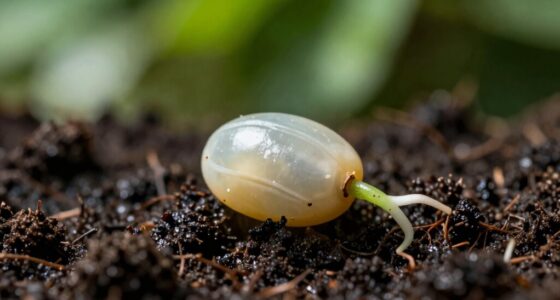
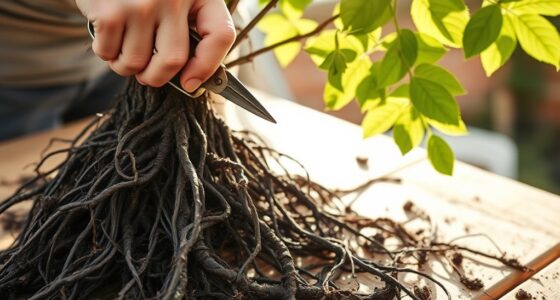
Leggy seedlings often happen because your setup isn’t ideal. If they don’t get enough light, they stretch and become weak. Poor soil, overwatering, or underwatering can also stress them and cause legginess. Make sure your seedlings have proper light, well-draining soil, and a consistent watering schedule. Small changes in your setup can make a big difference. Keep going, and you’ll discover how to prevent and fix these common setup problems.

Get garden gear delivered free with Prime
- Fast, free delivery on millions of items
- Prime Video, Amazon Music and more included
- Member-only deals all year
Key Takeaways
- Insufficient light causes seedlings to stretch excessively, leading to legginess.
- Poor soil drainage and structure hinder root growth, weakening seedling support.
- Overwatering creates waterlogged conditions, depriving roots of oxygen and promoting legginess.
- Underwatering stresses seedlings, resulting in weak, elongated stems.
- Inadequate environmental setup, including lighting and watering, disrupts healthy seedling development.

If your seedlings are growing tall and spindly, you’re likely facing a common problem known as the “leggy seedling” setup issue. This typically happens when the environment isn’t quite right, and it often boils down to how you’ve prepared your soil and managed watering practices. When seedlings stretch upward excessively, it’s their way of reaching for light, but it also indicates they aren’t getting what they need to develop strong, healthy roots. Understanding the role of soil composition and watering habits is vital to fixing this problem and promoting sturdier growth.
First, consider your soil composition. Seedlings thrive in well-draining soil that provides the right balance of nutrients and air. If the soil is too compacted or retains too much moisture, roots struggle to establish properly, and the seedlings tend to become leggy as they stretch upward in search of better conditions. Using a high-quality seed-starting mix that contains peat moss, vermiculite, or perlite ensures good aeration and prevents waterlogging. Avoid heavy garden soil or overly dense mixes, as these can suffocate roots and cause seedlings to become weak and elongated. Proper soil composition creates an environment where roots can expand comfortably, leading to stronger, more resilient seedlings that don’t need to stretch for light. Additionally, ensuring the soil has the appropriate biodiversity-friendly qualities can help foster beneficial microorganisms that support healthy seedling development. Incorporating soil amendments can further enhance the soil’s structure and nutrient content, promoting better growth. Regularly testing and adjusting soil pH can also prevent nutrient deficiencies that contribute to weak seedling growth. To further support healthy development, consider the importance of soil microbiology, which plays a crucial role in nutrient uptake and plant health.
Choose well-draining, aerated soil with peat moss, vermiculite, or perlite for healthy, strong seedlings.
Watering practices also considerably influence seedling health. Overwatering can drown roots and create a damp, oxygen-deprived environment, prompting seedlings to grow tall and spindly as they seek better conditions. Conversely, underwatering causes stress and weak growth, which can also lead to legginess. The key is to keep the soil consistently moist but never waterlogged. Use a spray bottle or gentle watering can to avoid disturbing delicate seedlings, and check moisture levels regularly. Water only when the top of the soil feels dry to the touch. Proper watering encourages healthy root development and provides the moisture the seedlings need without promoting legginess. Ensuring proper light conditions is equally crucial, as insufficient light compels seedlings to stretch excessively. When seedlings are kept in insufficient light, they may also become pale and weak, further exacerbating the leggy growth.
As an affiliate, we earn on qualifying purchases.
Frequently Asked Questions
How Can I Prevent Seedlings From Becoming Leggy in the First Place?
To prevent seedlings from becoming leggy, you should start with the right soil composition—light, well-draining, and rich in nutrients. Keep the soil consistently moist but not waterlogged. Additionally, plant seeds at the correct depth, usually twice as deep as the seed’s size. Provide ample light, preferably natural or grow lights, to promote strong, upright growth. Regularly monitor conditions to make certain seedlings develop a sturdy, healthy stem.
What Are the Best Light Sources for Healthy Seedling Growth?
The best light sources for healthy seedling growth offer a full spectrum, mimicking natural sunlight, which promotes proper seedling nutrition. Use grow lights like LED or fluorescent bulbs with a balanced light spectrum, especially blue light, to prevent legginess. Position the lights close enough—about 2-4 inches—to guarantee seedlings receive adequate energy, encouraging strong, upright stems and healthy development.
Does Watering Frequency Affect Seedling Legginess?
Watering frequency directly influences seedling sturdiness. When you water too often, soil moisture remains high, causing seedlings to stretch toward light, resulting in legginess. Conversely, infrequent watering can lead to dry soil, stunting root development and weakening seedlings. Striking a balance guarantees healthy root development and prevents legginess. Proper watering promotes compact growth and keeps seedlings strong, giving them the best chance to thrive and develop robust roots.
When Should I Transplant Leggy Seedlings to Prevent Further Stretching?
You should transplant leggy seedlings as soon as they develop a sturdy root system, typically when they have 2-3 sets of true leaves. Gently root prune to encourage lateral root growth, which helps prevent further stretching. Use nutrient-rich soil to support healthy development, and handle seedlings carefully to minimize stress. Proper timing and nurturing guarantee they grow stronger and less prone to legginess in their new environment.
Are Certain Plant Species More Prone to Leggy Seedlings?
Are some plant species more prone to leggy seedlings? Absolutely. Genetic predisposition and growth habit influence whether seedlings stretch too much. Tall, fast-growing plants like tomatoes and some herbs are more susceptible to legginess because their natural growth habits encourage rapid upward growth. Understanding these traits helps you select the right species for your setup, ensuring you provide ideal light and space to prevent leggy seedlings from becoming a persistent problem.
As an affiliate, we earn on qualifying purchases.
Conclusion
If you let your seedlings grow too tall and spindly, you’re setting yourself up for trouble. Their fragile stems might bend or break, leaving them vulnerable and weak. But if you catch the problem early, support and proper lighting can turn things around. Strength and resilience come from good setup, not neglect. So, remember: a sturdy start creates a thriving future. In the end, it’s all about giving your seedlings the right foundation to grow strong.
As an affiliate, we earn on qualifying purchases.
As an affiliate, we earn on qualifying purchases.
Fall yard work Picks
leaf blowers
As an affiliate, we earn on qualifying purchases.