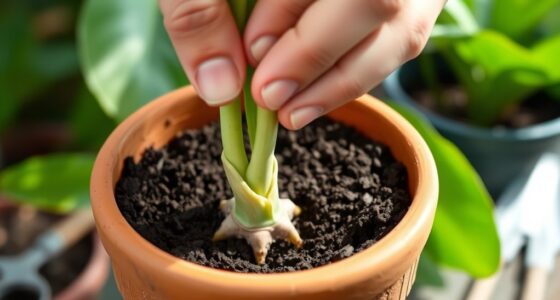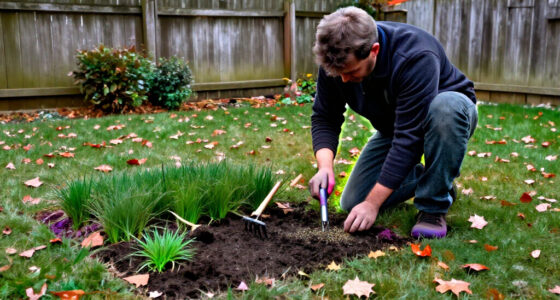
Planting seeds too shallow or too deep can cause significant growth delays that last for months. If seeds are too shallow, they may dry out or wash away, while planting too deep can prevent seedlings from emerging properly. Both errors weaken initial growth, slow nutrient uptake, and stunt development. To avoid these issues, it’s essential to follow proper planting depth guidelines and prepare your soil correctly. Keep exploring these tips to guarantee healthy, vigorous growth from the start.
Key Takeaways
- Planting seeds too shallow causes them to dry out or wash away, delaying germination.
- Planting too deep increases resistance, preventing seedlings from emerging promptly.
- Incorrect depth results in weak initial growth, slowing overall development for months.
- Improper planting depth hampers nutrient access, affecting long-term plant vigor.
- Deep planting in compacted soil can prevent seedling breakthrough, leading to prolonged growth delays.
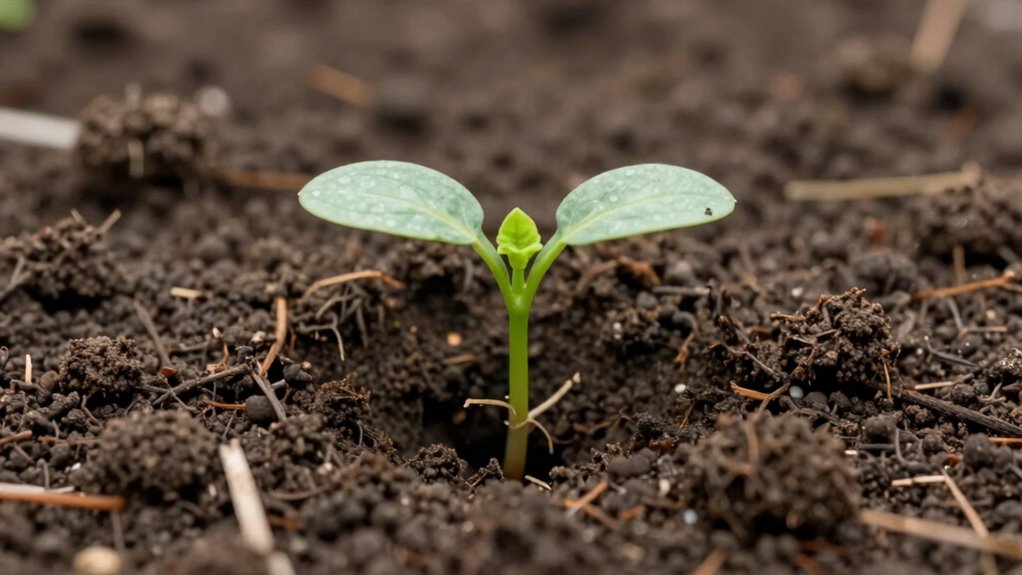
One of the often-overlooked factors contributing to poor seed germination is soil compaction. When soil becomes overly compacted, it creates a dense barrier around the seed, making it harder for the emerging root and shoot to penetrate the soil. This compaction can happen due to heavy machinery, frequent foot traffic, or poorly prepared soil. When soil is compacted, planting seeds at the correct depth becomes even more critical because the seed’s ability to push through the dense soil is hindered. If you plant too shallow in compacted soil, the seed might dry out or be washed away, but planting too deep can make it nearly impossible for the seedling to break through the heavy, compacted layer.
The consequences of planting at the incorrect depth and dealing with soil compaction are not immediate, but they can slow down growth significantly over months. You might see your plants emerge late or grow weakly, with stunted development that persists throughout their life cycle. This slow start affects nutrient uptake and overall vigor, reducing your crop yields. It’s essential to assess your soil before planting, loosen compacted areas, and ensure you’re placing seeds at the proper depth for your specific crop. Additionally, understanding the soil structure is crucial for effective planting and long-term crop health. Proper soil aeration and soil management techniques can help prevent future compaction issues and promote healthier root growth. Incorporating organic matter and practicing crop rotation are also effective ways to improve soil porosity over time. Regularly testing your soil’s compaction levels can help you identify and address problematic areas early. Being proactive about soil aeration can significantly enhance seed germination success.
You should pay close attention to the seed packet instructions, which usually specify the ideal planting depth. Use a ruler or a simple tool to measure the depth, and make sure your soil isn’t too dense or uneven. If your soil is heavy or clayey, consider tilling or aerating it beforehand to reduce compaction. Your goal is to create a loose, well-drained environment where seeds can germinate quickly and grow unimpeded. By avoiding planting depth errors and managing soil compaction, you’ll give your plants the best chance to thrive from the very start, leading to healthier crops and better yields in the long run.
garden seed planting depth guide
As an affiliate, we earn on qualifying purchases.
As an affiliate, we earn on qualifying purchases.
Frequently Asked Questions
How Do I Measure the Correct Planting Depth Accurately?
To measure the correct planting depth accurately, use a ruler or a marked stick to guarantee roots are covered properly without burying them too deep. Check the seed packet or plant label for specific depth guidance. Proper depth promotes healthy root development and soil aeration, preventing waterlogging or drought stress. Gently firm the soil around the plant to support roots and encourage strong growth from the start.
What Tools Are Best for Ensuring Proper Planting Depth?
Think of planting tools as your guiding compass through rocky terrain. A soil probe or a depth gauge is best for ensuring proper planting depth, especially when soil compaction varies. These tools help you accurately measure how deep you place seeds or seedlings, promoting healthy root development. Using a trowel or dibber also works well, giving you precise control and preventing shallow or too-deep planting that can hinder growth.
Can Improper Depth Affect Plant Disease Resistance?
Yes, improper planting depth can increase disease susceptibility by hindering root development. When plants are too shallow, roots struggle to establish, leaving them vulnerable to soil-borne diseases. Conversely, planting too deep can cause poor oxygen flow, weakening the plant’s defenses. Proper depth guarantees healthy root growth, enhancing resistance to diseases and promoting stronger, more resilient plants. Always verify planting depth to protect your crops effectively.
Does Soil Type Influence Optimal Planting Depth?
Imagine guiding your hand through different soils—clay, sandy, loamy—as they shape your planting. Soil composition directly influences your ideal planting depth because dense clay resists root penetration, requiring shallower planting, while sandy soil allows roots to dive deeper. Understanding how soil type affects root growth guarantees you plant at the right depth, promoting healthy development and faster growth, no matter the earth beneath your fingertips.
How Often Should I Check Planting Depth During Growth?
You should check your planting depth weekly during growth to guarantee proper root development and soil aeration. Regular inspections help you catch any shifts or compaction that could hinder roots from expanding and accessing oxygen. Adjust as needed to maintain ideal depth, especially after heavy rains or watering. Staying vigilant ensures your plants develop strong roots and healthy growth, preventing issues caused by improper planting depth over time.
As an affiliate, we earn on qualifying purchases.
Conclusion
Remember, a small mistake in planting depth can delay your garden’s bloom for months. It’s like setting a train on the wrong track—you might still arrive, but the journey takes longer. By paying attention now, you’ll enjoy the vibrant growth and early harvest you’re aiming for, instead of waiting in frustration. Proper depth is your garden’s first step toward success, turning a simple error into a story of patience and reward.
As an affiliate, we earn on qualifying purchases.
As an affiliate, we earn on qualifying purchases.