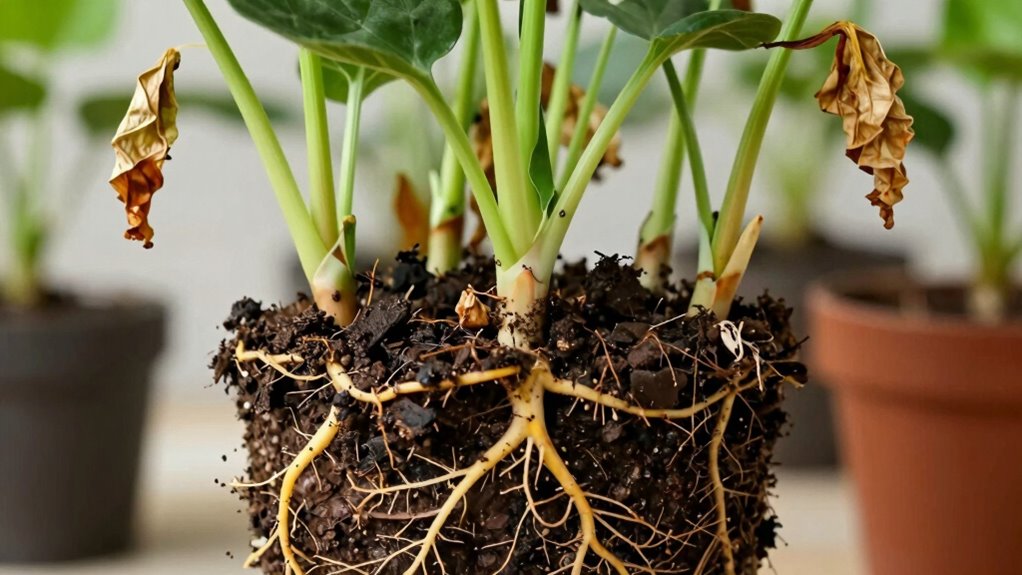

Rooted cuttings often fail after potting up because poor soil drainage causes water to sit around roots, leading to rot. Inadequate watering—either too much or too little—stresses the plant and hampers recovery. Insufficient airflow and compacted soil limit oxygen, weakening roots and inviting pests or disease. To boost your success, focus on creating well-draining soil, maintaining proper watering habits, and ensuring good airflow around your plants. Keep going for more tips on troubleshooting and prevention.

Get garden gear delivered free with Prime
- Fast, free delivery on millions of items
- Prime Video, Amazon Music and more included
- Member-only deals all year
Key Takeaways
- Poor soil drainage causes waterlogged roots, leading to rot and failure of rooted cuttings.
- Overwatering or inconsistent watering practices stress young plants, hindering establishment.
- Lack of adequate airflow increases humidity, promoting pests and fungal diseases.
- Using containers without drainage holes impairs soil aeration and root health.
- Insufficient light weakens plant vigor, making cuttings more susceptible to failure.
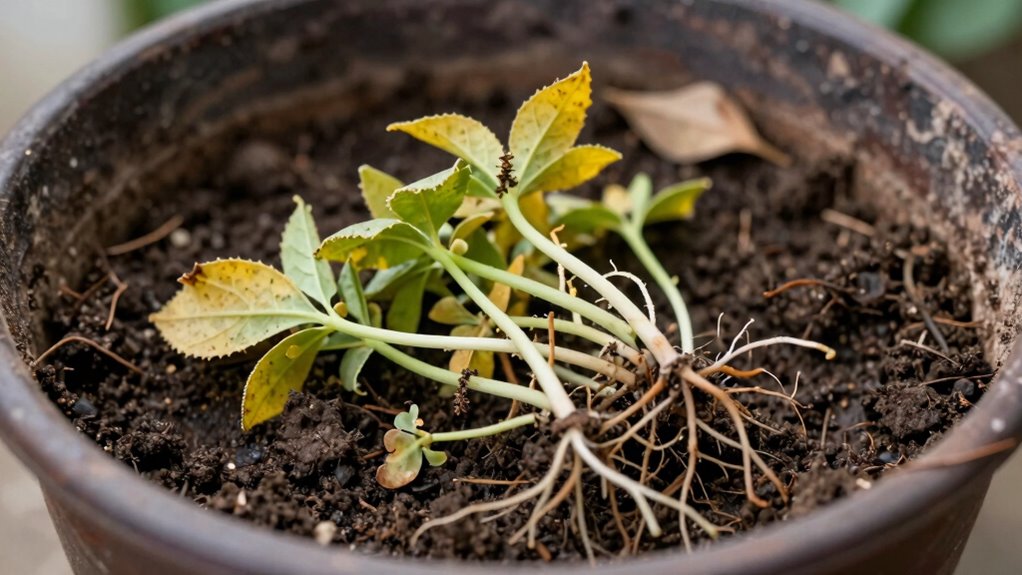
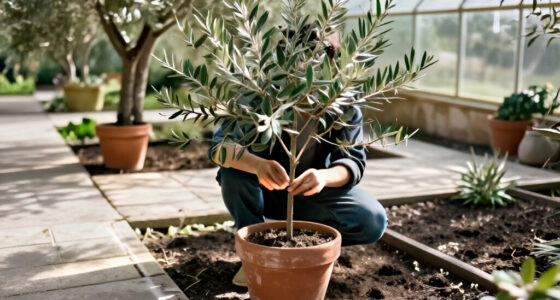
Many gardeners find that rooted cuttings often fail after they’ve been potted up, even when everything seems to be going well initially. You might notice that your young plants look healthy and vigorous at first, but then suddenly start to decline. One common reason for this is improper soil drainage. When you transplant cuttings into pots, if the soil retains too much moisture, your plants can quickly develop root rot or fungal infections. To prevent this, you need to guarantee that your potting mix is well-draining. A good mix often includes components like perlite, sand, or coarse organic matter, which help excess water flow away from the roots. Without proper drainage, water sits around the roots, depriving them of oxygen and encouraging disease, which can cause the cuttings to wilt and eventually die. Proper soil aeration is essential to maintain healthy root systems, as compacted or poorly aerated soil can lead to similar issues.
Proper soil drainage prevents root rot and supports healthy growth of potted cuttings.
Another vital factor that affects the success of your potted cuttings is pest management. Once rooted, plants are vulnerable to pests like aphids, spider mites, or fungus gnats, which can weaken or kill them. These pests are often attracted to the moist, tender roots and foliage of young plants. If you don’t keep a close eye on them, infestations can spread quickly, stunting growth or causing outright death. Regular inspection and early intervention are key. Use gentle, targeted treatments, such as insecticidal soap or neem oil, to control pests without harming your plants. Maintaining cleanliness around your pots and avoiding overwatering also reduce pest attraction. Remember, pests thrive in damp conditions, so managing soil moisture is not just about preventing rot but also about discouraging pests. Additionally, understanding the plant’s specific watering needs can help prevent both over- and underwatering, further supporting healthy growth. Proper watering practices also promote a balanced soil moisture level, which is essential for healthy root development.
Beyond soil drainage and pest control, you should consider other factors like watering practices, light levels, and airflow. Overwatering can drown roots and promote pests, while underwatering stresses the plant and hampers recovery. Adequate light helps strengthen the plant’s immune system, making it less susceptible to pests and disease. Good airflow around your potted cuttings reduces humidity levels that pests and fungi love. Proper watering techniques are essential for maintaining the balance between moisture and aeration in the soil. Using appropriate containers with drainage holes can further enhance soil health and prevent waterlogging. Addressing these issues holistically will give your rooted cuttings a better chance to thrive after potting up.
In the end, success depends on paying close attention to both soil conditions and pest management. By making certain that your soil drains well and keeping pests under control, you create an environment where your cuttings can establish strong roots and grow healthy. It’s a delicate balance, but with careful monitoring and adjustments, you can substantially improve your chances of nurturing thriving plants from rooted cuttings.
well-draining potting mix for cuttings
As an affiliate, we earn on qualifying purchases.
As an affiliate, we earn on qualifying purchases.
Frequently Asked Questions
How Can I Identify if My Rooted Cuttings Are Unhealthy?
You can tell if your rooted cuttings are unhealthy by examining their root health and looking for disease symptoms. Healthy roots are firm and white, while unhealthy ones are brown or mushy. Watch for discolored, wilting, or stunted leaves, which indicate disease symptoms or stress. If you notice foul odors or blackened roots, act quickly to prevent spread. Regularly inspect your cuttings to catch issues early and promote vigorous growth.
What Are the Best Soil Types for Potting up Cuttings?
Think of your cuttings as young saplings needing the right environment to thrive. The best soil types for potting up cuttings offer excellent soil drainage and nutrient richness. Use a mix with perlite or coarse sand to prevent waterlogging, combined with organic matter like compost to boost nutrients. This balanced blend encourages healthy root development and reduces the risk of failure, ensuring your cuttings grow strong and vibrant.
How Often Should I Water Potted Cuttings After Transfer?
You should water your potted cuttings regularly, maintaining a consistent watering schedule to keep moisture levels steady. Check the soil daily; water when the top inch feels dry, ensuring it’s moist but not soggy. Overwatering can cause root rot, so avoid excessive watering. Proper moisture levels encourage healthy root growth, helping your cuttings establish well after transfer. Adjust your watering frequency based on humidity and temperature conditions.
Can Pests Cause Rooted Cuttings to Fail After Potting?
Yes, pests can cause rooted cuttings to fail after potting. They damage the delicate roots and new growth, hindering development. To prevent this, practice pest prevention methods and regularly inspect your plants. Proper pest identification helps you spot issues early. If you detect pests, act quickly with suitable treatments to protect your cuttings, ensuring healthy growth and successful establishment in their new pots.
What Are Common Signs of Transplant Shock in Cuttings?
You’ll notice your cuttings looking like they’re wilting under a heavy cloud—this is transplant shock. Signs include root stress, where roots seem to falter, and nutrient deficiency, causing pale, weak leaves. They might stop growing or turn yellow, struggling to adapt. It’s like the plant’s spirit gets dampened, overwhelmed by change. Recognizing these signs early helps you nurture them back to health, easing their shift and encouraging new growth.
As an affiliate, we earn on qualifying purchases.
Conclusion
So, when your rooted cuttings fail after potting up, it’s like planting a fragile seed in a storm. The theory suggests they struggle because of shock or inadequate roots, leaving them vulnerable like a tiny boat in rough waters. To avoid this, handle with care and give them time to settle. With patience and nurturing, your cuttings can weather the storm and thrive, transforming into strong, healthy plants that flourish in their new home.
insecticidal soap for pests on young plants
As an affiliate, we earn on qualifying purchases.
As an affiliate, we earn on qualifying purchases.
perlite and sand for soil aeration
As an affiliate, we earn on qualifying purchases.
As an affiliate, we earn on qualifying purchases.
Fall Picks
fall essentials
As an affiliate, we earn on qualifying purchases.