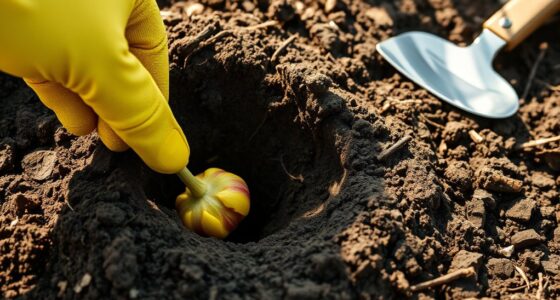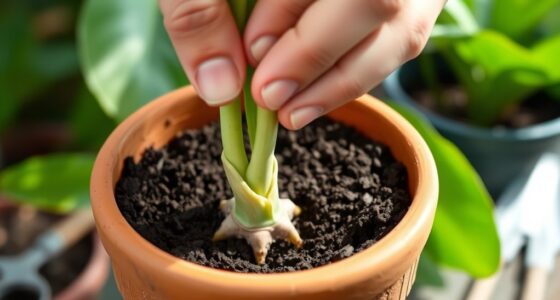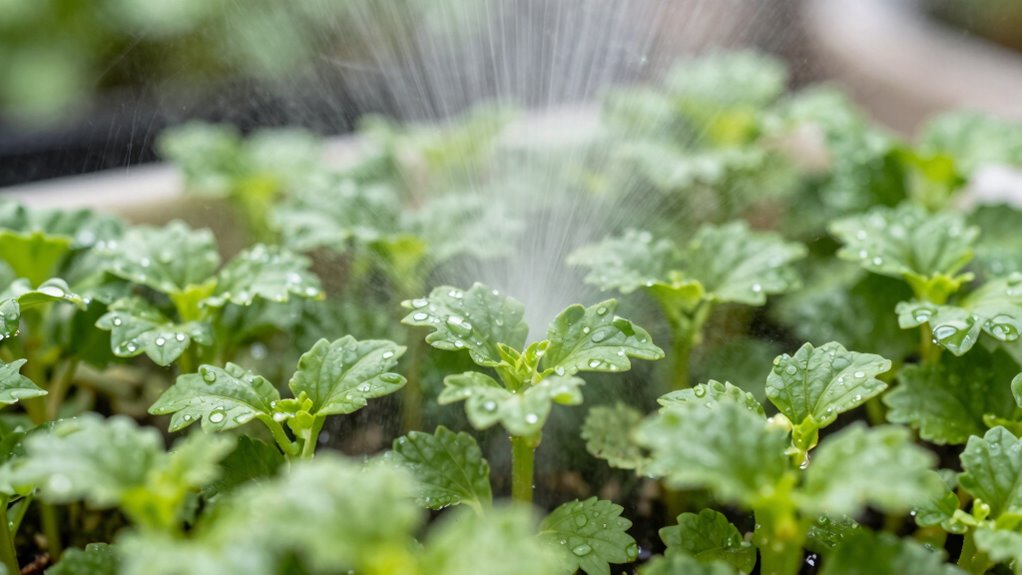

To keep your cuttings healthy without risking rot, use a misting system that provides gentle, consistent humidity, ensuring the environment isn’t over-saturated. Adjust spray frequency based on your plants’ needs, and position nozzles for even coverage. Keep humidity levels stable and monitor for excess moisture to prevent mold. Regular maintenance and proper setup help avoid problems. Stick with these tips, and you’ll soon master how to nurture strong, healthy cuttings efficiently.
Key Takeaways
- Maintain optimal humidity levels with regular, fine misting to prevent dehydration without over-saturating leaves or soil.
- Use timers and sensors to regulate mist frequency, avoiding excessive moisture that can cause rot or mold.
- Position nozzles for even coverage, ensuring leaves stay moist but not drenched, and avoid water pooling around plant bases.
- Keep air circulation steady to reduce humidity buildup, which can promote rot, while still supporting healthy leaf hydration.
- Regularly clean nozzles and check system pressure to ensure consistent misting and prevent clogging or uneven watering.
Why Misting Systems Are Essential for Healthy Plant Cuttings

Misting systems are crucial for maintaining the right environment for healthy plant cuttings because they provide consistent, fine humidity that prevents dehydration. Proper humidity encourages soil sterilization, reducing the risk of disease-causing pathogens that can hinder root development. When the environment stays moist, your cuttings are less stressed and more likely to develop strong, healthy roots. Misting helps keep the soil surface moist without overwatering, creating ideal conditions for root growth. By maintaining steady moisture levels, you support soil sterilization naturally, which promotes a clean environment for root development. This consistent humidity ensures your cuttings stay healthy, minimizes transplant shock, and accelerates their progress from cuttings to mature plants. Proper misting is a essential step in nurturing resilient, well-rooted plants. Free Floating
How Misting Systems Keep Humidity in the Perfect Range and Prevent Rot
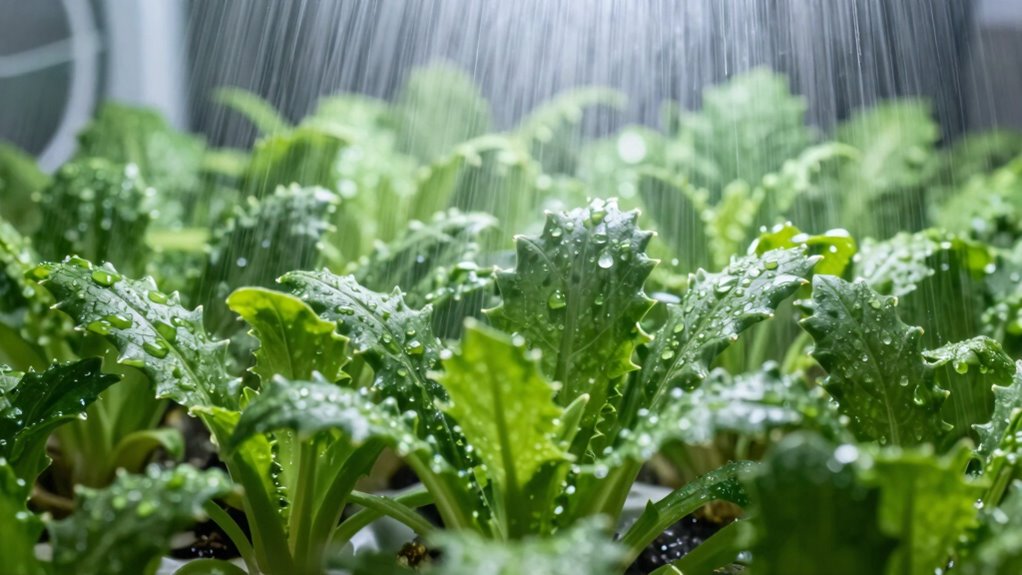
Maintaining the right humidity levels is essential to prevent rot and guarantee healthy root development. Misting systems excel at humidity control by providing consistent, gentle moisture that keeps the environment ideal for cuttings. When humidity is too low, leaves can dry out, hindering leaf health and slowing growth. Conversely, excessive humidity can lead to excess moisture around the leaves and stems, increasing the risk of rot. By regularly misting, your system ensures moisture stays within the excellent range, promoting leaf health while avoiding dampness that fosters decay. This balance helps protect your cuttings from stress and disease, encouraging strong, healthy roots to develop. Proper humidity control is the key to successful propagation without the fear of rot. Additionally, understanding the benefits of airless paint sprayers can help you appreciate how consistent spray application can also improve overall outcomes in various applications, including maintaining optimal environmental conditions. Regular monitoring with hygrometers can further enhance humidity management, ensuring your system keeps the environment precisely within the desired range. Incorporating automatic timers can also help maintain consistent misting intervals, reducing the need for constant manual adjustments. Implementing humidity sensors can provide real-time data, allowing for more precise control of misting cycles. Maintaining a stable environment also minimizes the risk of disease development, further supporting healthy plant growth.
Choosing the Best Misting System for Your Propagation Goals
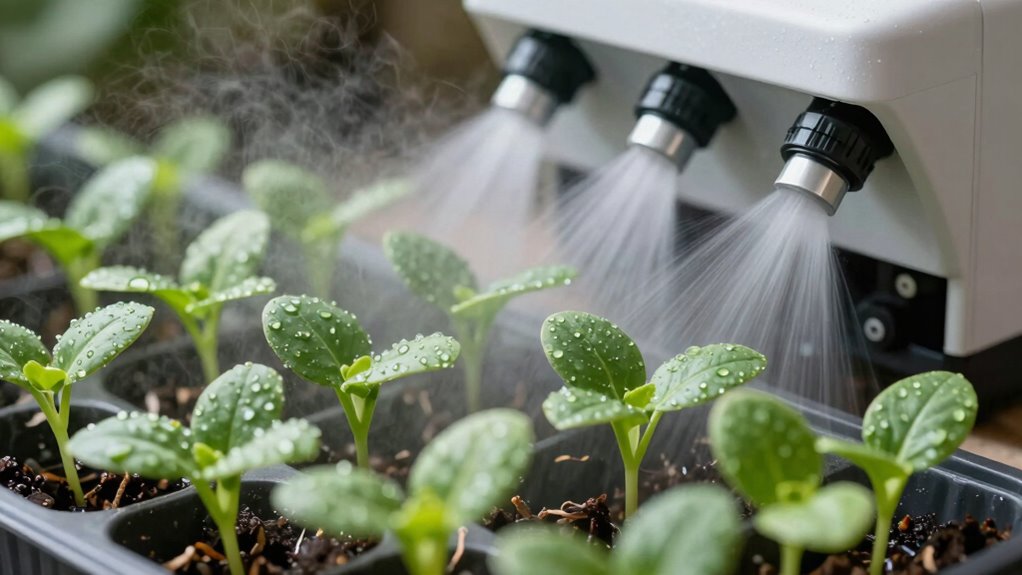
When selecting a misting system, you need to take into account how well it matches your plant types and their specific needs. Think about the spray frequency and coverage to guarantee your cuttings stay moist without overwatering. Making the right choice helps you achieve successful propagation and healthy growth. Additionally, understanding the filtration system of your misting setup ensures consistent performance and prevents clogging, ultimately supporting healthier plant development. Incorporating energy-efficient technology into your misting system can further enhance sustainability and reduce operational costs. Considering indoor air quality benefits, a properly maintained misting system can also help maintain optimal humidity levels in your growing environment. Properly managing humidity control is essential for preventing issues like mold or mildew, which can harm your plants. Moreover, paying attention to system durability can ensure your misting setup remains reliable over time, reducing maintenance needs and supporting ongoing plant health.
Compatibility With Plant Types
Choosing the right misting system depends heavily on the specific plant types you plan to propagate. Different plant species have unique needs, especially concerning moisture and airflow. Some plants thrive with high humidity and frequent misting, while others prefer drier conditions. Consider soil compatibility too; certain plants are sensitive to excess moisture in the soil, so a misting system that delivers fine, targeted spray can prevent overwatering. For example, tropical plants may require more frequent misting, whereas succulents need minimal humidity. Matching your misting system to your plant species guarantees ideal growth without risking rot or dehydration. Evaluate the moisture tolerance of your plants and select a system that provides the right balance, supporting healthy cuttings and successful propagation.
Spray Frequency and Coverage
Selecting the right spray frequency and coverage is essential to achieving successful propagation. You need to balance enough moisture to keep cuttings hydrated without causing excess humidity that can lead to rot. Adjust your drip frequency based on your plant type and environment—some may require more frequent misting, while others need less. Spray coverage should be even, ensuring all leaves receive adequate moisture without over-saturating the soil or cuttings. Overly frequent spray can increase humidity too much, risking fungal issues, while infrequent misting can dry out your cuttings. Proper humidity control monitoring your plants closely, and tweak your system accordingly. Additionally, understanding wave and wind conditions can help you anticipate how moisture disperses in your space, allowing for more precise adjustments. Maintaining appropriate air circulation is also vital to prevent stagnant, overly humid conditions that promote rot. Proper spray coverage combined with ideal drip frequency creates a stable environment that promotes healthy root development and prevents leaf rot.
How to Set Up and Use Your Misting System Safely and Effectively
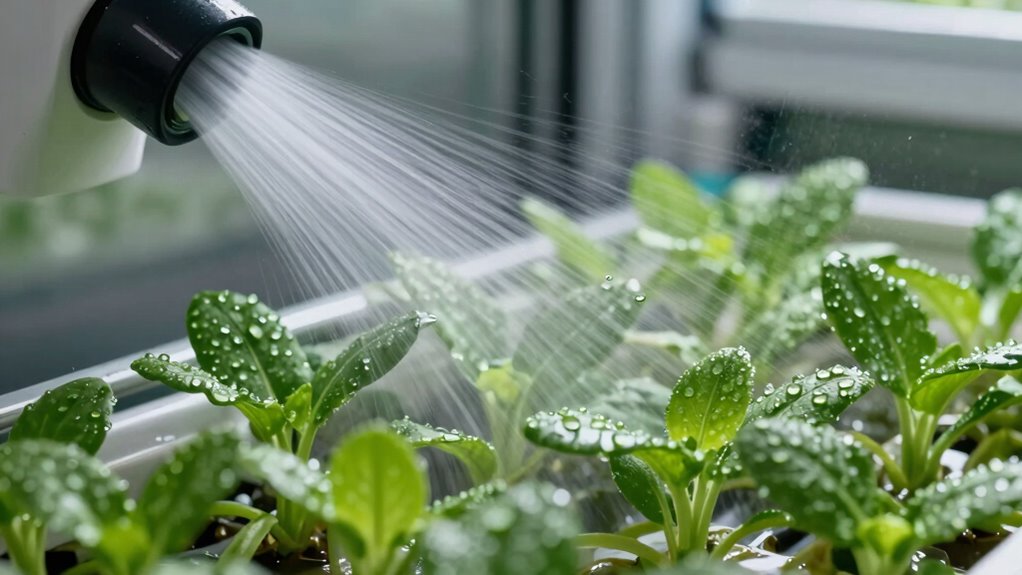
Setting up your misting system correctly is essential for safe and effective use. Begin by positioning the nozzles where they evenly distribute mist without drenching the leaves or ground. Secure all connections tightly to prevent leaks and ensure consistent spray. Regular maintenance tips include cleaning filters and checking for clogs to keep the system functioning smoothly. Always follow safety precautions, such as avoiding electrical components near water and turning off the system before maintenance. Use a timer to regulate misting intervals, preventing overwatering and mold growth. Keep an eye on humidity levels and adjust your system accordingly. Proper setup and routine care help protect your plants while minimizing risks, ensuring your propagation environment stays healthy and safe. Additionally, understanding your ownership essentials can help you operate your system efficiently and troubleshoot issues effectively. Knowing how to operate power tools safely is also crucial when performing maintenance or repairs on your equipment. To further optimize performance, consider monitoring environmental conditions to tailor misting schedules precisely to your plant’s needs. Regularly assessing your water quality can also prevent mineral buildup and maintain optimal humidity levels, enhancing plant health and growth environment. Being aware of air quality impact can also enhance your overall plant health and growth environment.
Troubleshooting Common Misting System Problems During Propagation
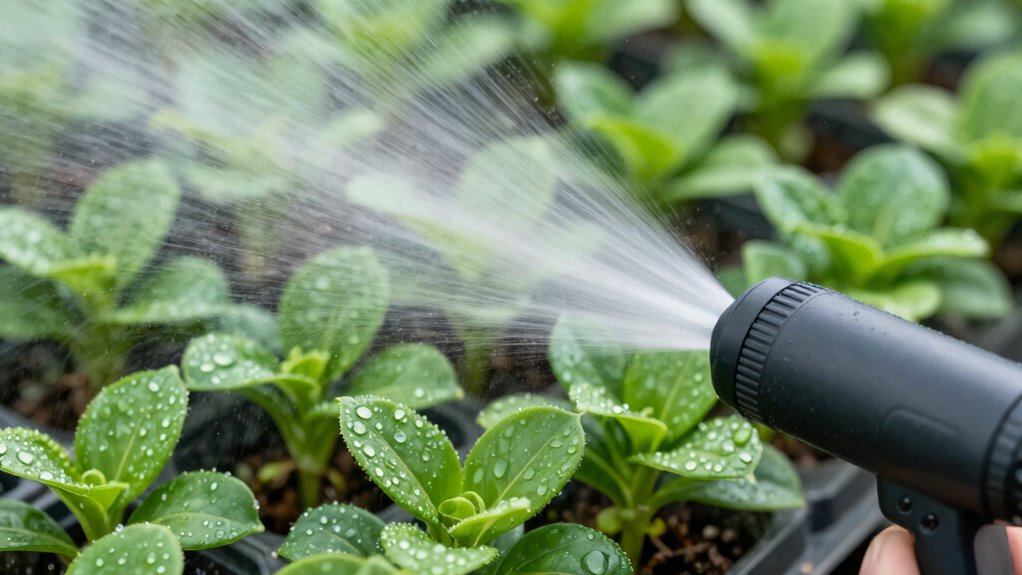
If your misting system is dripping water excessively, it could mean the pressure is too high or the nozzles are clogged. Uneven mist distribution might be caused by blocked or improperly positioned nozzles. Addressing these issues promptly helps make certain your cuttings stay healthy and properly hydrated. Regular maintenance and understanding home charging can also help prevent future problems.
Water Dripping Issues
Water dripping excessively from your misting system can quickly lead to problems during propagation, such as overly saturated media or disease development. To fix this, focus on drip management by adjusting the system’s shut-off valve or the duration of mist cycles. Proper humidity control is vital; too much water causes droplets to accumulate and drip. Check the nozzle for clogs or leaks, and ensure the pressure is correct. Installing drip trays or adjusting the angle of the nozzles can help prevent excess water from pooling and dripping. Regular maintenance and monitoring will keep the system running smoothly. Additionally, understanding water on the surface of leaves can help you better manage condensation and prevent unwanted dripping. Maintaining consistent humidity levels also supports healthy plant growth, reducing the likelihood of excess water and drip issues. Being aware of atmospheric conditions can further aid in optimizing misting schedules for better results. By fine-tuning these elements, you’ll reduce dripping, maintain ideal humidity, and create a healthier environment for your cuttings.
Uneven Mist Distribution
Uneven mist distribution can undermine your propagation efforts, causing some cuttings to receive too much moisture while others stay too dry. This often results from inconsistent spray uniformity or poorly managed drip zones. To fix this, you need to:
- Check your spray nozzles for clogs or misalignment to guarantee even coverage.
- Adjust drip zones so each cutting gets equal mist, preventing dry or overly wet spots.
- Maintain proper pressure in your system to promote consistent spray patterns.
- Regularly inspect for blocked or uneven spray patterns that disrupt uniform misting.
Top Tips to Encourage Healthy Leaf Growth in Propagating Cuttings
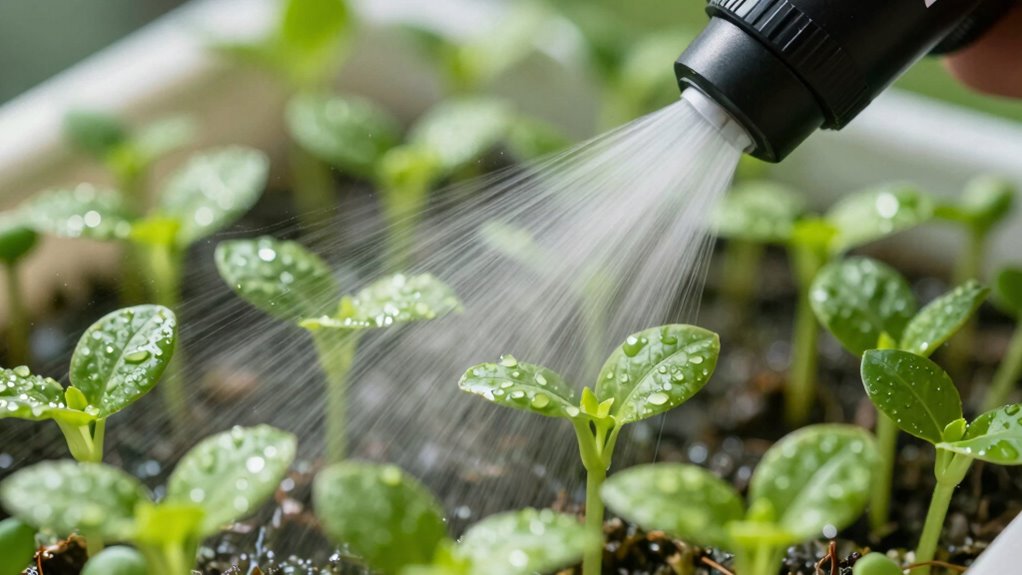
Ensuring healthy leaf growth in propagating cuttings requires paying close attention to environmental conditions and proper care. To promote robust root development and vibrant leaf health, keep the humidity levels stable with a misting system that avoids over-saturation. Proper airflow reduces the risk of mold and disease, supporting healthy leaves. Provide bright, indirect light to encourage photosynthesis without scorching the delicate foliage. Maintain consistent moisture in the growing medium, but don’t let it stay soggy, as excess water can lead to rot. Regularly check your cuttings for signs of stress or disease, and prune any damaged leaves to redirect energy to healthy growth. By creating an ideal environment, you’ll foster strong root development and lush, healthy leaves.
Misting Systems vs. Other Propagation Methods: Which Is Right for You?
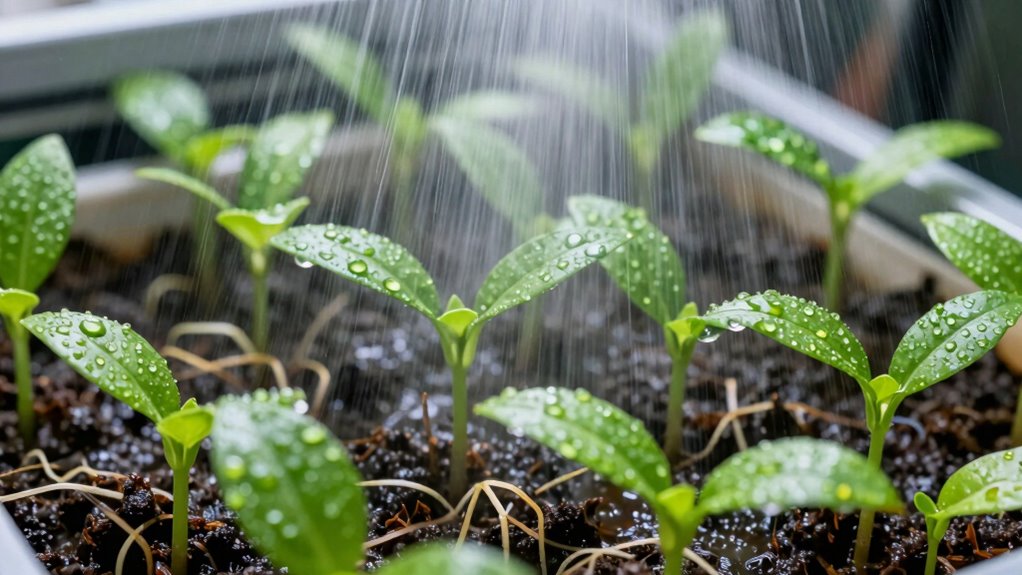
Choosing the right propagation method depends on your plant type, space, and desired results. Misting systems promote gentle moisture, encouraging root development without oversaturating or risking rot. Compared to soil-based methods, misting provides soil alternatives like hydroponics, which can speed up root growth and improve aeration. Consider these options:
- If you want rapid root development, misting keeps leaves hydrated without drowning roots.
- For limited space, propagation chambers with misting are compact and efficient.
- If soil rot has been a problem, soil alternatives like sphagnum or perlite prevent issues.
- For delicate cuttings, misting offers a controlled environment to nurture roots safely.
Ultimately, misting suits those seeking healthy roots and lush leaves without the mess or risks of traditional soil propagation.
Frequently Asked Questions
How Often Should I Run My Misting System for Optimal Leaf Health?
You should run your misting system 2-3 times daily, adjusting based on humidity control needs. In dry environments, increase misting frequency to maintain consistently moist leaves without overwatering. Check your cuttings regularly for excess moisture or dryness, and tweak the schedule accordingly. Proper misting keeps leaves healthy, promotes root growth, and prevents rot, ensuring your cuttings thrive without becoming overly saturated.
Can Misting Systems Be Used Outdoors or Only Indoors?
Think of your misting system as a loyal rainforest umbrella—perfectly suited for outdoor use. Yes, outdoor humidity and weather fluctuations test its durability, but many systems are designed to withstand the elements. You can confidently use your misting system outdoors, ensuring your plants stay hydrated without overwatering. Just pick a durable model built for outdoor conditions, and your plants will thrive in their lush environment, rain or shine.
What Types of Plants Benefit Most From Misting During Propagation?
Tropical plants with delicate foliage benefit most from misting during propagation. You’ll notice their leaves thrive with consistent moisture, which helps prevent dehydration and encourages healthy root development. Misting keeps the environment humid, mimicking their natural habitat. Just be careful not to overdo it, as excessive moisture can lead to rot. Regular, light misting guarantees your tropical cuttings stay happy, healthy, and ready to grow strong.
Is There a Risk of Mold or Fungal Issues With Misting Systems?
Misting systems may pose a potential problem with mold and fungal issues if not managed properly. To prevent fungal problems, prioritize proper fungal prevention and mold control by avoiding excessive moisture and ensuring good air circulation. Regularly clean your system, monitor humidity levels, and allow for drying periods. This proactive approach helps keep your cuttings healthy, happy, and free from mold or fungi.
How Do I Maintain and Clean My Misting System Regularly?
You should establish a regular cleaning schedule for your misting system, ideally every couple of weeks, to prevent mold buildup. During cleaning, disassemble the system and scrub nozzles and filters with a soft brush and mild solution. Also, perform routine system inspections for leaks or blockages, ensuring everything functions smoothly. Keeping it clean and inspecting regularly helps maintain *best* misting and reduces fungal risks.
Conclusion
With the right misting system, you can turn your propagation space into a lush, thriving jungle—almost like having a personal rain cloud! Keep your leaves happy and your roots healthy by maintaining perfect humidity and avoiding rot. Remember, troubleshooting and adjusting your system as needed will unveil the secret to unstoppable plant growth. So go ahead, embrace misting magic, and watch your cuttings flourish like never before!